Bromobenzene → Biphenyl
Reaction equation

Br[C:2]1[CH:7]=[CH:6][CH:5]=[CH:4][CH:3]=1.[C:8]1(B(O)O)[CH:13]=[CH:12][CH:11]=[CH:10][CH:9]=1.C(=O)([O-])[O-].[K+].[K+]>O1CCOCC1>[C:2]1([C:8]2[CH:13]=[CH:12][CH:11]=[CH:10][CH:9]=2)[CH:7]=[CH:6][CH:5]=[CH:4][CH:3]=1Participants
5
Reactant 3
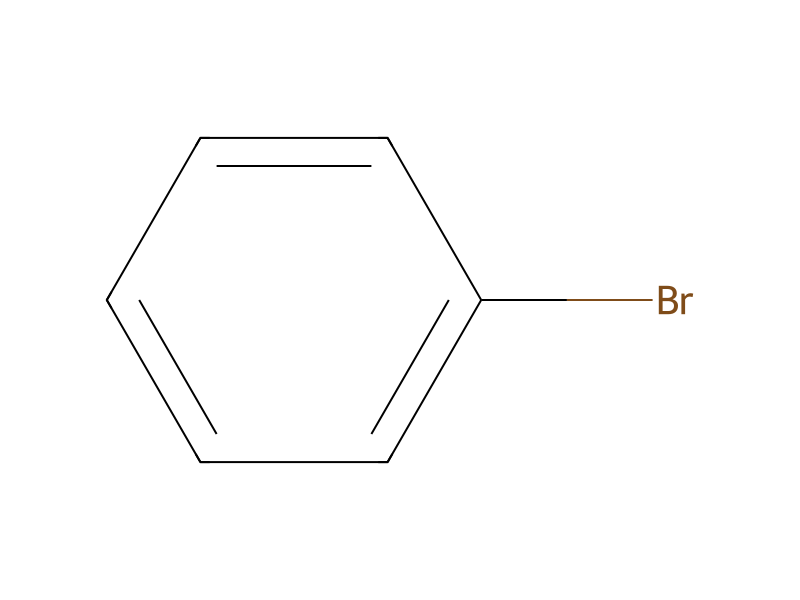


Product 1

Reagents, catalysts & solvents 1

Conditions
- Temperature
- 80 °C
Procedure
To a solution of bromobenzene (0.079 g, 0.5 mmol), phenyl boronic acid (0.073 g, 0.60 mmol) and potassium carbonate (0.138 g, 1 mmol) in 1,4-dioxane solvent (2.0 mL) was added the solid catalyst (0.01 mmol, 2 mol %) under argon gas. The reaction was then stirred at 80° C. for 16 hours. The mixture was then cooled to room temperature, filtered and concentrated in vacuo. The residue was subsequently purified by silica gel chromatography (hexanes/EtOAc or hexanes/ether). The isolated product was characterized by 1H NMR spectroscopy. Characterization Data (Biphenyl): Isolated as colorless solid; 1H NMR (CDCl3, 300 MHz): δ 7.71 (4H, d, J=7.8 Hz), 7.55 (4H, t, J=7.5 Hz), 7.45 (2H, t, J=7.2 Hz). Results are shown in Table 4.
Workup
- temperatureThe mixture was then cooled to room temperature
- filtrationfiltered
- concentrationconcentrated in vacuo
- customThe residue was subsequently purified by silica gel chromatography (hexanes/EtOAc or hexanes/ether)
Sources & evidence
- ORD record
- ord-0406b5d676b3425a80a22fb5919a59bf
- Source dataset
- uspto-grants-2015_06
- Patent number
- US09062085B2
Reaction notes
Loading…