Hydrochloric Acid → 4-(tert-Butyldimethylsilyloxy)phenylboronic Acid (contains varying amounts of Anhydride)
Reaction equation

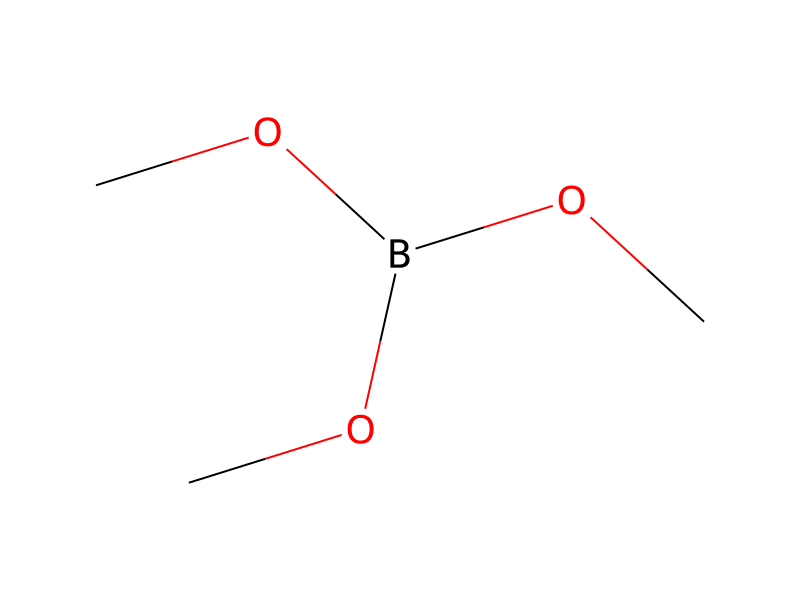
[Mg].[Si:2]([O:9][C:10]1[CH:15]=[CH:14][CH:13]=[CH:12][C:11]=1Br)([C:5]([CH3:8])([CH3:7])[CH3:6])([CH3:4])[CH3:3].[B:17](OC)([O:20]C)[O:18]C.Cl>C1COCC1.C(OC)(C)(C)C>[O:9]([C:10]1[CH:15]=[CH:14][C:13]([B:17]([OH:20])[OH:18])=[CH:12][CH:11]=1)[Si:2]([C:5]([CH3:8])([CH3:7])[CH3:6])([CH3:4])[CH3:3]Participants
Reactant 4



Product 1

Reagents, catalysts & solvents 2


Procedure
Magnesium turnings (0.53 g, 22 mmol) and 20 mL of THF were placed into a two-necked flask. Next, tert-butyldimethylsilyloxyphenyl bromide (5.64 g, 19.6 mmol) was added and the mixture was heated under reflux for 2 h before it was cooled to room temperature. The brown mixture was added to a solution of trimethyl borate (2.43 g, 24 mmol) in 5 mL of THF through a dropping funnel at −78° C. and allowed to warm to room temperature overnight. After hydrolysis with 90 mL of ca. 0.1 M hydrochloric acid followed by standard work-up with methyl tert-butyl ether, the brown residue was washed with 20 mL of cold hexane, and the resulting white product (3.86 g, 78%) was dried in vacuo. Mp: 175° C. (1H NMR (300 MHZ, CDCl3): δ0.25 (s, 6H); 1.01 (s, 9H); 6.95 (d, J=8.5 Hz, 2H); 8.11 (d, J 8.5 Hz, 2H). 13C NMR (75 MHZ, CDCl3): δ−4.3; 18.1; 25.7; 119.8; 137.5; 159.8. Reference: Bolm, C.; Derrien, N.; Seger, A. Synlett 1996, 387.
Workup
- temperaturethe mixture was heated
- temperatureunder reflux for 2 h before it
- temperatureto warm to room temperature overnight
- washthe brown residue was washed with 20 mL of cold hexane
- dry with materialthe resulting white product (3.86 g, 78%) was dried in vacuo
Sources & evidence
- ORD record
- ord-3fda65830b73464d8c7af15cf220e52b
- Source dataset
- uspto-grants-2002_06
- Patent number
- US06403522B1
Reaction notes
Loading…