Hydrochloric Acid → HCID 21963613, compound
Reaction equation

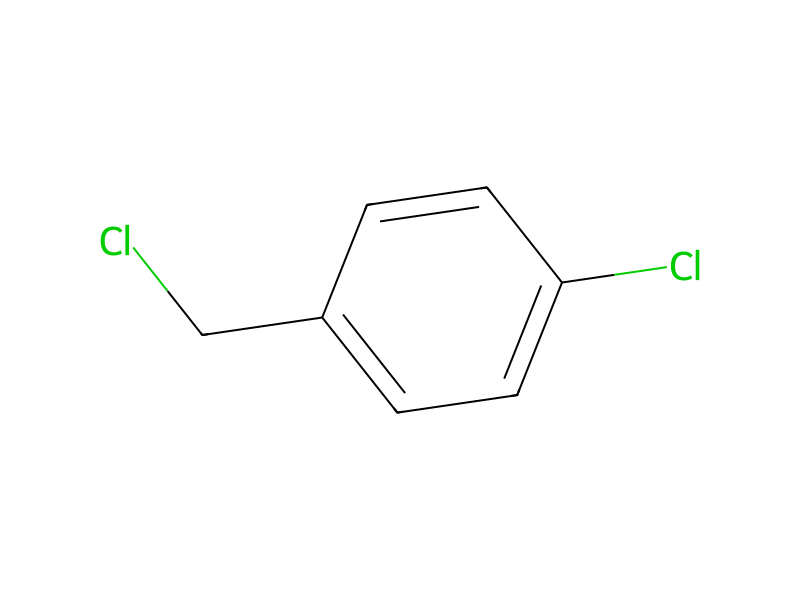
[Cl:1][C:2]1[CH:7]=[CH:6][C:5]([N:8]2[CH2:13][CH2:12][NH:11][CH2:10][CH2:9]2)=[CH:4][CH:3]=1.[Cl:14][C:15]1[CH:22]=[CH:21][C:18]([CH2:19]Cl)=[CH:17][CH:16]=1.C(=O)([O-])[O-].[K+].[K+].Cl>C(#N)C.C(O)(C)C.CCOCC.O>[ClH:1].[ClH:14].[Cl:1][C:2]1[CH:3]=[CH:4][C:5]([N:8]2[CH2:13][CH2:12][N:11]([CH2:19][C:18]3[CH:21]=[CH:22][C:15]([Cl:14])=[CH:16][CH:17]=3)[CH2:10][CH2:9]2)=[CH:6][CH:7]=1Participants
Reactant 4



Product 1

Reagents, catalysts & solvents 4




Procedure
A mixture of 1-(4-chlorophenyl)piperazine (1.61 g, 0.01 mole), 4-chlorobenzyl chloride (2.10 g, 0.01 mole) and potassium carbonate (2 g) in acetonitrile (40 mL) is heated at reflux for 6 hours under a nitrogen atmosphere. After cooling, the reaction mixture is poured into water (50 mL) and ether (50 mL). The aqueous layer is discarded and the organic layer is extracted with 1 N aqueous hydrochloric acid solution. The acidic extract is neutralized with 6 N ammonium hydoxide solution and extracted with ether. The organic layer is dried (Na2SO4) and concentrated to provide the crude free base of the desired unsymmetrically substituted piperazine. This material is dissolved in warm isopropanol (10 mL) and treated with a 1 N solution of HCl in ether until acidic to pH paper. Upon cooling, crystals of dihydrochloride salt are collected (2.2 g, 56%).
Workup
- temperatureis heated
- temperatureat reflux for 6 hours under a nitrogen atmosphere
- temperatureAfter cooling
- extractionthe organic layer is extracted with 1 N aqueous hydrochloric acid solution
- extractionThe acidic extract
- extractionextracted with ether
- dry with materialThe organic layer is dried (Na2SO4)
- concentrationconcentrated
- customto provide the crude free base of the
- temperatureUpon cooling
- customcrystals of dihydrochloride salt are collected (2.2 g, 56%)
Sources & evidence
- ORD record
- ord-9504d95ea5a746f7ba1ac2faf80e3eb9
- Source dataset
- uspto-grants-2006_09
- Patent number
- US07101887B2
Reaction notes
Loading…