Dichloromethane → 3-(5-Pyrimidyl)acrylic acid
Reaction equation

Br[C:2]1[CH:3]=[N:4][CH:5]=[N:6][CH:7]=1.[C:8]([OH:12])(=[O:11])[CH:9]=[CH2:10].C(=O)([O-])[O-].[K+].[K+].ClCCl>C(N(CCCC)CCCC)CCC.CC(O)=O.CC(O)=O.[Pd].C1(P(C2C=CC=CC=2)C2C=CC=CC=2)C=CC=CC=1>[N:4]1[CH:3]=[C:2]([CH:10]=[CH:9][C:8]([OH:12])=[O:11])[CH:7]=[N:6][CH:5]=1Participants
8
Reactant 4

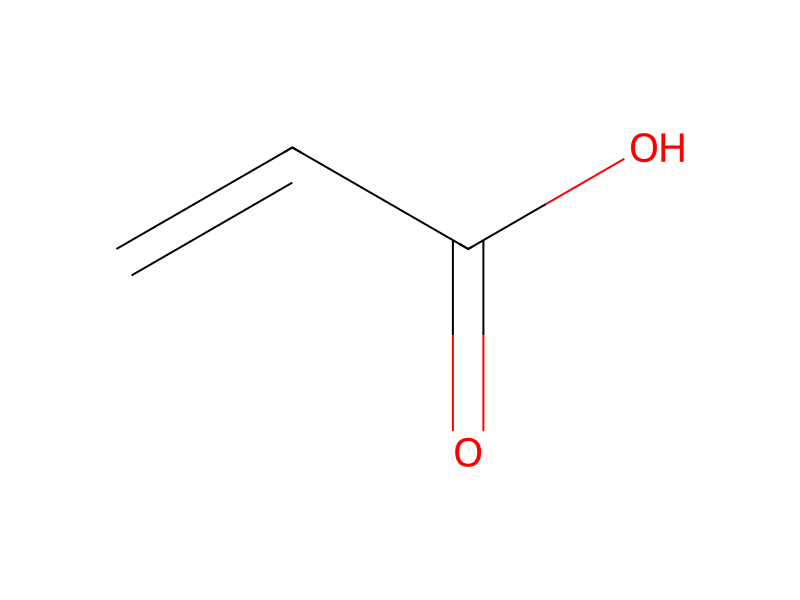


Product 1

Reagents, catalysts & solvents 3

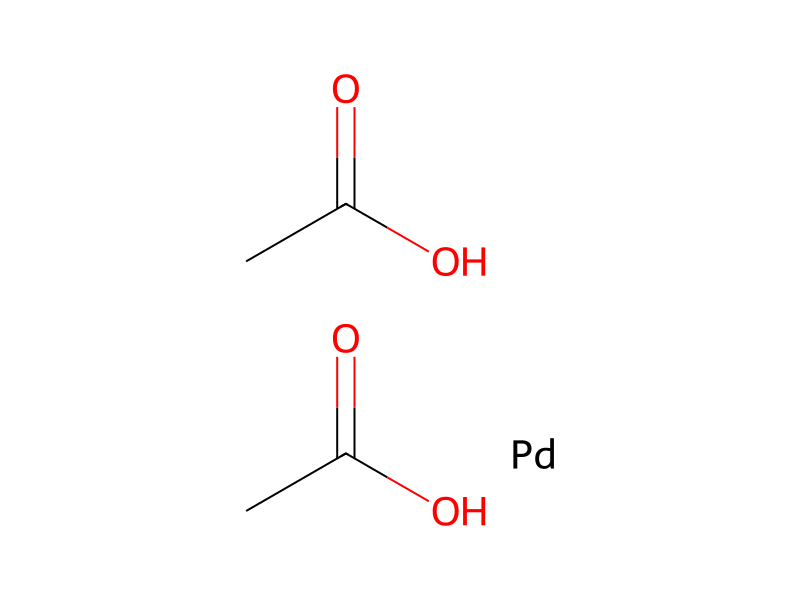

Conditions
- Temperature
- 152.5 °C
Procedure
A mixture of 5-bromopyrimidine (100 g), acrylic acid (48 g), triphenylphosphine (2.5 g) and palladium II acetate (0.1 g) was refluxed in tri-n-butylamine (260 ml) with overhead stirring for 4.5 h at 145-160° C. The mixture was cooled and a 10% solution of potassium carbonate (2 L) added followed by dichloromethane (500 mL). The organic layer was separated and the aqueous phase extracted with diethyl ether (3×300 ml). The aqueous layer was brought to pH 3 with concentrated hydrochloric acid (ice-cooling) and the solid so formed was filtered and dried in vacuo to give 3-(5-pyrimidyl)acrylic acid (35 g). 1H-NMR (d6-DMSO) δ 6.82(1H, d), 7.60(1H, d) and 9.15(3H, 2xs)
Workup
- temperatureThe mixture was cooled
- customThe organic layer was separated
- extractionthe aqueous phase extracted with diethyl ether (3×300 ml)
- customthe solid so formed
- filtrationwas filtered
- customdried in vacuo
Sources & evidence
- ORD record
- ord-a3d746e321f84521bb8b3d68d3f53d23
- Source dataset
- uspto-grants-2002_07
- Patent number
- US06417192B1
Reaction notes
Loading…