4-Hydroxybiphenyl → 4-(4-Nitrophenoxy)-1,1'-biphenyl
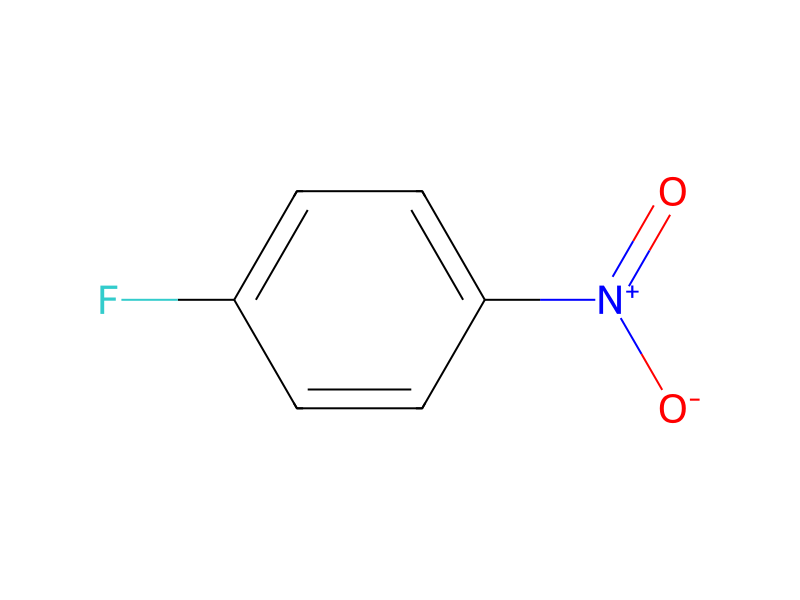
Reaction equation

F[C:2]1[CH:7]=[CH:6][C:5]([N+:8]([O-:10])=[O:9])=[CH:4][CH:3]=1.C([O-])([O-])=O.[K+].[K+].[OH:17][C:18]1[CH:23]=[CH:22][C:21]([C:24]2[CH:29]=[CH:28][CH:27]=[CH:26][CH:25]=2)=[CH:20][CH:19]=1.CCOC(C)=O>CN(C=O)C>[C:21]1([C:24]2[CH:29]=[CH:28][CH:27]=[CH:26][CH:25]=2)[CH:20]=[CH:19][C:18]([O:17][C:2]2[CH:7]=[CH:6][C:5]([N+:8]([O-:10])=[O:9])=[CH:4][CH:3]=2)=[CH:23][CH:22]=1Participants
6
Reactant 4



Product 1

Reagents, catalysts & solvents 1

Conditions
- Temperature
- 80 °C
Procedure
To a stirred solution of 1-fluoro-4-nitrobenzene (10 mmol) in DMF (20 mL) at room temperature, solid K2CO3 (30 mmol) was added followed by addition of 4-hydroxybiphenyl (10 mmol) to the reaction mixture and heating to 80° C. until the reaction was complete as indicated by TLC or HPLC. After cooling to room temperature to room temperature, the reaction mixture was poured into EtOAc (100 mL), washed with water (2×50 mL) and brine (50 mL), and dried over sodium sulfate. The solvent was removed in vacuo to afford the desired 4-(biphenyl-4-oxy)-1-nitrobenzene. The crude product was used for further transformation .
Workup
- temperatureAfter cooling to room temperature to room temperature
- washwashed with water (2×50 mL) and brine (50 mL)
- dry with materialdried over sodium sulfate
- customThe solvent was removed in vacuo
Sources & evidence
- ORD record
- ord-3090b95d115c4bf4a47cc43ee69d0d58
- Source dataset
- uspto-grants-2010_05
- Patent number
- US07714013B2
Reaction notes
Loading…