O-Phenylenediamine → Diisopropyl Ether
Reaction equation

[C:1](Cl)(=[O:5])[C:2](Cl)=O.[NH2:7][C:8]1[CH:13]=[CH:12][CH:11]=[CH:10][C:9]=1[NH2:14].[CH2:15](N(CC)CC)C>ClCCl.CN(C)C=O>[CH:8]([O:5][CH:1]([CH3:2])[CH3:15])([CH3:13])[CH3:9].[NH2:7][C:8]1[CH:13]=[CH:12][CH:11]=[CH:10][C:9]=1[NH-:14]Participants
Reactant 3
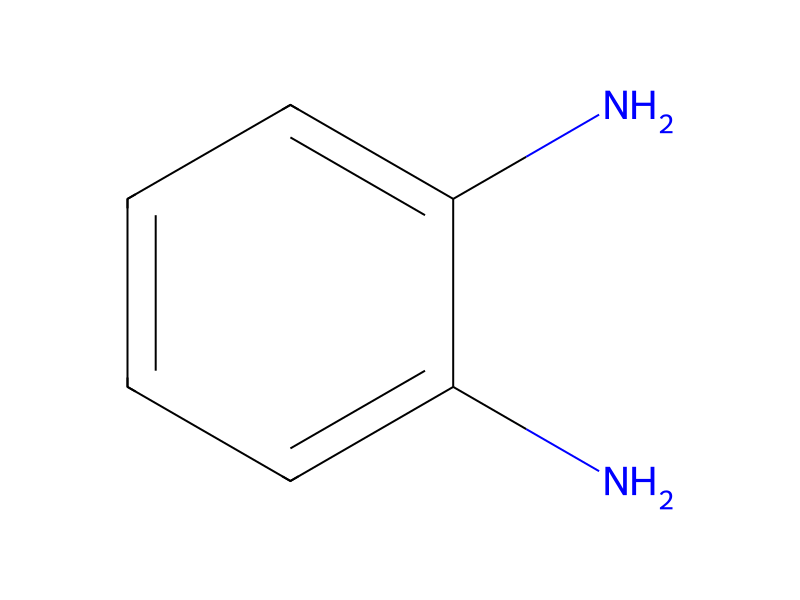


Product 2


Reagents, catalysts & solvents 2


Procedure
In a 50 ml three-necked flask, place 1.615 g of 7-nitro-9-oxo-9H-fluorene-4-carboxylic acid, which can be obtained according to WO2003057145, in suspension in 30 ml of dichloromethane, and then add successively 567 μl of oxalyl chloride and 1 drop of dimethylformamide. After stirring for 4 hours at room temperature, add 0.779 g of 1,2-diaminobenzene and 1.686 ml of triethylamine. After stirring for 20 hours at room temperature, the precipitate that formed is filtered off, and washed with water, then with a 10% saturated aqueous solution of sodium hydrogen carbonate and, finally, with water. After formation of a paste with diisopropyl ether, in this way we obtain 1.6 g of (2-aminophenyl)amide of 7-nitro-9-oxo-9H-fluoren -4-carboxylic acid, in the form of an orange powder, which is used as it is in the following stage, with the following characteristics:
Workup
- stirringAfter stirring for 20 hours at room temperature
- customthe precipitate that formed
- filtrationis filtered off
- washwashed with water
Sources & evidence
- ORD record
- ord-93653d4e4a06467ba82a12457e560c33
- Source dataset
- uspto-grants-2010_03
- Patent number
- US07674795B2
Reaction notes
Loading…