Triethylamine → 2-Cyano-α-(ethoxymethylene)-5-fluorobenzeneacetonitrile
Reaction equation

Br[C:2]1[CH:9]=[C:8]([F:10])[CH:7]=[CH:6][C:3]=1[C:4]#[N:5].[CH2:11]([O:13][CH:14]=[CH:15][C:16]#[N:17])[CH3:12].C(N(CC)CC)C>C1(C)C=CC=CC=1.C([O-])(=O)C.[Pd+2].C([O-])(=O)C>[C:16]([C:15]([C:2]1[CH:9]=[C:8]([F:10])[CH:7]=[CH:6][C:3]=1[C:4]#[N:5])=[CH:14][O:13][CH2:11][CH3:12])#[N:17]Participants
6


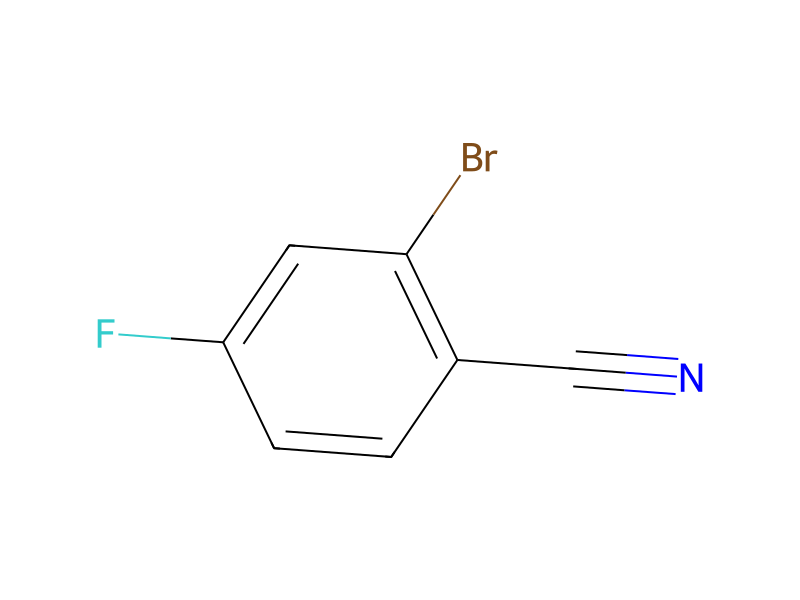



Conditions
- Temperature
- 100 °C
Procedure
Palladium acetate (II) (0.556 g, 2.5 mmol) is added to a degassed solution of 2-bromo-4-fluoro-benzonitrile (10 g, 50 mmol), 3-ethoxyacrylonitrile (10.3 mL, 100 mmol) and triethylamine (14 mL, 100 mmol) in toluene (75 mL). The reaction mixture is stirred in an oil bath at 100° C. for 1 day. The reaction mixture is cooled to RT, filtered through a pad of Celite, and the filter cake is rinsed with EtOAc. After evaporation of the solvent, the residue is purified using a Biotage column eluted with 0-50% EtOAc/hexanes (20 CV) to afford 8.77 g (94%) of 2-(1-cyano-2-ethoxy-vinyl)-4-fluoro-benzonitrile. LC/MS: RT=3.38 min, no ionization.
Workup
- temperatureThe reaction mixture is cooled to RT
- filtrationfiltered through a pad of Celite
- washthe filter cake is rinsed with EtOAc
- customAfter evaporation of the solvent
- customthe residue is purified
- washeluted with 0-50% EtOAc/hexanes (20 CV)
Sources & evidence
- ORD record
- ord-c056709694b64d90b717c34fba0d39a8
- Source dataset
- uspto-grants-2010_03
- Patent number
- US07678803B2
Reaction notes
Loading…