Hydrochloric Acid → HCID 11720582, compound
Reaction equation

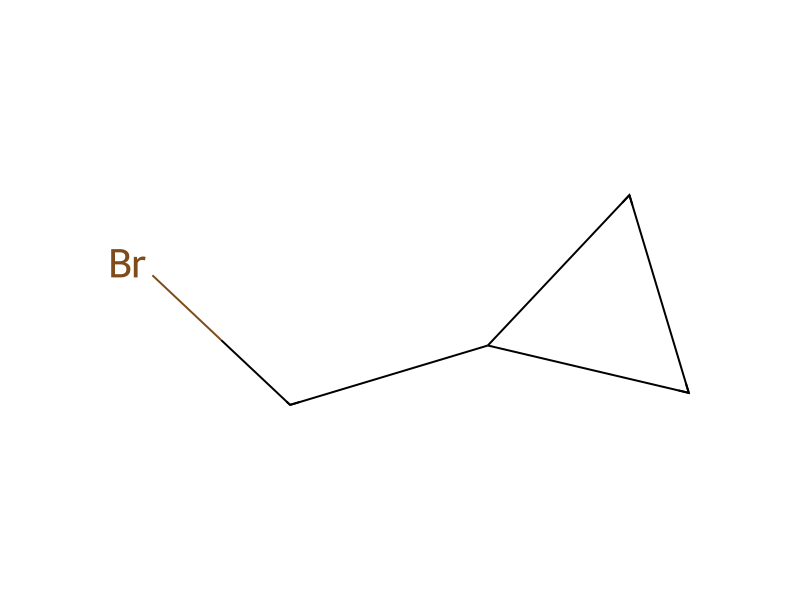
[C:1]([C:3]1[C:7]([NH:8][S:9]([C:12]([F:15])([F:14])[F:13])(=[O:11])=[O:10])=[C:6]([N:16]=CN(C)C)[N:5]([C:21]2[C:26]([Cl:27])=[CH:25][C:24]([C:28]([F:31])([F:30])[F:29])=[CH:23][C:22]=2[Cl:32])[N:4]=1)#[N:2].C(=O)([O-])[O-].[K+].[K+].[I-].[Na+].Br[CH2:42][CH:43]1[CH2:45][CH2:44]1.Cl>CC(C)=O.CO>[NH2:16][C:6]1[N:5]([C:21]2[C:22]([Cl:32])=[CH:23][C:24]([C:28]([F:31])([F:30])[F:29])=[CH:25][C:26]=2[Cl:27])[N:4]=[C:3]([C:1]#[N:2])[C:7]=1[N:8]([CH2:42][CH:43]1[CH2:45][CH2:44]1)[S:9]([C:12]([F:13])([F:15])[F:14])(=[O:11])=[O:10]Participants







Conditions
- Temperature
- 60 °C
Procedure
To a solution of N-(3-cyano-1-[2,6-dichloro-4-(trifluoromethyl)phenyl]-5-{[(dimethylamino)methylene]amino}-1H-pyrazol-4-yl)-1,1,1-trifluoromethanesulfonamide (250 mg, 0.48 mmol) in acetone (6 ml) was added potassium carbonate (100 mg, 0.72 mmol), a catalytic amount of sodium iodide and (bromomethyl)cyclopropane (69.5 μl, 0.72 mmol). The reaction mixture was then stirred at 60° C. overnight. The reaction mixture was concentrated under a stream of nitrogen and the residue was partitioned between dichloromethane (20 ml) and water (20 ml). The two layers were separated and the organic phase was washed with water, dried (Na2SO4) and concentrated in vacuo to give the protected compound. To a solution of the protected compound in methanol (5 ml) was added hydrochloric acid (4M, 3 ml) and the reaction mixture was heated at reflux. The reaction mixture was concentrated in vacuo and the residue was extracted with ethyl acetate (20 ml). The organic phase was washed with water (2×20 ml), dried (Na2SO4) and concentrated in vacuo. The crude product was dissolved in a mixture of acetonitrile (1 ml), dimethyl sulphoxide (2.4 ml) and water (0.6 ml) and purified by automated preparative liquid chromatography (Gilson system, 150 mm×30 mm Phenomonex LUNA C18(2) 10 μm column) using an acetonitrile:water gradient [60:40 to 95:5]. The appropriate fractions were concentrated in vacuo to give the titled compound (120 mg).
Workup
- concentrationThe reaction mixture was concentrated under a stream of nitrogen
- customthe residue was partitioned between dichloromethane (20 ml) and water (20 ml)
- customThe two layers were separated
- washthe organic phase was washed with water
- dry with materialdried (Na2SO4)
- concentrationconcentrated in vacuo
- customto give the protected compound
- temperaturethe reaction mixture was heated
- temperatureat reflux
- concentrationThe reaction mixture was concentrated in vacuo
- extractionthe residue was extracted with ethyl acetate (20 ml)
- washThe organic phase was washed with water (2×20 ml)
- dry with materialdried (Na2SO4)
- concentrationconcentrated in vacuo
- dissolutionThe crude product was dissolved in a mixture of acetonitrile (1 ml), dimethyl sulphoxide (2.4 ml) and water (0.6 ml)
- custompurified
- concentrationThe appropriate fractions were concentrated in vacuo
Sources & evidence
- ORD record
- ord-da8a010c4f0e4cd9b8bbda5c74b92dc3
- Source dataset
- uspto-grants-2010_03
- Patent number
- US07687533B2
Reaction notes
Loading…