Hydrochloric Acid → Isobutyl 2,5-diisobutoxybenzoate
Reaction equation

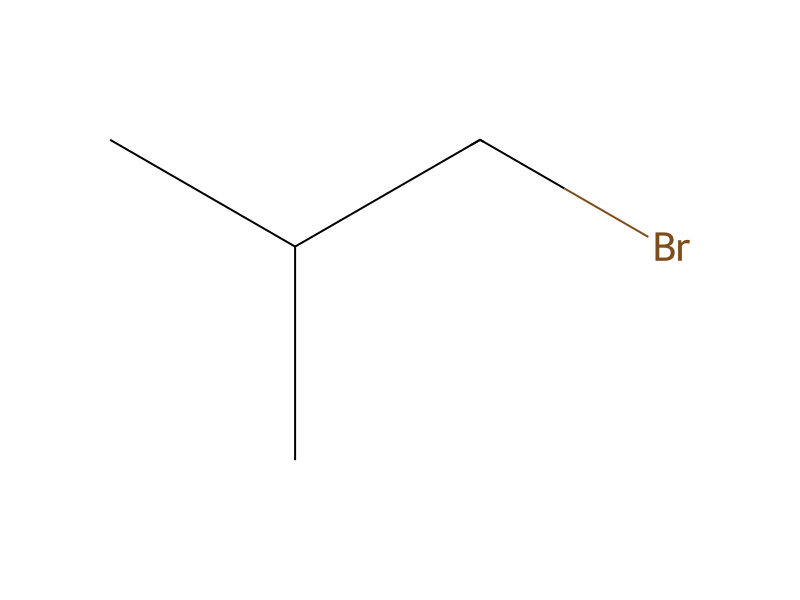
[OH:1][C:2]1[CH:10]=[CH:9][C:8]([OH:11])=[CH:7][C:3]=1[C:4]([OH:6])=[O:5].C(=O)([O-])[O-].[K+].[K+].[CH2:18](Br)[CH:19]([CH3:21])[CH3:20].Cl>CN(C)C=O.O.C(OCC)(=O)C>[CH2:18]([O:1][C:2]1[CH:10]=[CH:9][C:8]([O:11][CH2:2][CH:3]([CH3:7])[CH3:4])=[CH:7][C:3]=1[C:4]([O:6][CH2:18][CH:19]([CH3:21])[CH3:20])=[O:5])[CH:19]([CH3:21])[CH3:20]Participants







Conditions
- Temperature
- 110 °C
Procedure
In 200 ml of N,N-dimethylformamide are suspended 10 g of 2,5-dihydroxybenzoic acid, 148 g of potassium carbonate and 106 ml of isobutyl bromide. The mixture is stirred at 110° C. for 6 hours. The reaction mixture is added to a mixture of ethyl acetate and water, pH is adjusted to 2 with 6 mol/L hydrochloric acid, and the organic layer is separated. The organic layer is washed with water and saturated aqueous solution of sodium chloride successively and dried over anhydrous magnesium sulfate, and then the solvent is distilled off under reduced pressure. The residue thus obtained is purified by silica gel column chromatography (eluent; hexane:ethyl acetate=10:1) to obtain 18 g of isobutyl 2,5-diisobutoxybenzoate as a light yellow oily product.
Workup
- customthe organic layer is separated
- washThe organic layer is washed with water and saturated aqueous solution of sodium chloride successively
- dry with materialdried over anhydrous magnesium sulfate
- distillationthe solvent is distilled off under reduced pressure
- customThe residue thus obtained
- customis purified by silica gel column chromatography (eluent; hexane:ethyl acetate=10:1)
Sources & evidence
- ORD record
- ord-c26bb5fe7a1b4882b9bd548466166847
- Source dataset
- uspto-grants-2008_01
- Patent number
- US07314888B1
Reaction notes
Loading…