Indole → Methyl 1-methyl-1H-indole-3-carboxylate
Reaction equation

[NH:1]1[C:9]2[C:4](=[CH:5][CH:6]=[CH:7][CH:8]=2)[C:3](C(O)=O)=[CH:2]1.[C:13](=O)([O-])[O-].[K+].[K+].[C:19](=[O:24])(OC)[O:20][CH3:21].N1C2C(=CC=CC=2)C=C1>CN(C)C=O>[CH3:21][O:20][C:19]([C:3]1[C:4]2[C:9](=[CH:8][CH:7]=[CH:6][CH:5]=2)[N:1]([CH3:13])[CH:2]=1)=[O:24]Participants
Reactant 4
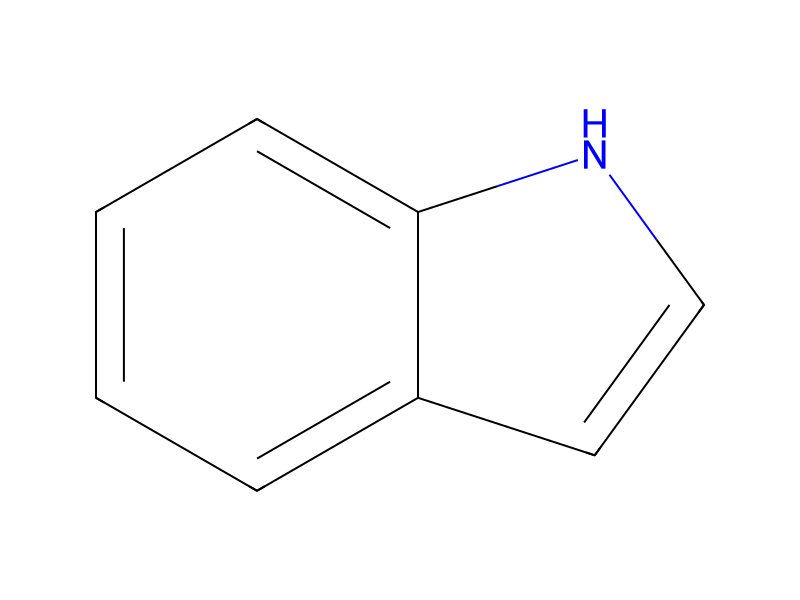

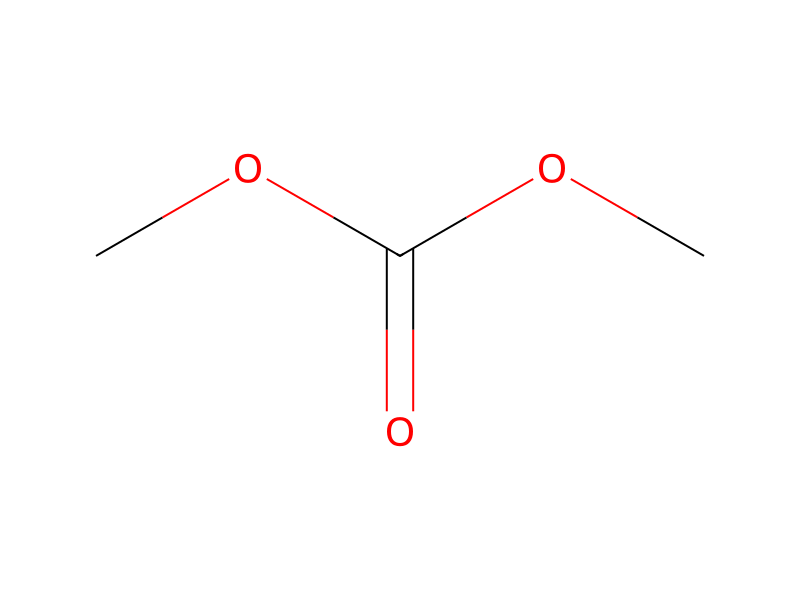

Product 1

Reagents, catalysts & solvents 1

Conditions
- Temperature
- 130 °C
Procedure
To a three-necked round bottom flask was charged 3-indolecarboxylic acid (2.5 g, 15.51 mmol), potassium carbonate (powder, 1.25 g), N,N-dimethylformamide (20 mL) and dimethyl carbonate (3.9 mL, 46.3 mmol). As the stirred mixture was heated to reflux (130° C.), the disappearance of starting indole was monitored by HPLC. After 5 h the reaction was complete, then the mixture was cooled to room temperature and was partitioned between water (50 mL) and tert-butyl methyl ether (100 mL). The separated organic layer was washed with water (2×50 mL) and the volatiles were evaporated under reduced pressure. Purification of the obtained crude by using column chromatography over silica gel furnished 1-methylindole-3-carboxylic acid methyl ester (50% yield) and the decarboxylated byproduct 1-methylindole (45% yield).
Workup
- temperatureAs the stirred mixture was heated
- temperaturethe mixture was cooled to room temperature
- customwas partitioned between water (50 mL) and tert-butyl methyl ether (100 mL)
- washThe separated organic layer was washed with water (2×50 mL)
- customthe volatiles were evaporated under reduced pressure
- customPurification of the
- customobtained crude
Sources & evidence
- ORD record
- ord-ac438d9ad964453f9f4cb786bac18bf6
- Source dataset
- uspto-grants-2001_12
- Patent number
- US06326501B1
Reaction notes
Loading…