Ethylene Glycol → 2-[(2-Naphthalenylmethyl)oxy]ethanol
Reaction equation

[CH2:1]([OH:4])[CH2:2][OH:3].[H-].[Na+].Br[CH2:8][C:9]1[CH:18]=[CH:17][C:16]2[C:11](=[CH:12][CH:13]=[CH:14][CH:15]=2)[CH:10]=1.O>C1COCC1.[N+](CCCC)(CCCC)(CCCC)CCCC.[I-].CCOC(C)=O>[CH:10]1[C:11]2[C:16](=[CH:15][CH:14]=[CH:13][CH:12]=2)[CH:17]=[CH:18][C:9]=1[CH2:8][O:3][CH2:2][CH2:1][OH:4]Participants
Reactant 4



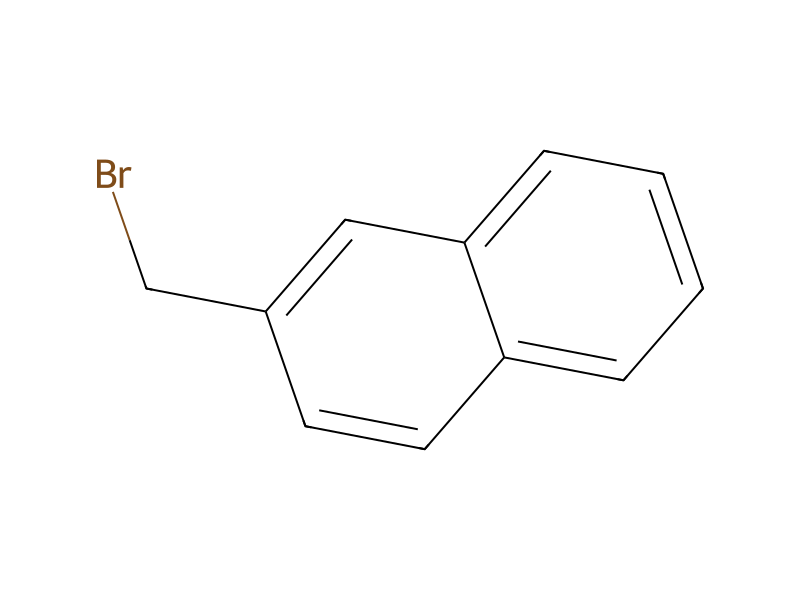
Product 1

Reagents, catalysts & solvents 3



Conditions
- Temperature
- 60 °C
Procedure
Ethylene glycol (0.084 mL, 1.5 mmol) was added to NaH (38 mg, 1.52 mmol, 95% in oil) in THF (3 mL). 2-(Bromomethyl)naphthalene (330 mg, 1.5 mmol) was added to the reaction, and the residual 2-(bromomethyl)naphthalene was transferred to the reaction tube with additional THF (1 mL). (Bu)4NI (55 mg, 0.15 mmol) was then added, and the reaction was heated at 60° C. for 18 h and then rt for 4 h. H2O (2 mL) and EtOAc (2 mL) were added, and the layers were separated via pipette. The aqueous layer was extracted with EtOAc (1×1 mL), and the combined organic layers were concentrated. The crude product was purified on a SPE cartridge (5 g silica) eluting with the following 10 mL fractions: 30% EtOAc/hexanes (fractions 1,2), 50% EtOAc/hexanes (fraction 3), and 75% EtOAc/hexanes (fraction 4) to give the title compound (101 mg, 33%). The product was characterized by 1H NMR (400 MHz) in CDCl3.
Workup
- customthe layers were separated via pipette
- extractionThe aqueous layer was extracted with EtOAc (1×1 mL)
- concentrationthe combined organic layers were concentrated
- customThe crude product was purified on a SPE cartridge (5 g silica)
- washeluting with the following 10 mL fractions
Sources & evidence
- ORD record
- ord-d72e8b4267e34f6abbf926de0fb17fe0
- Source dataset
- uspto-grants-2015_09
- Patent number
- US09144571B2
Reaction notes
Loading…