2,2'-Bipyridine → HCID 90308949, compound
Reaction equation

[CH:1]1(B(O)O)[CH2:3][CH2:2]1.C(=O)(O)[O-].[Na+].N1C=CC=CC=1C1C=CC=CN=1.[N+:24]([C:27]1[CH:35]=[CH:34][CH:33]=[C:32]2[C:28]=1[CH:29]=[CH:30][NH:31]2)([O-:26])=[O:25]>ClCCCl.C([O-])(=O)C.[Cu+2].C([O-])(=O)C>[CH:1]1([N:31]2[C:32]3[C:28](=[C:27]([N+:24]([O-:26])=[O:25])[CH:35]=[CH:34][CH:33]=3)[CH:29]=[CH:30]2)[CH2:3][CH2:2]1Participants
7



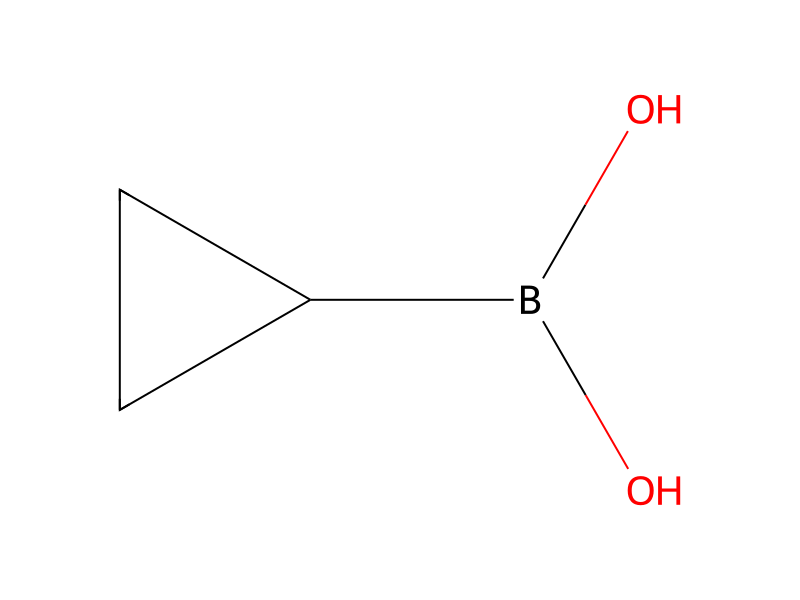



Procedure
Cyclopropyl boronic acid (1.0 g), sodium bicarbonate (0.99 g), copper acetate (II) (1.1 g), and 2,2′-bipyridine (0.92 g) were added to a solution of 4-nitro-1H-indole (0.96 g) in 1,2-dichloroethane (60 ml). The reaction solution was stirred at room temperature for 7 days, and then further stirred at 60° C. for 2 hours. The insolubles were filtrated through celite, and then the resultant was washed successively with water and a saturated saline solution. After drying over anhydrous sodium sulfate, the solvent was evaporated under vacuum. The resultant residue was purified by column chromatography on silica gel (developing solvent:hexane/ethyl acetate) to obtain 1-cyclopropyl-4-nitro-1H-indole as a yellow solid.
Workup
- stirringfurther stirred at 60° C. for 2 hours
- filtrationThe insolubles were filtrated through celite
- washthe resultant was washed successively with water
- dry with materialAfter drying over anhydrous sodium sulfate
- customthe solvent was evaporated under vacuum
- customThe resultant residue was purified by column chromatography on silica gel (developing solvent:hexane/ethyl acetate)
Sources & evidence
- ORD record
- ord-4e148fae70dd465e84a0759e97bef852
- Source dataset
- uspto-grants-2015_09
- Patent number
- US09145414B2
Reaction notes
Loading…