Isopropanol → Diisopropyl tartrate
Reaction equation

[C:1]([OH:10])(=[O:9])[C@@H:2]([C@H:4]([C:6]([OH:8])=[O:7])[OH:5])[OH:3].[CH:11](O)([CH3:13])[CH3:12].[CH3:15][C:16]1C=CC(S(O)(=O)=O)=C[CH:21]=1>C1C=CC=CC=1>[C:6]([C@@H:4]([C@H:2]([C:1]([O:10][CH:16]([CH3:21])[CH3:15])=[O:9])[OH:3])[OH:5])([O:8][CH:11]([CH3:13])[CH3:12])=[O:7]Participants
5
Reactant 3


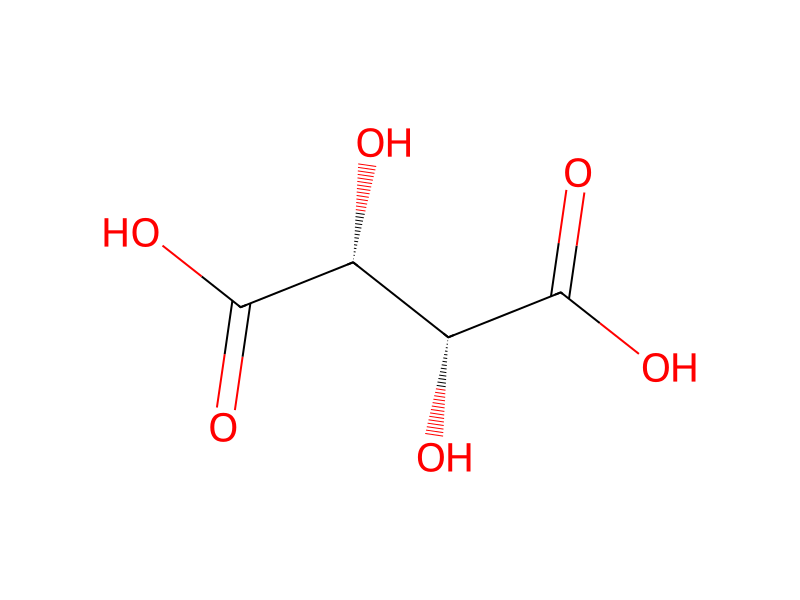
Product 1

Reagents, catalysts & solvents 1

Procedure
Diisopropyl (R,R)-tartrate was prepared according to the procedure described in J. Am. Chem. Soc., 1981, 6237. 400 g of (R,R)-tartaric acid, 400 mL of isopropanol and 5 g of p-TsOH were heated in refluxing benzene to afford, following distillation, 201 g (55%) of the above-titled compound: bp.=103-105° C. (2 torr) (lit. 152° C. (12 torr)).
Workup
- customto afford
- distillationdistillation, 201 g (55%) of the above-titled compound
- custombp.=103-105° C. (2 torr) (lit. 152° C. (12 torr))
Sources & evidence
- ORD record
- ord-3e40acb0fd9d4c72a1af656056f49efb
- Source dataset
- uspto-grants-2000_07
- Patent number
- US06090950
Reaction notes
Loading…