4-Bromophenol → 4-(4-Bromophenoxy)tetrahydro-2H-pyran
Reaction equation

C(OC(N=NC(OCC)=O)=O)C.[Br:13][C:14]1[CH:19]=[CH:18][C:17]([OH:20])=[CH:16][CH:15]=1.O[CH:22]1[CH2:27][CH2:26][O:25][CH2:24][CH2:23]1.C1(P(C2C=CC=CC=2)C2C=CC=CC=2)C=CC=CC=1>O1CCCC1>[Br:13][C:14]1[CH:19]=[CH:18][C:17]([O:20][CH:22]2[CH2:27][CH2:26][O:25][CH2:24][CH2:23]2)=[CH:16][CH:15]=1Participants
6





Procedure
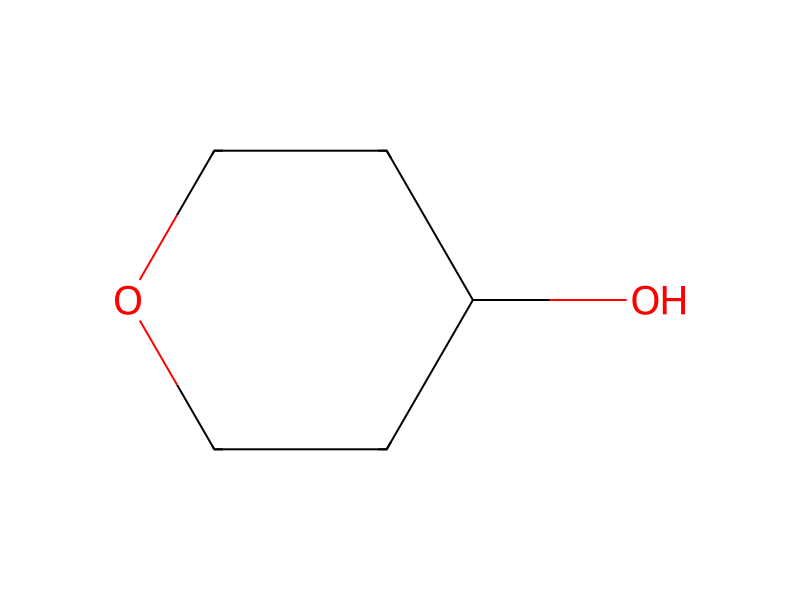
A mixture of 4.0 mL of diethyl-azodicarboxylate in 20 mL of dry tetrahydrofuran was added at 5° C. to a stirred solution of 3.5 g of 4-bromo-phenol, 2.4 mL of 4-hydroxy-tetrahydropyran and 6.6 g triphenylphosphine in 75 mL of tetrahydrofuran within 30 minutes. Stirring was continued at room temperature for 72 hours. The solvent was evaporated in vacuo and the residue chromatographed on silica gel (ethyl acetate) yielding 5.6 g of 4-(4-bromo-phenoxy)-tetrahydropyran as a white solid. M.p. 53-55° C., EI-MS: 256 (M+).
Workup
- customThe solvent was evaporated in vacuo
- customthe residue chromatographed on silica gel (ethyl acetate)
Sources & evidence
- ORD record
- ord-dd9374803bd346829601cf2a540c43c8
- Source dataset
- uspto-grants-2002_08
- Patent number
- US06432955B1
Reaction notes
Loading…