Hydrochloric Acid → HCID 18429490, compound
Reaction equation

[OH:1][N:2]1[C:6](=[O:7])[C:5]2=[CH:8][CH:9]=[CH:10][CH:11]=[C:4]2[C:3]1=[O:12].C(=O)([O-])[O-].[K+].[K+].[Cl:19][C:20]([Cl:24])=[CH:21][CH2:22]Cl.Cl>CN(C)C=O>[Cl:19][C:20]([Cl:24])=[CH:21][CH2:22][O:1][N:2]1[C:3](=[O:12])[C:4]2=[CH:11][CH:10]=[CH:9][CH:8]=[C:5]2[C:6]1=[O:7]Participants
6
Reactant 4

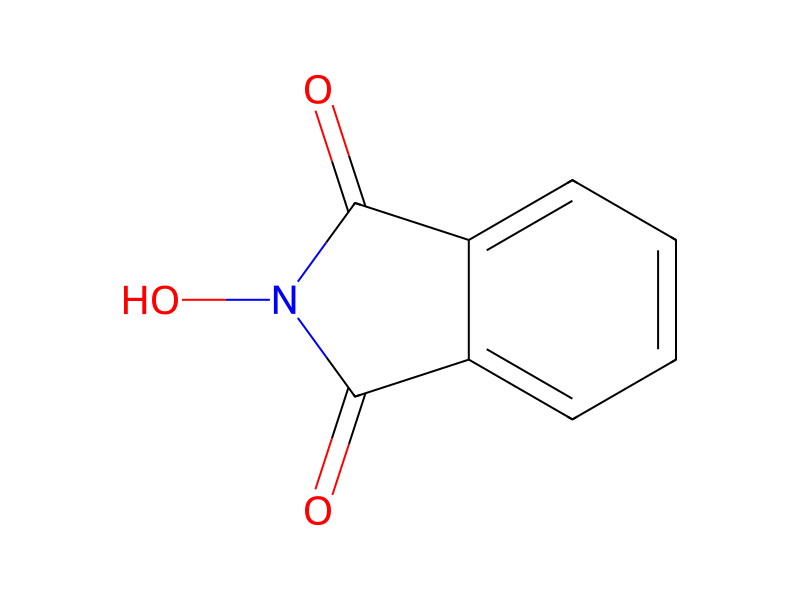


Product 1

Reagents, catalysts & solvents 1

Procedure
To a mixture of 44 g of N-hydroxyphthalimide, 39 g of potassium carbonate, and 400 ml of N,N-dimethylformamide was added 41 g of 1,1,3-trichloro-1-propene at room temperature. After stirring at room temperature for 12 hours, the reaction mixture was poured into diluted hydrochloric acid to cause the deposition of crystals. These crystals were collected by filtration, washed with water and hexane in this order, and dried under reduced pressure, which afforded 66 g (yield, 90%) of N-(3,3-dichloro-2-propenyloxy)phthalimide.
Workup
- filtrationThese crystals were collected by filtration
- washwashed with water and hexane in this order
- customdried under reduced pressure, which
Sources & evidence
- ORD record
- ord-8d150a80fa874ff883571f178a581d30
- Source dataset
- uspto-grants-2002_08
- Patent number
- US06437184B1
Reaction notes
Loading…