Potassium Phosphate, Tribasic → 1-Chloro-3,5-dicyclopropylbenzene
Reaction equation

[Cl:1][C:2]1[CH:7]=[C:6](Br)[CH:5]=[C:4](Br)[CH:3]=1.[CH:10]1(B(O)O)[CH2:12][CH2:11]1.[O-]P([O-])([O-])=O.[K+].[K+].[K+].C1(P([CH:37]2[CH2:42][CH2:41]CCC2)C2CCCCC2)CCCCC1>CC([O-])=O.CC([O-])=O.[Pd+2]>[Cl:1][C:2]1[CH:7]=[C:6]([CH:10]2[CH2:12][CH2:11]2)[CH:5]=[C:4]([CH:41]2[CH2:42][CH2:37]2)[CH:3]=1Participants
6

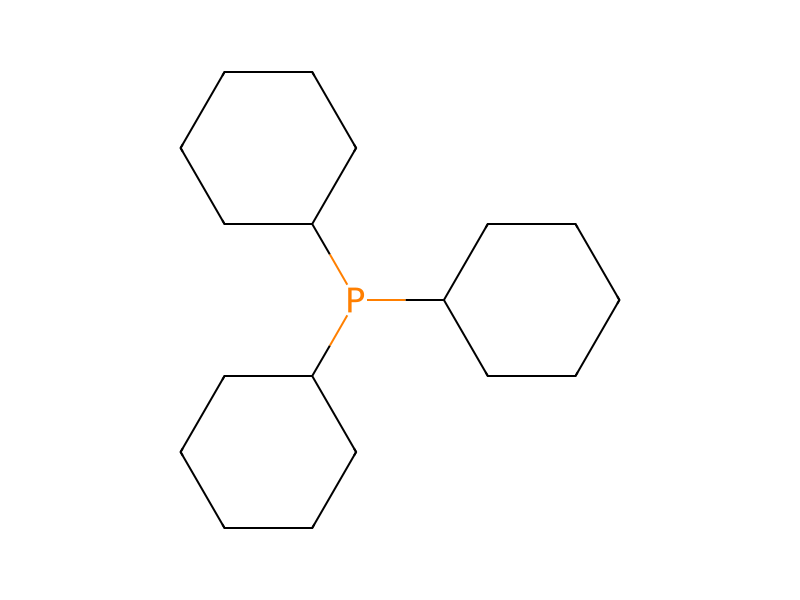

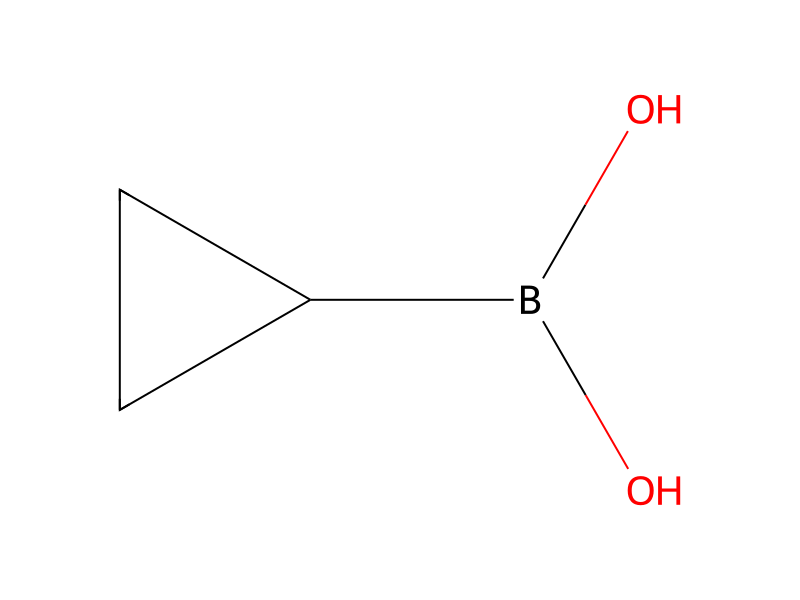


Procedure
1-Chloro-3,5-dibromobenzene (2.70 g, 10.0 mmol) and cyclopropylboronic acid (1.72 g, 20 mmol) were reacted using K3PO4 (14.9 g, 70 mmol), tricyclohexylphosphine (56 mg, 2.0 mmol), Pd(OAc)2 (288 mg, 1.0 mmol) as described above to give 1-chloro-3,5-dicyclopropyl-benzene (1.84 g, 96%) after purification by flash chromatography on silica gel (% EtOAc in hexane=2%˜10%).
Sources & evidence
- ORD record
- ord-4bbce9305f8c4579ae598837a7ca25ea
- Source dataset
- uspto-grants-2014_04
- Patent number
- US08691855B2
Reaction notes
Loading…