Potassium Carbonate → 2'-Methyl[biphenyl]-2-amine
Reaction equation

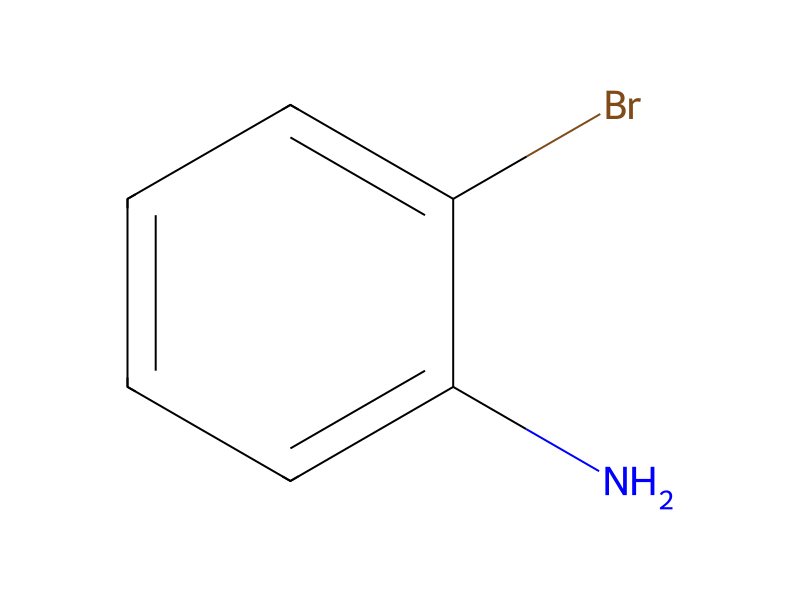
[CH3:1][C:2]1[CH:7]=[CH:6][CH:5]=[CH:4][C:3]=1B(O)O.Br[C:12]1[CH:18]=[CH:17][CH:16]=[CH:15][C:13]=1[NH2:14].C1(P(C2C=CC=CC=2)C2C=CC=CC=2)C=CC=CC=1.C(=O)([O-])[O-].[K+].[K+]>C([O-])(=O)C.[Pd+2].C([O-])(=O)C.COCCOC>[NH2:14][C:13]1[CH:15]=[CH:16][CH:17]=[CH:18][C:12]=1[C:3]1[CH:4]=[CH:5][CH:6]=[CH:7][C:2]=1[CH3:1]Participants






Procedure
Added together 2-methylphenyl boronic acid (24.7 g, 181 mmol), 2-bromo aniline (25.7 g, 151 mmol), palladium(II)acetate (0.85 g, 3.78 mmol), triphenylphosphine (4.0 g, 15.1 mmol), a 2 M solution of potassium carbonate (204 mL) and ethylene glycol dimethyl ether (223 mL) and heated the reaction mixture at reflux for 18 hours. After the reaction was cooled to room temperature, the aqueous phase was separated from the organic phase. The aqueous phase was extracted with ethyl acetate and the organic extractions were combined, dried over magnesium sulfate and filtered. The crude product was purified by silica gel column chromatography using 10% ethyl acetate in hexanes as the eluants. The pure fractions were collected, combined and concentrated to give 2-amino-2′-methyl-biphenyl (23.5 g, 84.8% yield) whose structure was confirmed by GCMS and NMR.
Workup
- temperatureat reflux for 18 hours
- customthe aqueous phase was separated from the organic phase
- extractionThe aqueous phase was extracted with ethyl acetate
- extractionthe organic extractions
- dry with materialdried over magnesium sulfate
- filtrationfiltered
- customThe crude product was purified by silica gel column chromatography
- customThe pure fractions were collected
- concentrationconcentrated
Sources & evidence
- ORD record
- ord-c6e3ccd98a774d079a62d9615e644d44
- Source dataset
- uspto-grants-2014_04
- Patent number
- US08691988B2
Reaction notes
Loading…