Hydrochloric Acid → HCID 66751041, compound
Reaction equation

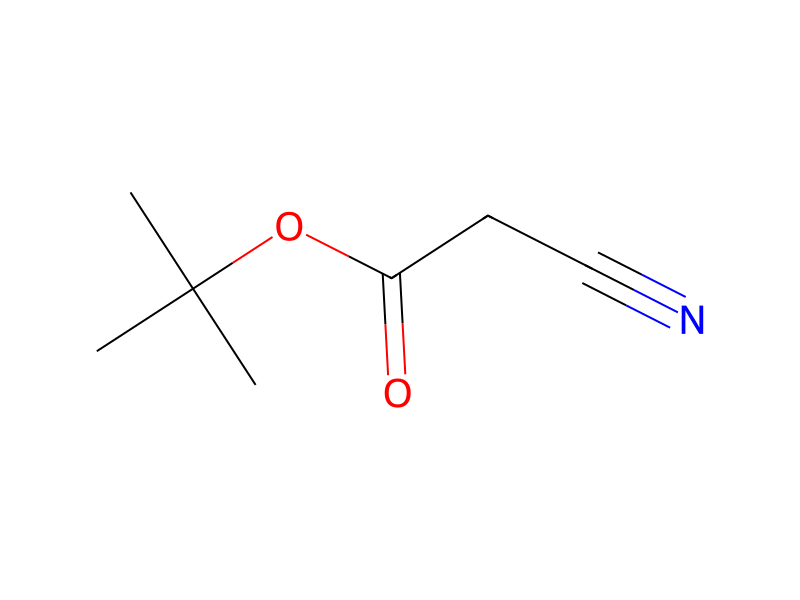
Br[C:2]1[C:7]2[CH:8]=[CH:9][S:10][C:6]=2[CH:5]=[CH:4][CH:3]=1.CC(C)([O-])C.[K+].[C:17]([CH2:19][C:20]([O:22][C:23]([CH3:26])([CH3:25])[CH3:24])=[O:21])#[N:18].Cl>Cl[Pd](Cl)([P](C1C=CC=CC=1)(C1C=CC=CC=1)C1C=CC=CC=1)[P](C1C=CC=CC=1)(C1C=CC=CC=1)C1C=CC=CC=1.C1(P(C2C=CC=CC=2)C2C=CC=CC=2)C=CC=CC=1.C(OCC)(=O)C.O.COCCOC>[S:10]1[C:6]2[CH:5]=[CH:4][CH:3]=[C:2]([CH:19]([C:17]#[N:18])[C:20]([O:22][C:23]([CH3:26])([CH3:25])[CH3:24])=[O:21])[C:7]=2[CH:8]=[CH:9]1Participants
Reactant 4



Product 1

Reagents, catalysts & solvents 5





Procedure
To 1,2-dimethoxyethane (3 mL) solution of 0.30 g of 4-bromobenzothiophene were added 0.33 g of potassium tert-butoxide, 0.21 g of tert-butyl cyanoacetate, 0.01 g of dichlorobis(triphenylphosphine)palladium(II) and 0.01 g of triphenylphosphine, which was then refluxed for 40 minutes. Thereto were added 0.33 g of potassium tert-butoxide, 0.01 g of dichlorobis(triphenylphosphine)palladium(II) and 0.01 g of triphenylphosphine, which was then refluxed for 30 minutes. The reaction mixture was added to a mixed solution of water and ethyl acetate, and the pH was adjusted to 1 with 6 mol/L hydrochloric acid. The organic layer was separated, and dried over anhydrous magnesium sulfate, followed by distilling off the solvent under reduced pressure. The resultant residue was purified using silica gel column chromatography (eluent; hexane:ethyl acetate=5:1) to provide 0.26 g of tert-butyl 2-(1-benzothiophen-4-yl)-2-cyanoacetate as pale brown oily form.
Workup
- temperaturewas then refluxed for 40 minutes
- temperaturewas then refluxed for 30 minutes
- customThe organic layer was separated
- dry with materialdried over anhydrous magnesium sulfate
- distillationby distilling off the solvent under reduced pressure
- customThe resultant residue was purified
Sources & evidence
- ORD record
- ord-8981a7372d6a40ef8ff2b40e0316e23f
- Source dataset
- uspto-grants-2012_09
- Patent number
- US08273902B2
Reaction notes
Loading…