Benzoic Acid → 5H-Dibenzo[a,d]cyclohepten-5-one
Reaction equation

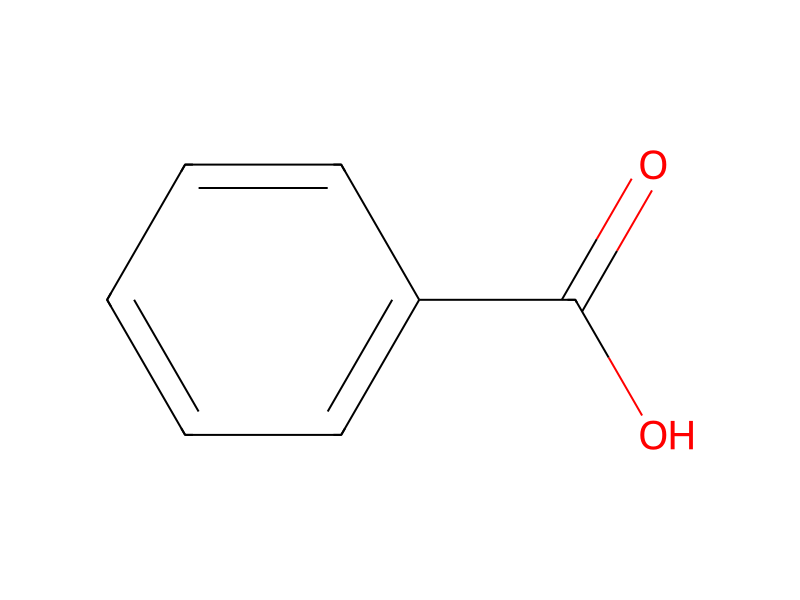
[CH2:1]1[C:16]2[C:11](=[CH:12][CH:13]=[CH:14][CH:15]=2)[C:9](=[O:10])[C:8]2[C:3](=[CH:4][CH:5]=[CH:6][CH:7]=2)[CH2:2]1.C(O)(=O)C1C=CC=CC=1.S(Cl)(Cl)=O.[Al+3].[Cl-].[Cl-].[Cl-].C1C(=O)N(Br)C(=O)C1.CC(N=NC(C#N)(C)C)(C#N)C.C(OOC(=O)C1C=CC=CC=1)(=O)C1C=CC=CC=1.[Br-]>C(Cl)Cl.C(N(CC)CC)C.C(Cl)(Cl)(Cl)Cl>[CH:5]1[CH:4]=[C:3]2[CH:2]=[CH:1][C:16]3[C:11]([C:9](=[O:10])[C:8]2=[CH:7][CH:6]=1)=[CH:12][CH:13]=[CH:14][CH:15]=3Participants
Reactant 8







Product 1

Reagents, catalysts & solvents 3



Procedure
The general procedure for the synthesis of 4"-aryl-substituted 8,9-dicarboxydibenzo[2,3:5,6]bicyclo[5.2.0]nonan-4-ones is illustrated in scheme I. Bromination of o-phenethylbenzoic acid in sulfur dioxide in the presence of TFA provides the desired product 2-(p-bromophenethyl)-benzoic acid (Ib). Cyclization to the desired dibenzosuberone Ic can be accomplished by heating benzoic acid derivative Ib in neat polyphosphoric acid or, alternatively the acid chloride, prepared using thionyl chloride, can be treated with AlCl3 in CH2Cl2. Treatment of Ic with NBS and AIBN or benzoylperoxide in refluxing CCl4 followed by elimination of the newly added bromide with triethylamine affords the desired dibenzosuberenone derivative Id. Photolysis of Id with an excess of maleic anhydride in toluene in a Rayonet reactor irradiating with 300 nanometer tubes or with a Hanovia medium pressure Hg lamp with a pyrex filter provides, after hydrolysis with NaOH and purification, the desired diacid derivative Ie. Further elaboration of the 4"-position can be carded out by coupling of Ie with a variety of aryl boronic acid derivatives and tin reagents. ##STR15##
Sources & evidence
- ORD record
- ord-a27116fa8eca464ca23c63a048b95339
- Source dataset
- uspto-grants-1996_02
- Patent number
- US05492917
Reaction notes
Loading…