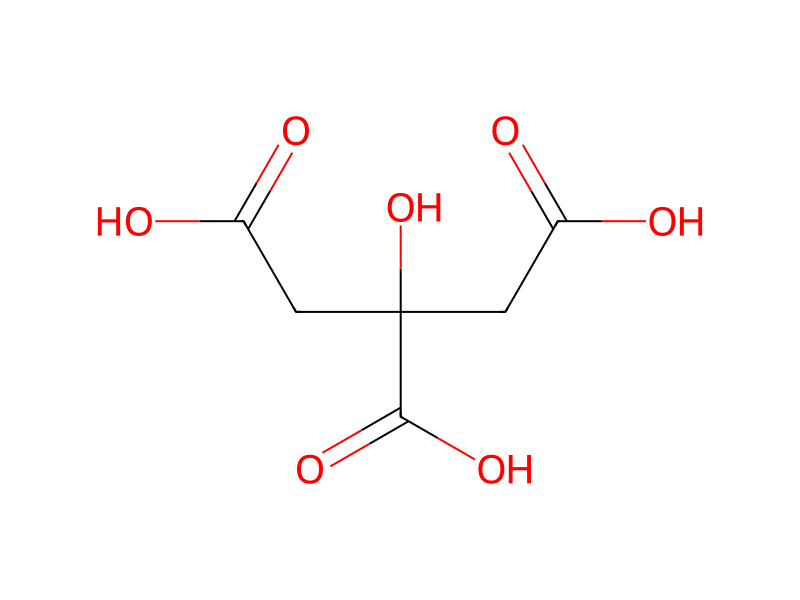
Citric Acid → HCID 86684899, compound
Reaction equation

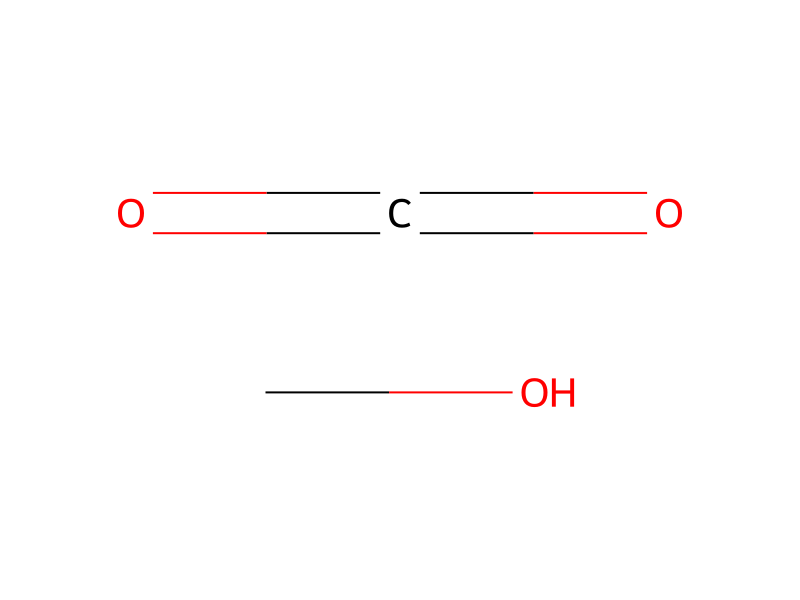
[F:1][C:2]([C:5]1([C:8]([OH:10])=O)[CH2:7][CH2:6]1)([F:4])[F:3].C(Cl)(=O)C(Cl)=O.C(=O)=O.CO.CS([O-])(=O)=O.[O:27]=[C:28]1[C@@H:33]2[CH2:34][C@@H:30]([CH2:31][NH2+:32]2)[O:29]1.C(O)(=O)CC(CC(O)=O)(C(O)=O)O>C1(C)C=CC=CC=1.CN(C)C=O.C(N(CC)CC)C.O1CCCC1>[F:1][C:2]([F:4])([F:3])[C:5]1([C:8]([N:32]2[CH2:31][C@@H:30]3[CH2:34][C@H:33]2[C:28](=[O:27])[O:29]3)=[O:10])[CH2:7][CH2:6]1Participants
Reactant 5



Product 1

Reagents, catalysts & solvents 4




Conditions
- Temperature
- 2 °C
Procedure
Trifluoromethyl-cyclopropanecarboxylic acid (167.0 g, 1084 mmol) was suspended in toluene (500 mL) and then dimethylformamide (3.6 mL, 47 mmol) was added. The mixture was cooled to 2° C. (ice bath) and a solution of oxalyl chloride (90 mL, 1037 mmol) in toluene (167 mL) was added dropwise (within 25 min). The mixture was then stirred for additional 30 min, followed by 4 h at room temperature. Subsequently, it was cooled to 0° C. again (dry ice/methanol bath) and (1S,4S)-3-oxo-2-oxa-5-azonia-bicyclo[2.2.1]heptane methanesulfonate (200 g, 956 mmol), tetrahydrofuran (330 mL) and triethylamine (500 mL, 3.59 mol) were slowly added, keeping the reaction temperature below 5° C. Especially after addition of 50% of triethylamine, the reaction becomes strongly exothermic and efficient cooling is essential. The mixture was stirred for 20 h at room temperature, before it was poured onto an aqueous citric acid solution (10% in water, 1.6 L) and the phases were separated. The aqueous phase was extracted with ethyl acetate (3×500 mL). The combined organic extracts were washed with brine (500 mL), dried over sodium sulfate, and concentrated in vacuo. The crude product (245 g, brown oil) was dissolved in dichloromethane (330 mL) before ethyl acetate (130 mL) and heptane (660 mL) were added and dichloromethane was carefully distilled off in vacuo. The product started to crystallize. The suspension was cooled to 2° C. (ice bath) and stirred for 1 h, before it was filtered. The precipitate was washed with ethyl acetate/heptane 1:9 (v/v, 300 mL) and dried in vacuo to afford the title compound as a light brown powder (219 g, 92%). 1H NMR (CDCl3, 400 MHz): δ 1.17-1.25 (m, 1H), 1.30 (dd, J=5.3 Hz, 8.3 Hz, 1H), 1.37-1.46 (m, 2H), 2.13 and 2.37 (AB, JAB=10.7 Hz, each 1H), 3.63 and 3.73 (AB, JAB=12.1 Hz, each 1H), 4.99 (s, 1H), 5.21 (s, 1H).
Workup
- waitfollowed by 4 h at room temperature
- additionwere slowly added
- customthe reaction temperature below 5° C
- temperatureefficient cooling
- stirringThe mixture was stirred for 20 h at room temperature, before it
- customthe phases were separated
- extractionThe aqueous phase was extracted with ethyl acetate (3×500 mL)
- washThe combined organic extracts were washed with brine (500 mL)
- dry with materialdried over sodium sulfate
- concentrationconcentrated in vacuo
- dissolutionThe crude product (245 g, brown oil) was dissolved in dichloromethane (330 mL) before ethyl acetate (130 mL) and heptane (660 mL)
- additionwere added
- distillationdichloromethane was carefully distilled off in vacuo
- customto crystallize
- temperatureThe suspension was cooled to 2° C. (ice bath)
- stirringstirred for 1 h, before it
- filtrationwas filtered
- washThe precipitate was washed with ethyl acetate/heptane 1:9 (v/v, 300 mL)
- customdried in vacuo
Sources & evidence
- ORD record
- ord-7ca04e1364c84ddd8173296f4e7fe1c4
- Source dataset
- uspto-grants-2014_08
- Patent number
- US08796471B2
Reaction notes
Loading…