Hydrochloric Acid → 4-Hydroxybenzaldehyde
Reaction equation

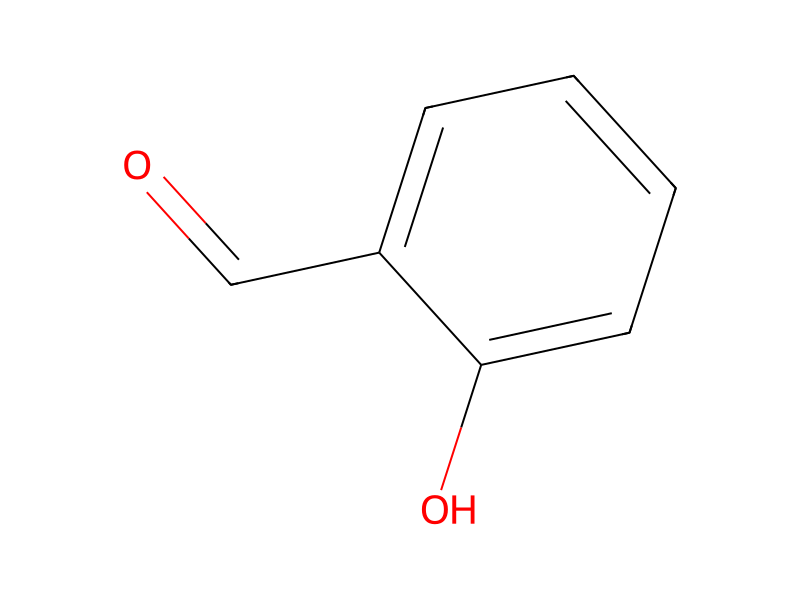
[C:1]1([O-:7])[CH:6]=[CH:5][CH:4]=[CH:3][CH:2]=1.[Na+].[OH-].[Na+].C1C=CC=CC=1.[OH-].[Na+].Cl.[C:20]1([OH:26])[CH:25]=[CH:24][CH:23]=[CH:22][CH:21]=1>C(C(C)=O)C(C)C.C(OCC)(=O)C.C(Cl)(Cl)Cl.C1C=CC=CC=1>[CH:20](=[O:26])[C:2]1[C:1](=[CH:6][CH:5]=[CH:4][CH:3]=1)[OH:7].[OH:26][C:20]1[CH:25]=[CH:24][C:23]([CH:1]=[O:7])=[CH:22][CH:21]=1Participants
Reactant 5



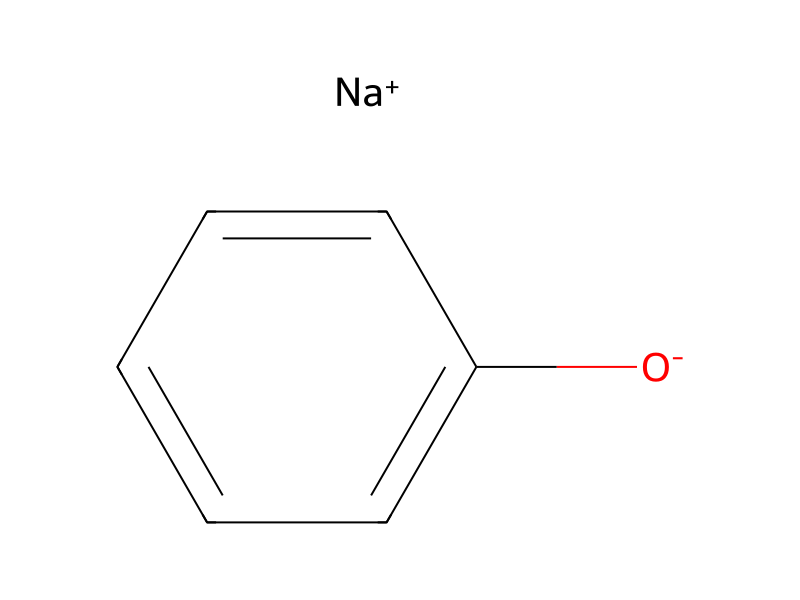

Product 2

Reagents, catalysts & solvents 4




Procedure
A three-necked flask equipped with a condenser and a stirrer was charged with 3.0 g (0.0259 mol) of sodium phenolate and 20.66 g of an anhydrous sodium hydroxide/benzene slurry [sodium hydroxide 5.16 g (0.129 mol)/benzene 15.5 g], each of which was individually prepared in advance, and 0.15 g (about 0.00014 mol) of Tween 80. The mixture was heated to 60° to 65° C. with stirring. When the temperature of the reaction system became constant, 18.5 g (0.155 mol) of chloroform charged in the side inlet tube was carefully added dropwise to the stirred mixture over 30 minutes to 1 hour. After the completion of dropwise addition, the reaction temperature was elevated to 75° to 80° C., followed by stirring for an additional about 3 hours. The initiation of the reaction could be visually observed by the change of color of the emulsion to yellowish brown as the dropwise addition of chloroform initiated. After the completion of reaction, the reaction mixture was cooled to room temperature (i.e., about 15° to 30° C.), and 10 ml of ethyl acetate (or methyl isobutyl ketone) was added thereto. Thereafter, concentrated hydrochloric acid (12 wt%) in an amount of 2 to 3 times the stoichiometric amount was added to the reaction mixture under cooling to 0° to 5° C., and the resulting mixture was stirred to adjust the pH of the aqueous layer to 1 to 2. After the separation of the ethyl acetate layer, the aqueous layer was thoroughly extracted twice with ethyl acetate (10 ml×2). These extracts were collected together, and then subjected to quantitative analysis by gas chromatography. The result it was found to be a conversion based on sodium phenolate used of the phenol of 95.7% and a yield based on phenol consumed of hydroxybenzaldehydes (salicylaldehyde plus p-hydroxybenzaldehyde) of 62.8%, respectively. The proportion of salicylaldehyde to p-hydroxybenzaldehyde formed was 7.8:1.
Workup
- customA three-necked flask equipped with a condenser and a stirrer
- temperatureThe mixture was heated to 60° to 65° C.
- additionwas carefully added dropwise to the stirred mixture over 30 minutes to 1 hour
- additionAfter the completion of dropwise addition
- customwas elevated to 75° to 80° C.
- stirringby stirring for an additional about 3 hours
- customThe initiation of the reaction
- customAfter the completion of reaction
- additionwas added
- temperatureunder cooling to 0° to 5° C.
- stirringthe resulting mixture was stirred
- customAfter the separation of the ethyl acetate layer
- extractionthe aqueous layer was thoroughly extracted twice with ethyl acetate (10 ml×2)
- customThese extracts were collected together
- customThe result it
- customconsumed of hydroxybenzaldehydes (salicylaldehyde plus p-hydroxybenzaldehyde) of 62.8%
Sources & evidence
- ORD record
- ord-3116be34260e404eb2efd874fa78e019
- Source dataset
- uspto-grants-1984_09
- Patent number
- US04469894
Reaction notes
Loading…