Benzaldehyde → 1,3-Dioxane-4,6-dione, 5-(1H-indol-3-ylphenylmethyl)-2,2-dimethyl-
Reaction equation

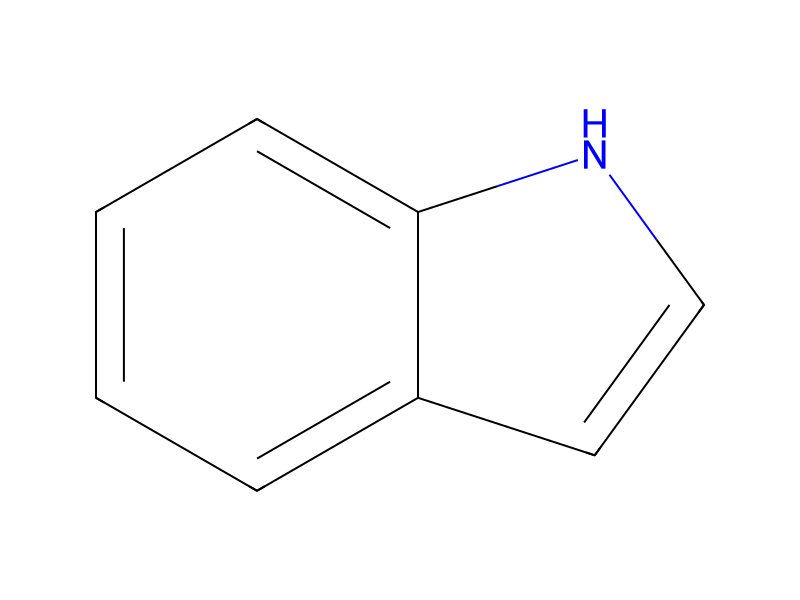
[NH:1]1[C:9]2[C:4](=[CH:5][CH:6]=[CH:7][CH:8]=2)[CH:3]=[CH:2]1.[CH3:10][C:11]1([CH3:19])[O:16][C:15](=[O:17])[CH2:14][C:13](=[O:18])[O:12]1.[CH:20](=O)[C:21]1[CH:26]=[CH:25][CH:24]=[CH:23][CH:22]=1.N1CCCC1C(O)=O>C(#N)C>[NH:1]1[C:9]2[C:4](=[CH:5][CH:6]=[CH:7][CH:8]=2)[C:3]([CH:20]([C:21]2[CH:26]=[CH:25][CH:24]=[CH:23][CH:22]=2)[CH:14]2[C:15](=[O:17])[O:16][C:11]([CH3:19])([CH3:10])[O:12][C:13]2=[O:18])=[CH:2]1Participants





Procedure
Using the procedure described in Tetrahedron 56 (2000) 5479-5492, indole (5.0 g, 42.7 mmole) and 2,2-dimethyl-[1,3]dioxane-4,6-dione (6.15 g, 42.7 mmole) were mixed in acetonitrile (50 ml). To this mixture was added benzaldehyde (9.06 g, 85.4 mmole) and d,l-proline (0.25 g). The mixture was stirred at room temperature for 18 hours after which time much of the reaction mixture had turned solid. The solvent was evaporated at reduced pressure and the residue was triturated with ether and filtered. The filter cake was washed with several portions of ether to afford pure 5-[(1H-indol-3-yl)-phenyl-methyl]-2,2-dimethyl-[1,3]dioxane-4,6-dione, 11.83 g, as a light pink solid (MS (M−H)=348) which was used without further purification in the next step.
Workup
- customThe solvent was evaporated at reduced pressure
- customthe residue was triturated with ether
- filtrationfiltered
- washThe filter cake was washed with several portions of ether
Sources & evidence
- ORD record
- ord-c9aa7804b66047968f54e9a4d217021e
- Source dataset
- uspto-grants-2011_01
- Patent number
- US07863305B2
Reaction notes
Loading…