Water → HCID 25052168, compound
Reaction equation

[NH2:1][C:2]1[CH:7]=[CH:6][C:5]([C:8]2[N:9]([CH2:22][CH3:23])[C:10]3[C:15]([C:16]=2[C:17]#[N:18])=[CH:14][CH:13]=[C:12]([O:19][CH2:20][CH3:21])[CH:11]=3)=[CH:4][CH:3]=1.CCN(CC)CC.[CH:31]1([C:34](Cl)=[O:35])[CH2:33][CH2:32]1.O>C1COCC1.C(OCC)(=O)C>[C:17]([C:16]1[C:15]2[C:10](=[CH:11][C:12]([O:19][CH2:20][CH3:21])=[CH:13][CH:14]=2)[N:9]([CH2:22][CH3:23])[C:8]=1[C:5]1[CH:4]=[CH:3][C:2]([NH:1][C:34]([CH:31]2[CH2:33][CH2:32]2)=[O:35])=[CH:7][CH:6]=1)#[N:18]Participants
7
Reactant 4


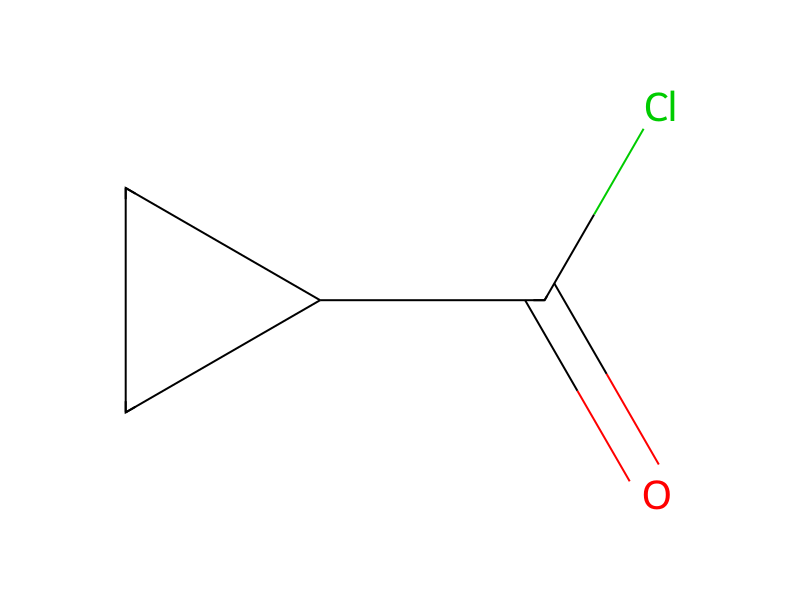

Product 1

Reagents, catalysts & solvents 2


Procedure
To a solution of compound 2-(4-aminophenyl)-6-ethoxy-1-ethyl-1H-indole-3-carbonitrile (3.66 g, 12 mmol), prepared as described in example 1Gb, in 20 mL of THF is added Et3N (3.37 ml) and cyclopropanecarbonyl chloride (1.6 mL, 18 mmol). The mixture is stirred for 3 h at room temperature. Then water and ethyl acetate are added to the reaction mixture. The organic layer is separated, washed with brine (2×), dried over anhydrous Na2SO4, filtered and concentrated. The residue is recrystallized with ethyl acetate and hexane to yield 99% of cyclopropanecarboxylic acid [4-(3-cyano-6-ethoxy-1-ethyl-1H-indol-2-yl)-phenyl]-amide.
Workup
- customThe organic layer is separated
- washwashed with brine (2×)
- dry with materialdried over anhydrous Na2SO4
- filtrationfiltered
- concentrationconcentrated
- customThe residue is recrystallized with ethyl acetate and hexane
Sources & evidence
- ORD record
- ord-0c9714b1e9e64178a87f9ffc70f7ea08
- Source dataset
- uspto-grants-2011_01
- Patent number
- US07868037B2
Reaction notes
Loading…