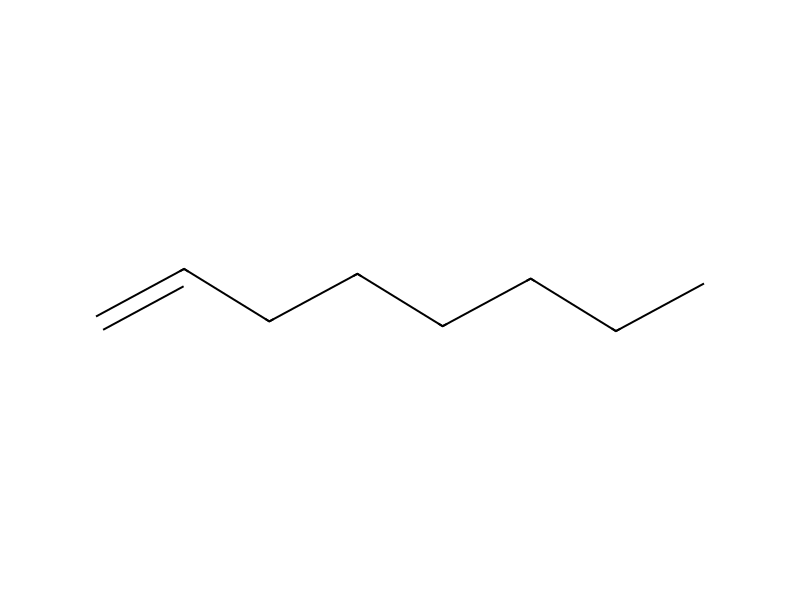
1-Octene → Ethylene
Reaction equation

[Sn](Cl)(Cl)(Cl)Cl.[Sn](Br)(Br)(Br)Br.[Sn](I)(I)(I)I.[Cl-].[Ce+3].[Cl-].[Cl-].[Cl-].[Yb+3].[Cl-].[Cl-].[Sb](Cl)(Cl)Cl.[Cl-].[Cl-].[Ga+2].[Cl-].[Cl-].[Cl-].[Al+3].[CH2:35]=[CH:36][CH2:37][CH2:38][CH2:39][CH2:40][CH2:41][CH3:42]>[Fe](Cl)Cl.[Fe](Br)Br.[Fe](Cl)(Cl)Cl>[CH3:35][CH2:36][CH2:37][CH2:38][CH2:39][CH2:40][CH:41]=[CH:42][CH2:35][CH2:36][CH2:37][CH2:38][CH2:39][CH3:40].[CH2:35]=[CH2:36]Participants
Reactant 9





Product 2

Reagents, catalysts & solvents 3

Procedure
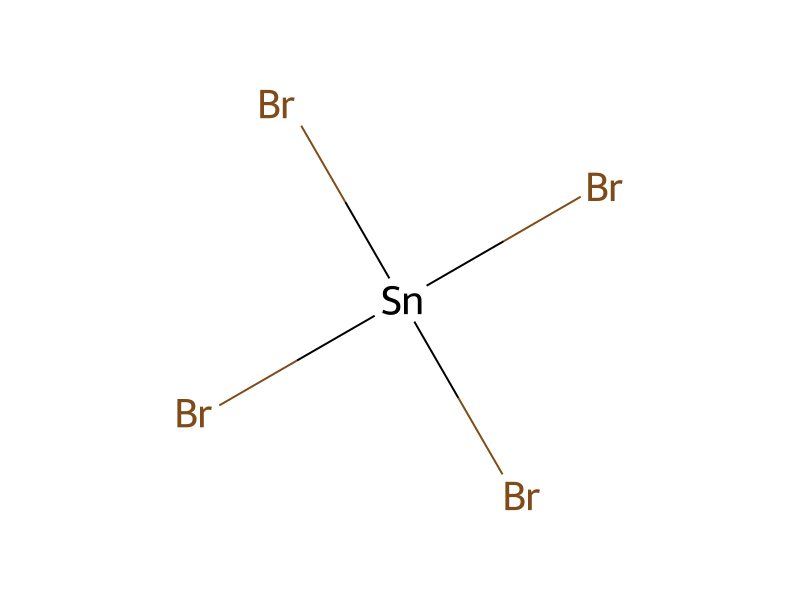
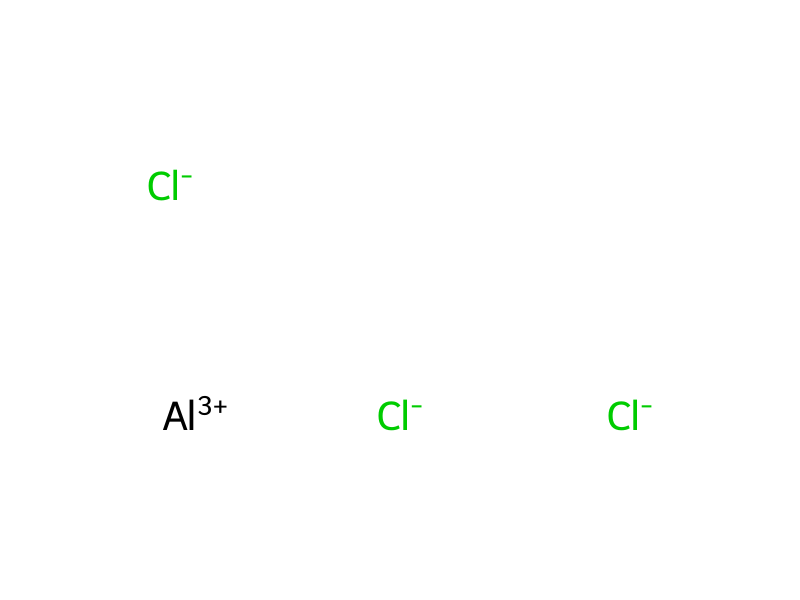
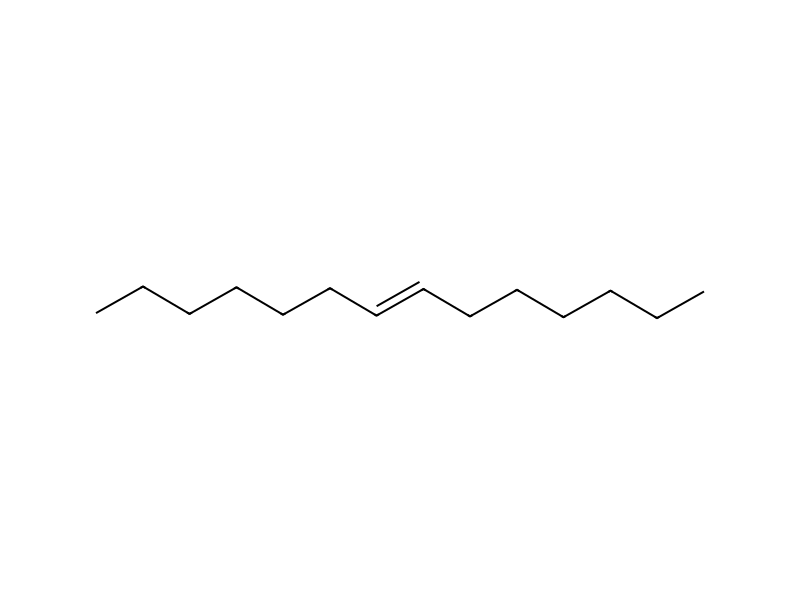
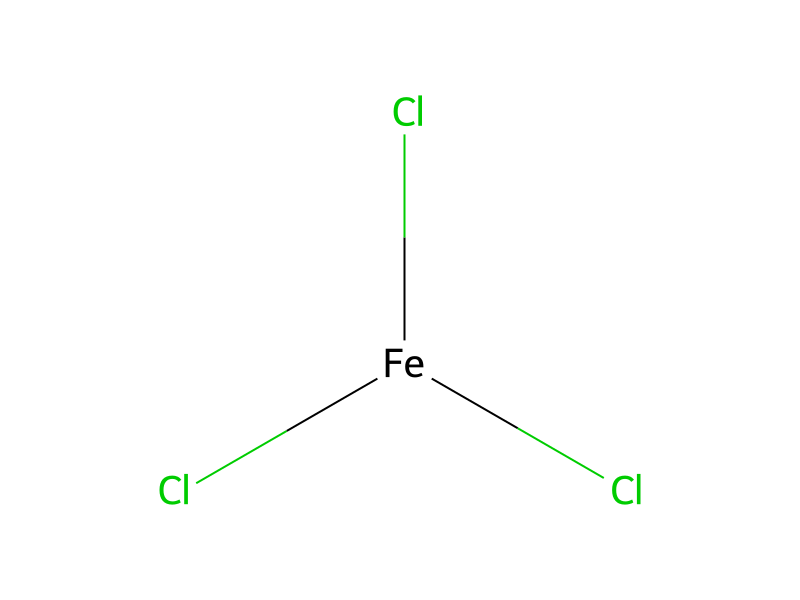
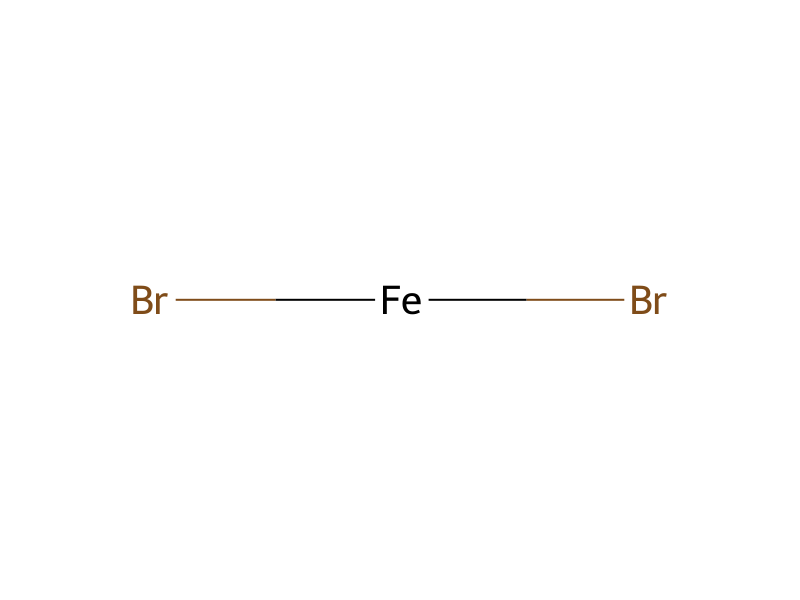
The increase in the activity of metathesis catalysts as a result of the addition of salts was likewise examined in Inorganica Chimica Acta 359 (2006) 2910-2917. The influences of tin chloride, tin bromide, tin iodide, iron(II) chloride, iron(II) bromide, iron(III) chloride, cerium(III) chloride*7H2O, ytterbium(III) chloride, antimony trichloride, gallium dichloride and aluminium trichloride on the self-metathesis of 1-octene to form 7-tetradecene and ethylene were studied. When the Grubbs-I catalyst was used, a significant improvement in the to conversion of 7-tetradecene was observed on addition of tin chloride or tin bromide (Table 1). Without the addition of a salt, a conversion of 25.8% was achieved, when SnCl2*2H2O was added the conversion rose to 68.5% and when tin bromide was added it rose to 71.9%. Addition of tin iodide significantly reduced the conversion from 25.8% to 4.1%. However, in combination with the Grubbs II catalyst, all three tin salts lead to only slight improvements in conversion from 76.3% (reference experiment without addition) to 78.1% (SnCl2), to 79.5% (SnBr2) and 77.6% (SnI2). When the “Phobcats” [Ru(phobCy)2Cl2 (=ChPh)] is used, the conversion is reduced from 87.9% to 80.8% by addition of SuCl2, to 81.6% by addition of SnBr2 and to 73.9% by addition of SnI2. When iron(II) salts are used in combination with the Grubbs I catalyst, the increase in conversion when iron(II) bromide is used is higher than when iron(II) chloride is used. It may be noted that regardless of the type of catalyst used, the conversion is always higher when bromides are used than when the corresponding chlorides are used.
Workup
- temperatureThe increase in the activity of metathesis catalysts as
- customa result of the addition of salts
Sources & evidence
- ORD record
- ord-698af53c58384dda882f629f3522420e
- Source dataset
- uspto-grants-2011_01
- Patent number
- US07875683B2
Reaction notes
Loading…