Isopropanol → Urea, (4-methoxyphenyl)-
Reaction equation

C([N:5](CCCC)CCCC)CCC.[CH3:14][O:15][C:16]1[CH:21]=[CH:20][C:19]([N:22]=[C:23]=[O:24])=[CH:18][CH:17]=1.C(O)(C)C.C([O-])(=O)C.[NH4+]>O.CO.CN(C=O)C>[CH3:14][O:15][C:16]1[CH:17]=[CH:18][C:19]([NH:22][C:23]([NH2:5])=[O:24])=[CH:20][CH:21]=1Participants







Procedure
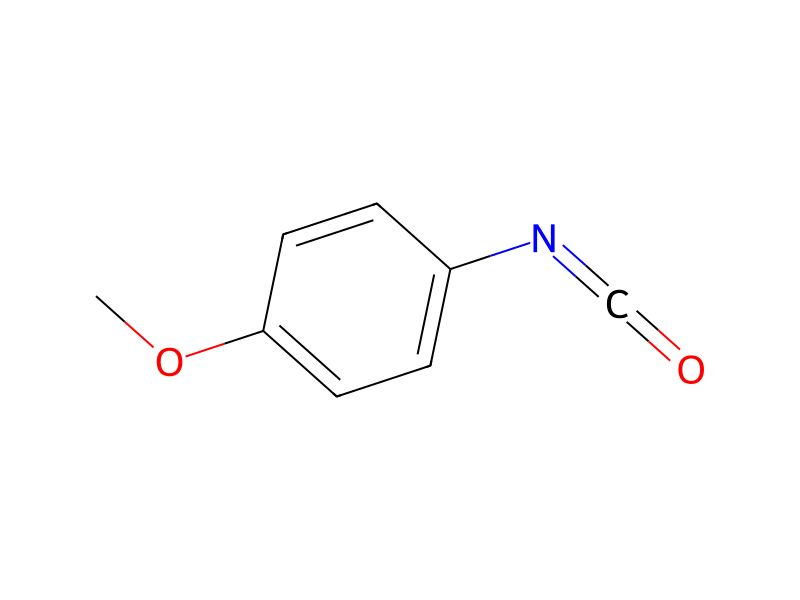
P1-(cytidine 5′-)-P4-(uridine 5′-) tetraphosphate, ditributylammonium salt (50 mg, 0.043 mmol; prepared from the tetraammonium salt by treatment with Dowex 50Wx4H+ in water, followed by mixing the protonated species with an excess of tributylamine in methanol, stripping and lyophilization) was dissolved in dry DMF (1 mL) and tributylamine (10 uL, 0.43 mmol), and p-methoxyphenylisocyanate (8.4 uL, 0.648 mmol) were added in a single portion. The homogeneous reaction mixture was heated overnight at 35° C., whereupon TLC (silica gel, 50% isopropanol/50% ammonium hydroxide) and HPLC (C18) indicated a substantial conversion to a single product. The solvent was removed on a rotary evaporator and the residue dissolved in water (1 mL). The product was isolated by repeated injections onto a semi-preparative HPLC column (Alltech Nucleotide/Nucleoside C18, 7 um, 10×250 mm, gradient from 0.1 M ammonium acetate to methanol over 30 minutes, 5 mL/min, monitor at 260 nm). Stripping and lyophilization gave the p-methoxyphenylurea (24 mg, 55% yield), as the tetraammonium salt.
Workup
- customThe solvent was removed on a rotary evaporator
- dissolutionthe residue dissolved in water (1 mL)
- customThe product was isolated
Sources & evidence
- ORD record
- ord-59d18d2796b54482808011f95d705336
- Source dataset
- uspto-grants-2008_11
- Patent number
- US07452870B2
Reaction notes
Loading…