Lithium Hydroxide → Indole
Reaction equation

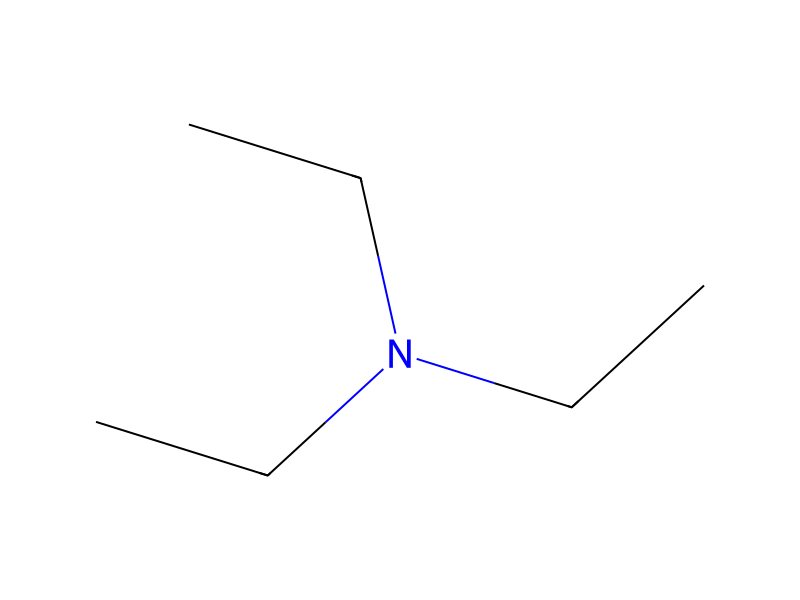
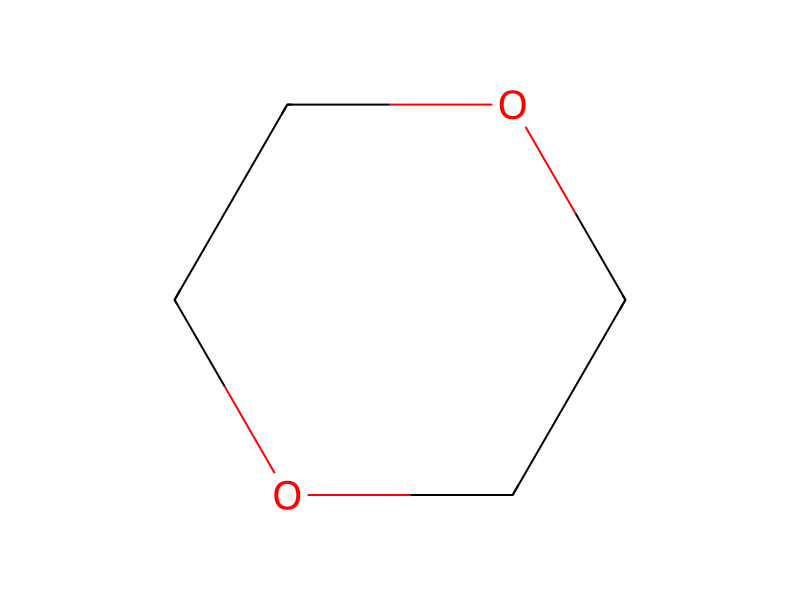
[OH-].[Li+].[OH-].[Na+].C1(N=[C:12]=[N:13][CH:14]2[CH2:19][CH2:18][CH2:17][CH2:16][CH2:15]2)CCCCC1.Cl.[CH3:21]N(C)CCCN=C=NCC.F[P-](F)(F)(F)(F)F.CN(C(N(C)C)=[N+]1C2C(=NC=CC=2)[N+]([O-])=N1)C.ON1C2C=CC=CC=2N=N1.F[B-](F)(F)F.N1(OC(N(C)C)=[N+](C)C)C2C=CC=CC=2N=N1.C(N(C(C)C)CC)(C)C>C(N(CC)CC)C.C1COCC1.O1CCOCC1.ClCCl.CN(C)C=O.O.CO>[NH:13]1[C:14]2[C:15](=[CH:16][CH:17]=[CH:18][CH:19]=2)[CH:21]=[CH:12]1Participants
Reactant 8
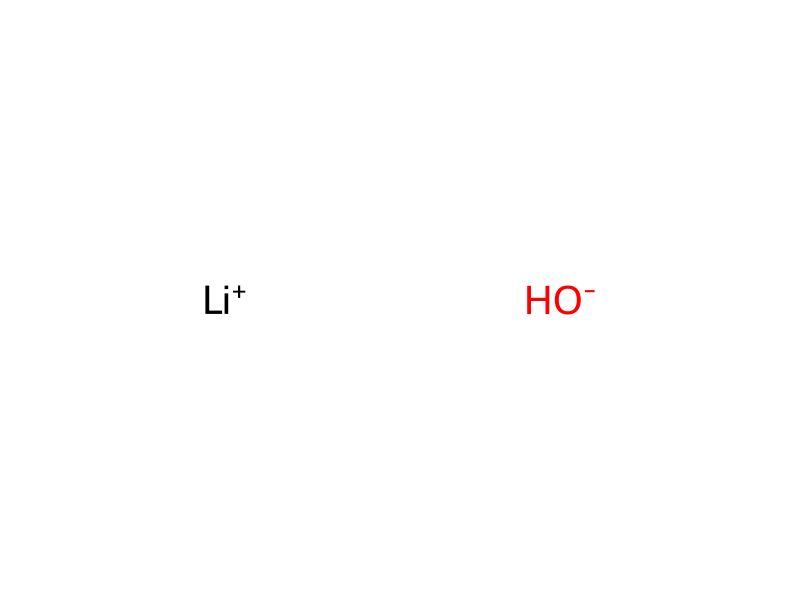 HCID 3939Lithium Hydroxide
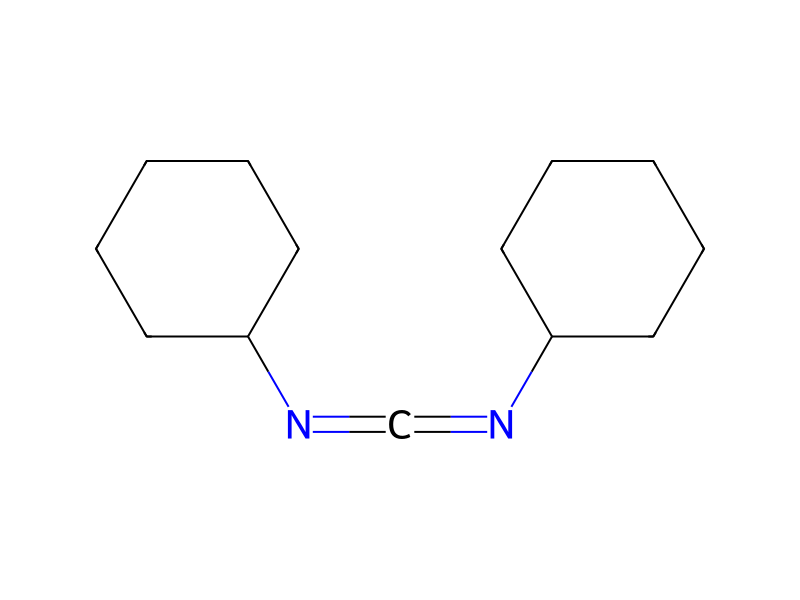 HCID 10868Dicyclohexylcarbodiimide
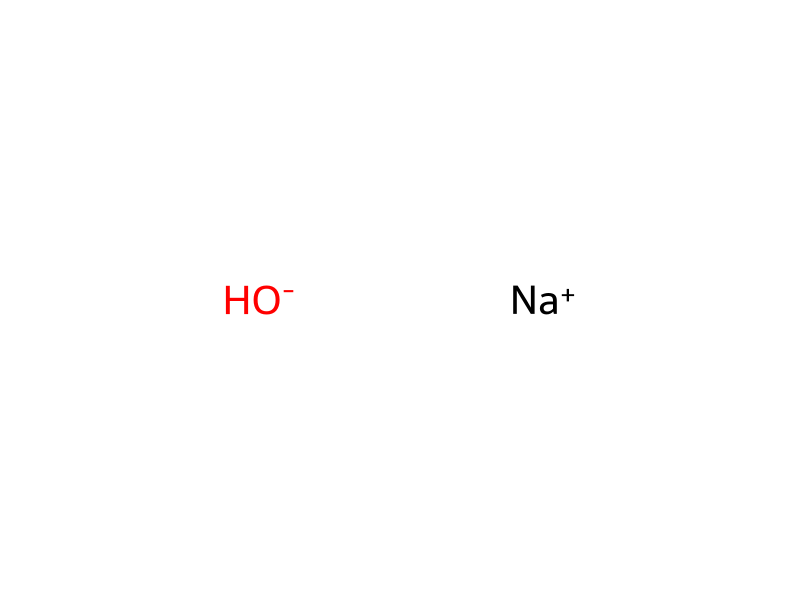 HCID 14798Sodium Hydroxide
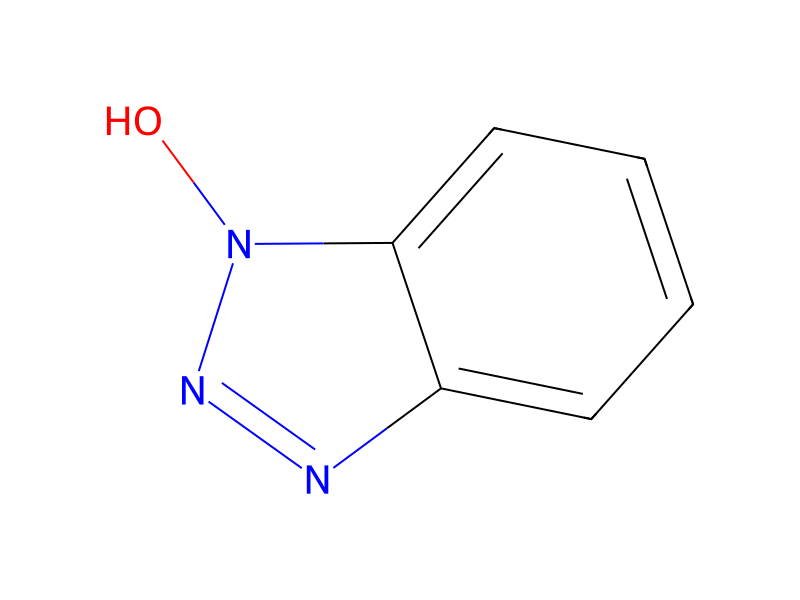 HCID 757711-Hydroxybenzotriazole
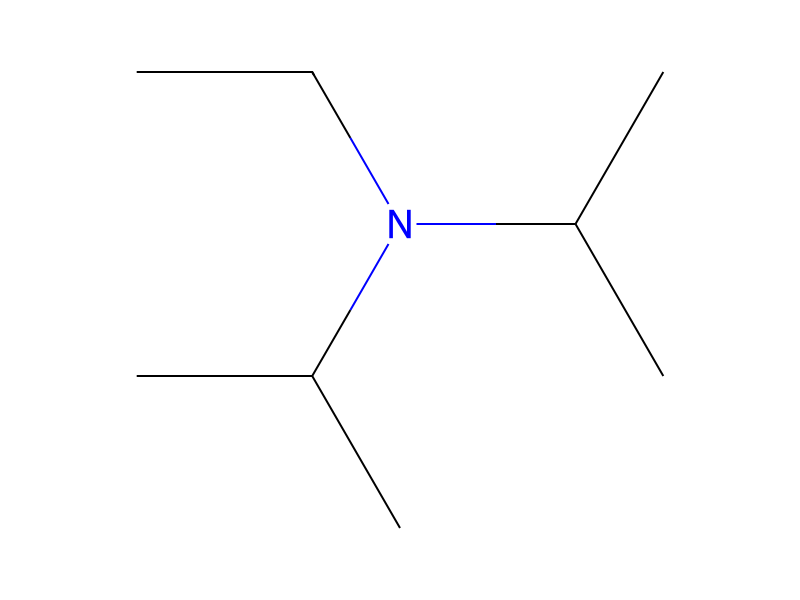 HCID 81531Diisopropylethylamine
 HCID 27239391,3-Propanediamine, N'-(ethylcarbonimidoyl)-N,N-dimethyl-, monohydrochloride
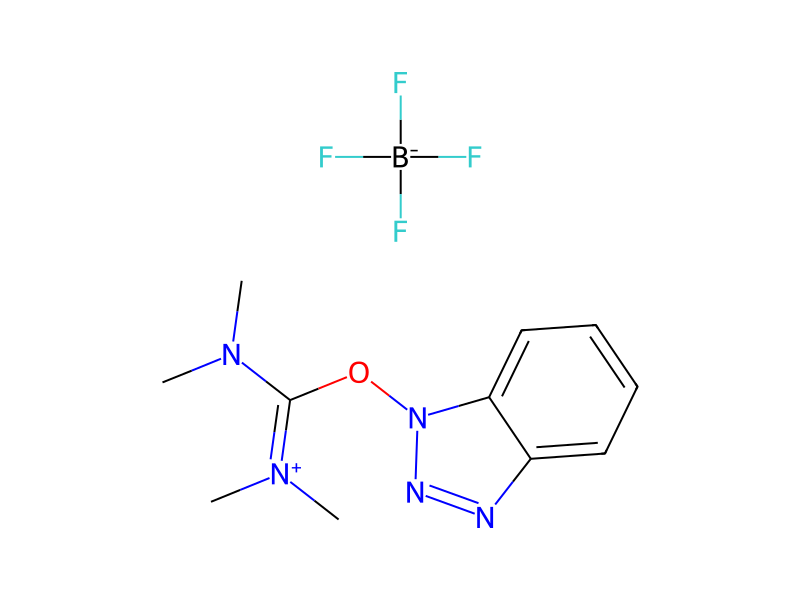 HCID 2733207O-(Benzotriazol-1-yl)-N,N,N',N'-tetramethyluronium tetrafluoroborate
 HCID 178484293HCID 178484293, compound
Product 1
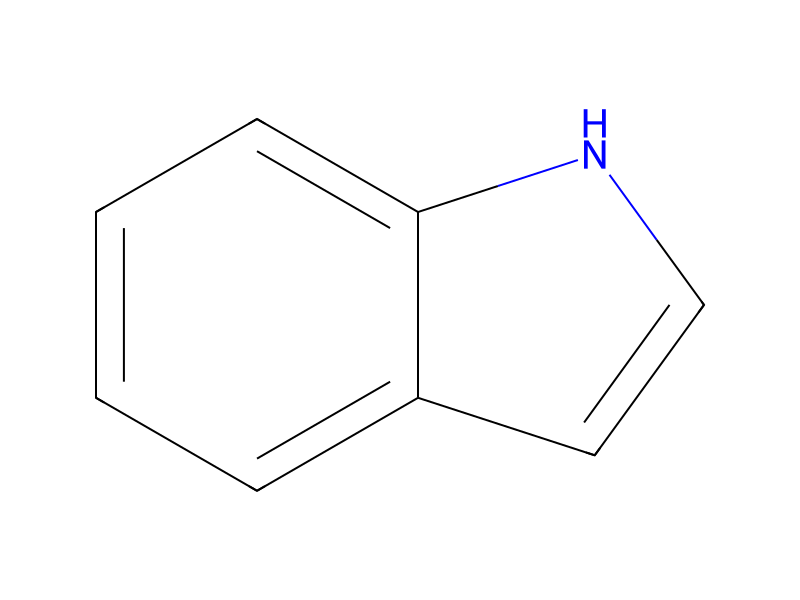
Reagents, catalysts & solvents 7
Procedure
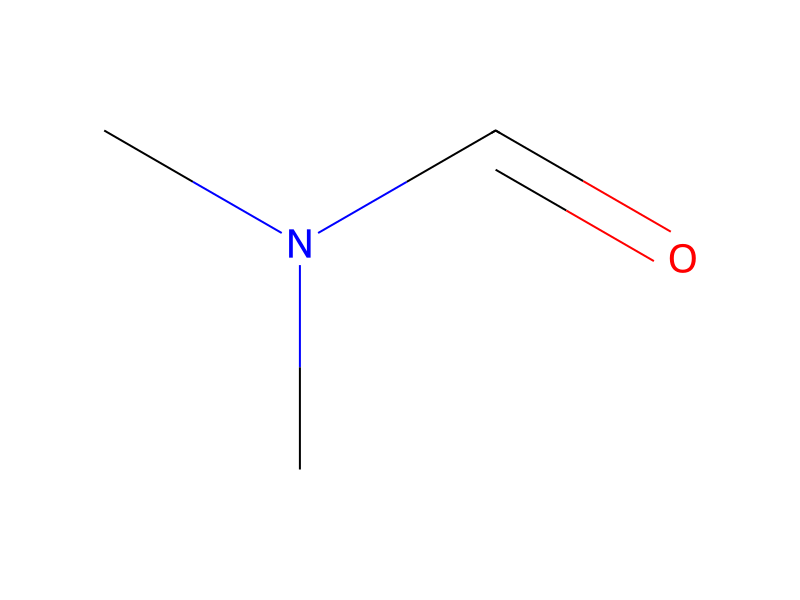
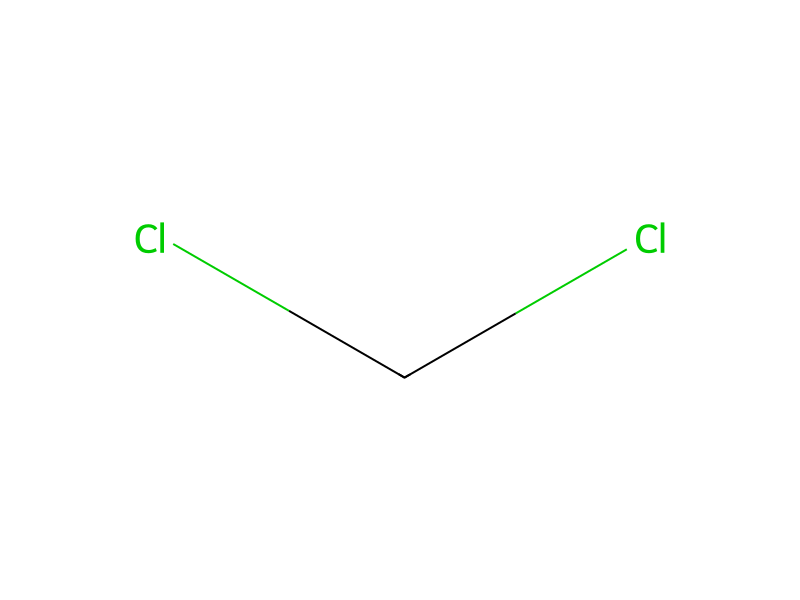
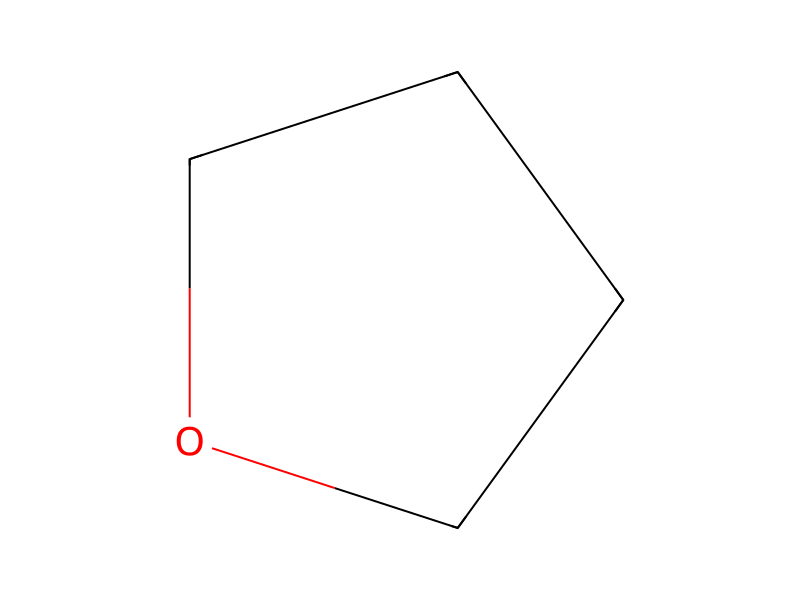
The transformation of the ester functionality in IV into the respective amide functionality in I can be affected under various conditions according to methods described in literature and the procedures are known to those in the art (For reaction conditions described in literature affecting such reactions see for example: Comprehensive Organic Transformations: A Guide to Functional Group Preparations, 2nd Edition, Richard C. Larock. John Wiley & Sons, New York, N.Y. 1999). However, it is convenient to first saponify the ester functionality in IV under basic conditions in the presence or the absence of a solvent to access the intermediate acid of formula V. There is no particular restriction on the nature of the solvent to be employed, provided that it has no adverse effect on the reaction or the reagents involved and that it can dissolve the reagents, at least to some extent. Examples for suitable solvents include methanol, THF, water and the like. There is no particular restriction on the nature of the base used in this stage, and any base commonly used in this type of reaction may equally be employed here. Examples of such bases include lithium hydroxide, sodium hydroxide, and the like. The reaction can take place over a wide range of temperatures, and the precise reaction temperature is not critical to the invention. It is convenient, for example, to carry out the reaction with heating from ambient temperature to reflux. The time required for the reaction may also vary widely, depending on many factors, notably the reaction temperature and the nature of the reagents. However, a period of from 0.5 h to several days will usually suffice to yield the intermediate acid. The coupling of carboxylic acids with amines is widely described in literature and the procedures are known to those in the art (For reaction conditions described in literature affecting such reactions see for example: Comprehensive Organic Transformations: A Guide to Functional Group Preparations, 2nd Edition, Richard C. Larock. John Wiley & Sons, New York, N.Y. 1999). The respective acids of formula V can conveniently be transformed to the respective amide through coupling with an amine of formula VI (either commercially available or accessible by methods described in references or by methods known in the art; as appropriate) by employing the usage of coupling reagents. For example coupling reagents like N,N′-carbonyldiimidazole (CDI), N,N′-dicyclohexylcarbodiimide (DCC), 1-(3-dimethylaminopropyl)-3-ethylcarbodiimide hydrochloride (EDCI), 1-[bis(dimethylamino)methylene]-1H-1,2,3-triazolo [4,5-b]pyridinium-3-oxide hexafluoro-phosphate (HATU), 1-hydroxy-1,2,3-benzotriazole (HOBT), O-benzotriazol-1-yl-N,N,N′,N′-tetramethyluronium tetrafluoroborate (TBTU) and the like can equally well be employed to affect such transformation. It is convenient, for example, to carry out the reaction in a solvent like dimethylformamide (DMF) and in the presence of a base. There is no particular restriction on the nature of the solvent to be employed, provided that it has no adverse effect on the reaction or the reagents involved and that it can dissolve the reagents, at least to some extent. Examples for suitable solvents include: DMF, dichloromethane (DCM), dioxane, THF, and the like. There is no particular restriction on the nature of the base used in this stage, and any base commonly used in this type of reaction may equally be employed here. Examples of such bases include triethylamine and diisopropylethylamine, and the like. The reaction can take place over a wide range of temperatures, and the precise reaction temperature is not critical to the invention. It is convenient, for example, to carry out the reaction with heating from ambient temperature to reflux. The time required for the reaction may also vary widely, depending on many factors, notably the reaction temperature and the nature of the reagents. However, a period of from 0.5 h to several days will usually suffice to yield indole derivatives of formula Ia. The indole derivatives of formula Ia can optionally be transformed into the 1-alkyl indole derivatives through a reaction with an alkylating agent such as for example an alkyl iodide and in the presence of a base such as NaH, DIPEA, Na2CO3 and the like. When carrying out this reaction the 5-amino group might have to be protected with a conventional amino protecting group.
Workup
- customFor reaction conditions
- customprovided that it
- customon the reaction
- dissolutioncan dissolve the reagents
- customany base commonly used in this type of reaction
- customThe reaction
- customthe reaction
- temperatureto reflux
- customThe time required for the reaction
- customof from 0.5 h to several days
- customto yield the intermediate acid
- customFor reaction conditions
- customprovided that it
- customon the reaction
- dissolutioncan dissolve the reagents
- customany base commonly used in this type of reaction
- customThe reaction
- customthe reaction
- temperaturewith heating from ambient temperature
- temperatureto reflux
- customThe time required for the reaction
- customof from 0.5 h to several days
Sources & evidence
- ORD record
- ord-e0b174a29494475d867909c8b94d10a9
- Source dataset
- uspto-grants-2008_11
- Patent number
- US07456174B2
Reaction notes
Loading…