Diisopropylethylamine → (2S)-N1-((1S,2R)-1-benzyl-3-(cyclohexyloxy)[(4-methoxyphenyl)sulfonyl]amino-2-hydroxypropyl)-2-[(2-quinolinylcarbonyl)amino]butanediamide
Reaction equation

[CH2:1]([C@H:8]([NH:31][C:32](=[O:38])OC(C)(C)C)[C@@H:9]([OH:30])[CH:10]([NH:18][S:19]([C:22]1[CH:27]=[CH:26][C:25]([O:28][CH3:29])=[CH:24][CH:23]=1)(=[O:21])=[O:20])[O:11][CH:12]1[CH2:17][CH2:16][CH2:15][CH2:14][CH2:13]1)[C:2]1[CH:7]=[CH:6][CH:5]=[CH:4][CH:3]=1.Cl.[NH2:40][C:41](=[O:60])[CH2:42][C@H:43]([NH:47][C:48]([C:50]1[CH:59]=[CH:58][C:57]2[C:52](=[CH:53][CH:54]=[CH:55][CH:56]=2)[N:51]=1)=[O:49])C(O)=O.O.ON1C2C=CC=CC=2N=N1.Cl.CN(C)CCCN=C=NCC.C(N(C(C)C)CC)(C)C>FC(F)(F)C(O)=O.CN(C)C=O>[CH2:1]([C@H:8]([NH:31][C:32](=[O:38])[C@@H:43]([NH:47][C:48]([C:50]1[CH:59]=[CH:58][C:57]2[C:52](=[CH:53][CH:54]=[CH:55][CH:56]=2)[N:51]=1)=[O:49])[CH2:42][C:41]([NH2:40])=[O:60])[C@@H:9]([OH:30])[CH:10]([NH:18][S:19]([C:22]1[CH:27]=[CH:26][C:25]([O:28][CH3:29])=[CH:24][CH:23]=1)(=[O:21])=[O:20])[O:11][CH:12]1[CH2:13][CH2:14][CH2:15][CH2:16][CH2:17]1)[C:2]1[CH:3]=[CH:4][CH:5]=[CH:6][CH:7]=1Participants
Reactant 5
 HCID 81531Diisopropylethylamine
 HCID 27239391,3-Propanediamine, N'-(ethylcarbonimidoyl)-N,N-dimethyl-, monohydrochloride
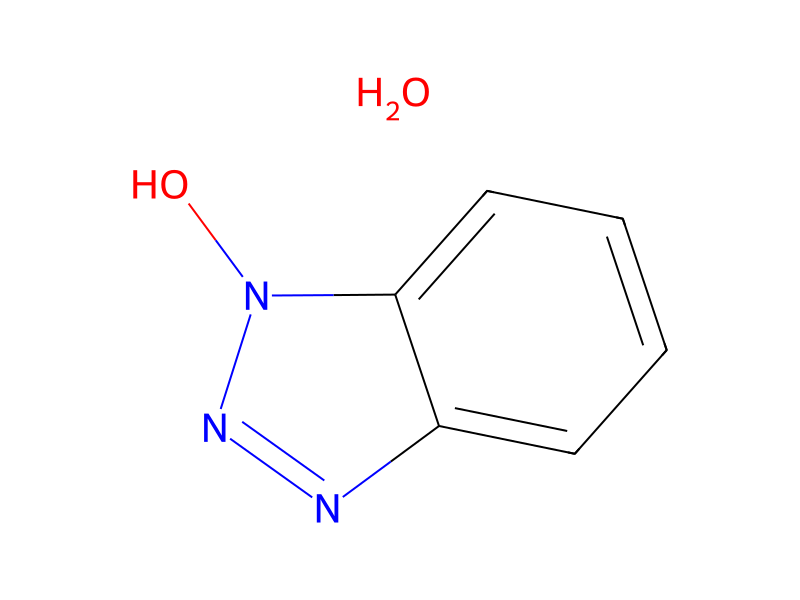 HCID 27960291-Hydroxybenzotriazole hydrate
 HCID 69220928HCID 69220928, compound
 HCID 69223512tert-butyl N-((1S,2R)-1-benzyl-3-(cyclohexyloxy)((4-methoxyphenyl)sulfonyl]amino-2-hydroxypropyl)carbamate
Product 1

Reagents, catalysts & solvents 2


Procedure
tert-butyl N-((1S,2R)-1-benzyl-3-(cyclohexyloxy)[(4-methoxyphenyl)sulfonyl]amino-2-hydroxypropyl)carbamate (0.18 mmol, 100 mg) was stirred in 1 mL trifluoroacetic acid (TFA) at room temperature for 1 hour. The TFA was removed under vacuum, and the resulting residue was dissolved in ethyl acetate, washed with 5% aq. potassium carbonate solution, brine, dried over magnesium sulfate, and concentrated to a residue. The resulting free amine, (2S)-4-amino-4-oxo-2-[(2-quinolinylcarbonyl)amino]butanoic acid hydrochloride (0.18 mmol, 56 mg), 1-hydroxybenzotriazole hydrate (0.18 mmol, 25 mg), N-(3-Dimethylaminopropyl)-N′-ethylcarbodiimide hydrochloride (0.20 mmol, 38 mg), diisopropylethylamine (0.91 mmol, 0.157 mL) and anhydrous N,N-dimethylformamide (0.5 mL) were combined at room temperature and stirred for 15 hours. The crude reaction mixture was concentrated to a residue, dissolved in ethyl acetate, washed with 1N HCl, 5% aq. potassium carbonate solution, brine and dried over magnesium sulfate. The solution was concentrated to a residue, purified by silica gel chromatography (ethyl acetate), and lyophylized providing a fluffy white solid. H-1-NMR (CDCl3): δ 9.19-9.17 (1H,m), 8.32-8.30 (1H,m), 8.23-8.16 (2H,m), 7.89-7.87 (1H,m), 7.79-7.76 (3H,m), 7.65-7.61 (1H,m), 7.13-7.11 (2H,m), 7.05-6.94 (6H,m), 5.73-5.64 (1H,m), 5.41-5.33 (1H,m), 4.96-4.85 (1H,m), 4.28-4.08 (2H,m), 3.89-3.74 (1H,m), 3.86 (3H,s), 3.25 (1H,bs), 2.95-2.79 (5H,m), 2.65-2.60 (1H,m), 2.04 (2H,bs), 1.70 (2H,bs), 1.57-1.41 (1H,m), 1.30-1.10 (5H,m); MS (ESI): M+H=719.
Workup
- customThe TFA was removed under vacuum
- dissolutionthe resulting residue was dissolved in ethyl acetate
- washwashed with 5% aq. potassium carbonate solution, brine
- dry with materialdried over magnesium sulfate
- concentrationconcentrated to a residue
- customwere combined at room temperature
- customThe crude reaction mixture
- concentrationwas concentrated to a residue
- dissolutiondissolved in ethyl acetate
- washwashed with 1N HCl, 5% aq. potassium carbonate solution, brine
- dry with materialdried over magnesium sulfate
- concentrationThe solution was concentrated to a residue
- custompurified by silica gel chromatography (ethyl acetate)
- customlyophylized providing a fluffy white solid
Sources & evidence
- ORD record
- ord-15e0cdb0f2c04771a0e900ae10ac0fb4
- Source dataset
- uspto-grants-2008_09
- Patent number
- US07419967B2
Reaction notes
Loading…