Methylparaben → Methyl 4-cyclohexylbenzoate
Reaction equation

C(=O)([O-])[O-].[K+].[K+].[CH3:7][O:8][C:9](=[O:17])[C:10]1[CH:15]=[CH:14][C:13](O)=[CH:12][CH:11]=1.[CH:18]1(Br)[CH2:23][CH2:22][CH2:21][CH2:20][CH2:19]1>CN(C)C=O>[CH3:7][O:8][C:9](=[O:17])[C:10]1[CH:15]=[CH:14][C:13]([CH:18]2[CH2:23][CH2:22][CH2:21][CH2:20][CH2:19]2)=[CH:12][CH:11]=1Participants
Reactant 3
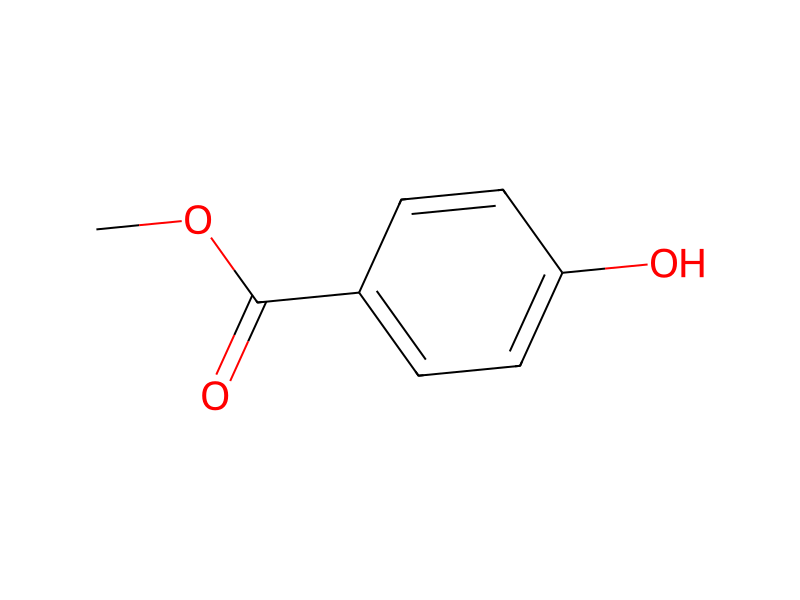


Product 1

Reagents, catalysts & solvents 1

Conditions
- Temperature
- 100 °C
Procedure
Potassium carbonate (2.26 g, 16.4 mmol) was added to a solution of methyl-4-hydroxybenzoate (1.0 g, 6.6 mmol) and cyclohexyl bromide (1.62 ml, 13.1 mmol) in dimethylformamide (20 ml). The mixture was heated at 100° C. for 24 hours, cooled, filtered and concentrated in vacuo. Work up followed by flash chromatography over silica gel (hexane:ethyl acetate, 5:1) afforded methyl-4-cyclohexylbenzoate (169 mg). This was dissolved (162 mg, 0.69 mmol) in a mixture of 1,4-dioxane (10 ml) and water (5 ml) and lithium hydroxide monohydrate (32 mg, 0.76 mmol) added. The mixture was stirred at room temperature for 18 hours. A further quantity of lithium hydroxide was added (32 mg) and stirring continued for 4 hours. The mixture was added to ethyl acetate, washed with brine and concentrated to yield the title compound as a yellow solid (27 mg ).
Workup
- temperaturecooled
- filtrationfiltered
- concentrationconcentrated in vacuo
Sources & evidence
- ORD record
- ord-4b5c390b62084a789863e60afec67d87
- Source dataset
- uspto-grants-2001_04
- Patent number
- US06218393B1
Reaction notes
Loading…