Piperazine → 1-(1-Naphthyl)piperazine
Reaction equation

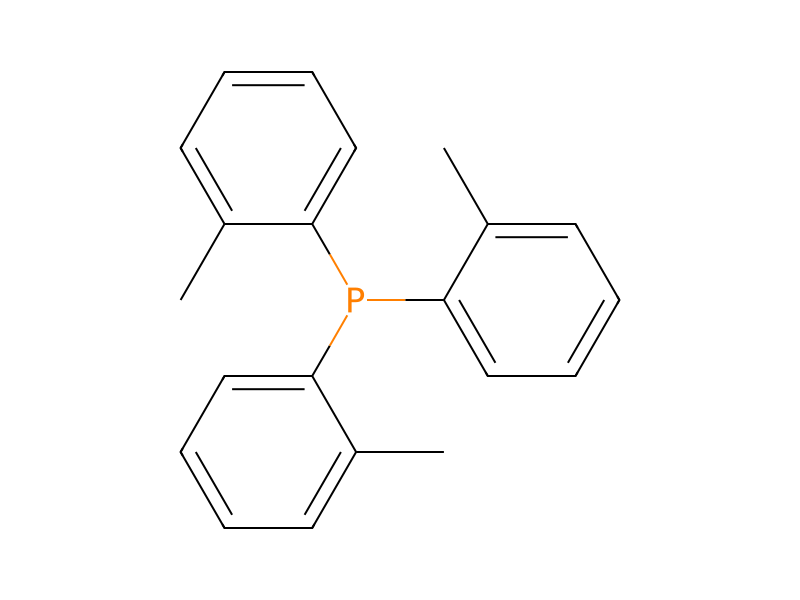
[NH:1]1[CH2:6][CH2:5][NH:4][CH2:3][CH2:2]1.CC(C)([O-])C.[K+].Br[C:14]1[C:23]2[C:18](=[CH:19][CH:20]=[CH:21][CH:22]=2)[CH:17]=[CH:16][CH:15]=1.C1(C)C=CC=CC=1P(C1C=CC=CC=1C)C1C=CC=CC=1C>C1(C)C(C)=CC=CC=1.C(Cl)Cl.C([O-])(=O)C.[Pd+2].C([O-])(=O)C>[C:22]1([N:1]2[CH2:6][CH2:5][NH:4][CH2:3][CH2:2]2)[C:23]2[C:18](=[CH:17][CH:16]=[CH:15][CH:14]=2)[CH:19]=[CH:20][CH:21]=1Participants
8
Reactant 4



Product 1

Reagents, catalysts & solvents 3



Procedure
83.2 g (966 mmol) of piperazine, 38.0 g (339 mmol) of potassium tert-butoxide and 50.0 g (241 mmol) of 1-bromonaphthalene were added to a mixture of 5.4 g (24.2 mmol) of palladium acetate and 14.7 g (48.3 mmol) of tri-o-tolyl-phosphine in 500 ml of xylene, and the mixture was refluxed with efficient stirring under a nitrogen atomsphere for 10 h. The mixture was then diluted with methylene chloride, the insoluble residue was filtered off, and the filtrate was concentrated. The crude product was purified by column chromatography (silica gel, mobile phase THF/methanol/ammonia 85/13/2). 21.5 g (42%) of product with melting point 84-86° C. were isolated.
Workup
- temperaturethe mixture was refluxed
- filtrationthe insoluble residue was filtered off
- concentrationthe filtrate was concentrated
- customThe crude product was purified by column chromatography (silica gel, mobile phase THF/methanol/ammonia 85/13/2)
Sources & evidence
- ORD record
- ord-8c2f4a5b79ac43cd8f1135414d7ac940
- Source dataset
- uspto-grants-2001_04
- Patent number
- US06222034B1
Reaction notes
Loading…