Hydrochloric Acid → 2-(4-Bromo-3,3,4,4-tetrafluorobutyl)-malonic acid diethyl ester
Reaction equation

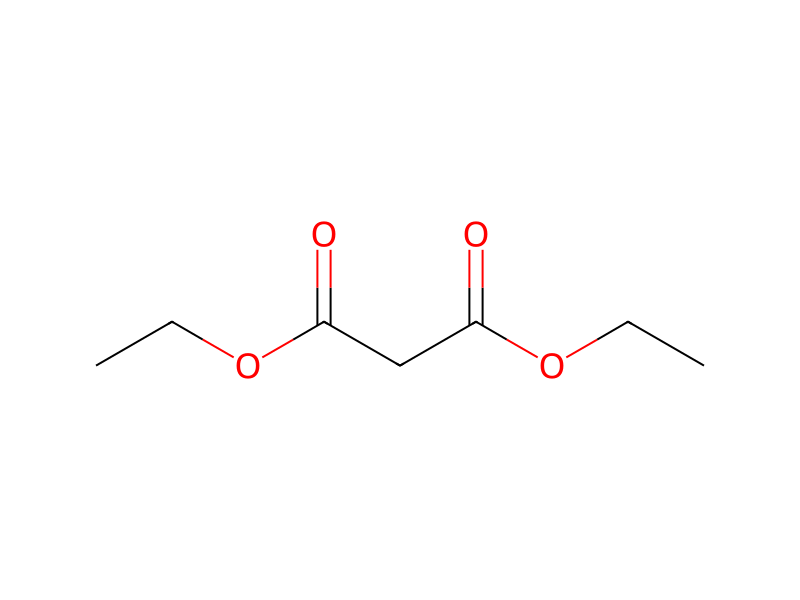
[H-].[Na+].[C:3]([O:11][CH2:12][CH3:13])(=[O:10])[CH2:4][C:5]([O:7][CH2:8][CH3:9])=[O:6].[Br:14][C:15]([F:23])([F:22])[C:16]([F:21])([F:20])[CH2:17][CH2:18]I.Cl>CN(C)C=O>[CH2:12]([O:11][C:3](=[O:10])[CH:4]([CH2:18][CH2:17][C:16]([F:21])([F:20])[C:15]([Br:14])([F:23])[F:22])[C:5]([O:7][CH2:8][CH3:9])=[O:6])[CH3:13]Participants





Procedure
In nitrogen atmosphere, 1900 mL of dimethylformamide was prepared with the addition of 320 g (7.17 mol) of sodium hydride (60% mineral oil-containing product), followed by putting it in an iced bath with the addition of 1208 g (7.17 mol) of diethyl malonate. After 1 hour of stirring, 2400 g (7.17 mol) of 1-bromo-1,1,2,2-tetrafluoro-4-iodobutane was added to this solution while regulating the reaction solution so as to be not higher than 100° C. After 1 hour of stirring, 1000 mL of 1N hydrochloric acid was added thereto, followed by extracting it with diisopropyl ether. Then, an organic layer was concentrated, followed by distillation under reduced pressure (115-116° C./0.53 kPa), thereby obtaining 1940 g of the objective 2-(4-bromo-3,3,4,4-tetrafluorobutyl)-malonic acid diethyl ester (74% yield, 89% GC purity) in the form of a light yellow liquid.
Workup
- customto be not higher than 100° C
- stirringAfter 1 hour of stirring
- extractionby extracting it with diisopropyl ether
- concentrationThen, an organic layer was concentrated
- distillationfollowed by distillation under reduced pressure (115-116° C./0.53 kPa)
Sources & evidence
- ORD record
- ord-4ae3c467b7a940c6af365dcd54d8a2c9
- Source dataset
- uspto-grants-2014_11
- Patent number
- US08889888B2
Reaction notes
Loading…