Hydrochloric Acid → HCID 57487442, compound
Reaction equation

[CH2:1]1[CH2:5]O[CH2:3][CH2:2]1.[C:6](O)(=O)[CH3:7].[NH2:10][CH2:11][C@@H:12]([OH:31])[C@@H:13]([NH:23]C(=O)OC(C)(C)C)[CH2:14][C:15]1[CH:20]=[C:19]([F:21])[CH:18]=[C:17]([F:22])[CH:16]=1.[Cu]C#N.[ClH:35].C[N:37]1C[CH2:40][CH2:39][C:38]1=O>CN(C=O)C.C(#N)C>[ClH:35].[NH2:23][C@@H:13]([CH2:14][C:15]1[CH:16]=[C:17]([F:22])[CH:18]=[C:19]([F:21])[CH:20]=1)[C@H:12]([OH:31])[CH2:11][NH:10][CH2:3][C:2]1[CH:7]=[C:6]2[C:40]([CH:39]=[CH:38][NH:37]2)=[CH:5][CH:1]=1Participants
Reactant 5

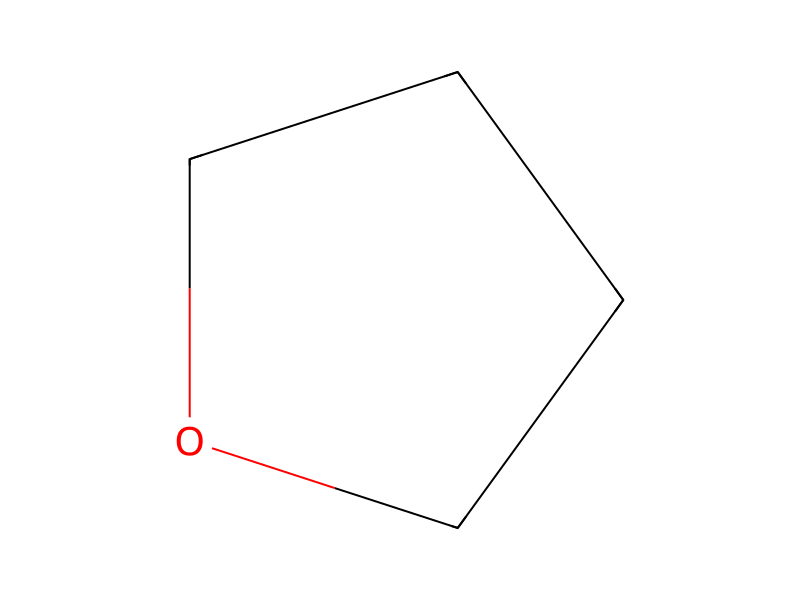
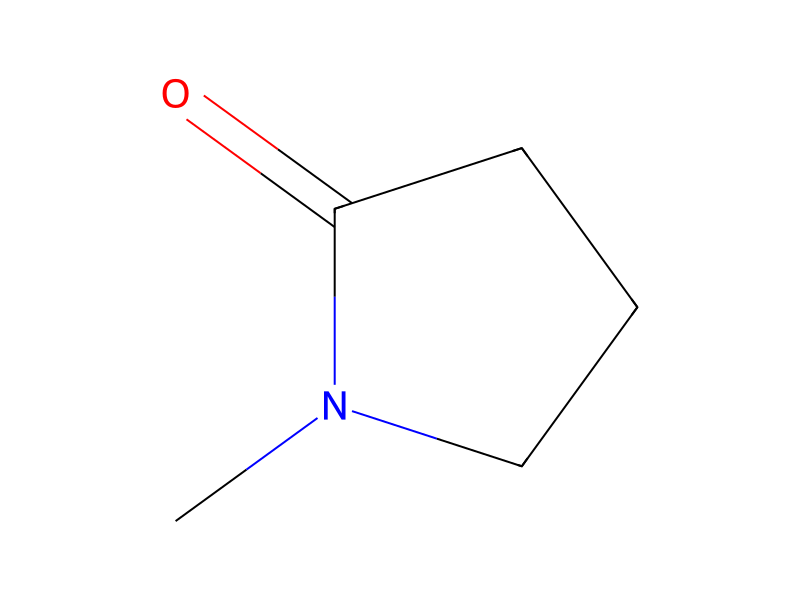

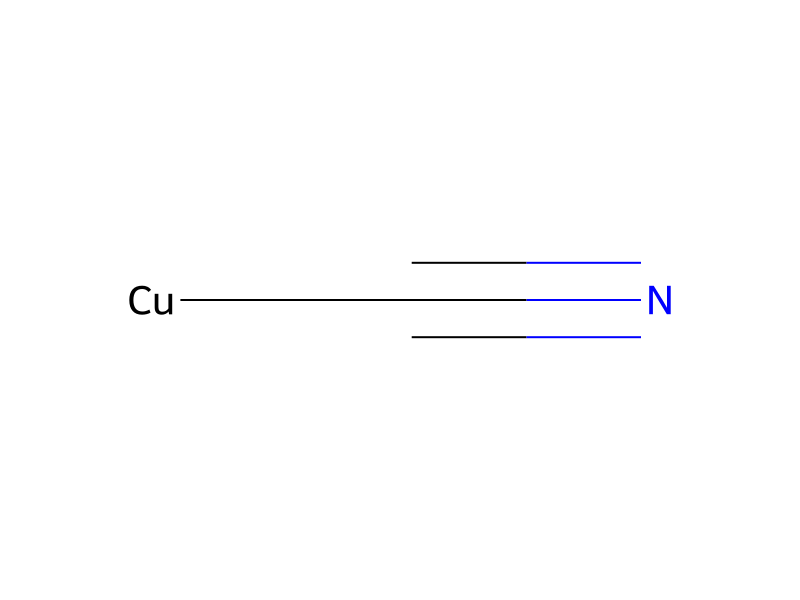
Product 1

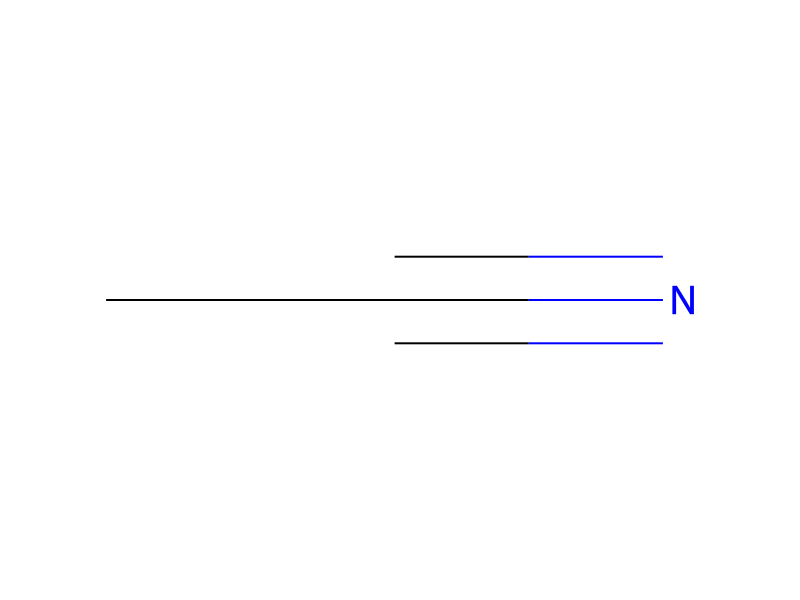
Reagents, catalysts & solvents 2
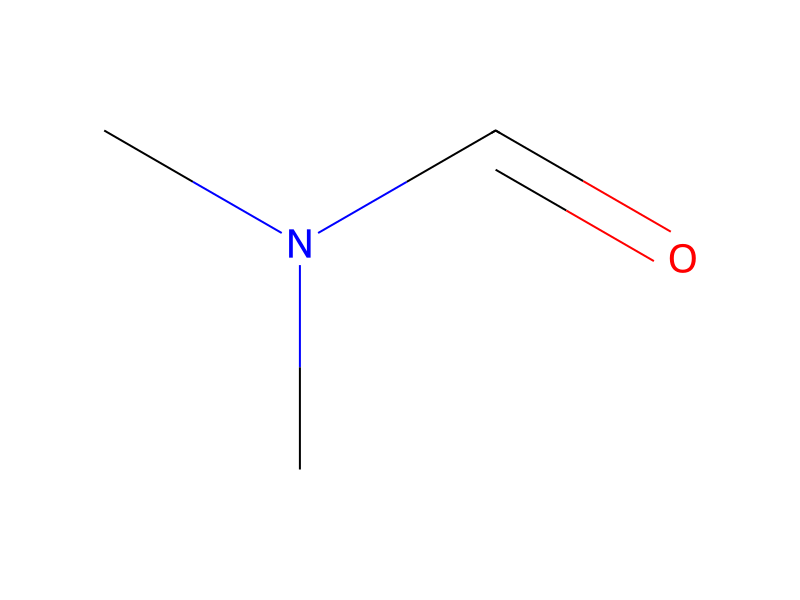
Procedure
Chart GG. Isoquinoline (1) is reacted with phosphorus oxychloride or phosphorus oxybromide at temperatures ranging from room temperature to about 150° C. to yield halo-isoquinoline (2). Halo-isoquinoline (2) is reacted with an amine at temperatures ranging from room temperature to 200° C. to yield amino-isoquinoline (3). This reaction may be carried out in the presence of an organic solvent such as THF, acetonitrile, DMF, or NMP. Alternatively, the amine can be used as solvent, and a sealed reaction vessel may be used to contain volatile amine at high temperatures. Amino-isoquinoline (3) is reacted with copper (I) cyanide in an organic solvent, for example DMF or NMP (N-methylpyrrolidinone) at temperatures ranging from about 120° C. to reflux, followed by hydrolysis with an aqueous acid, for example aqueous HCl, to yield isoquinoline carboxylic acid (4). Additional methods for converting amino-isoquinoline (3) to isoquinoline carboxylic acid (4) are known to those skilled in the art and include, for example, reacting (3) with carbon monoxide and an alcohol in the presence of a catalyst, for example a palladium catalyst such as palladium acetate or palladium(0) tetrakis(triphenylphosphine), and an additive, for example 1,1′-bis (diphenylphosphino) ferrocene or 1,3-bis (diphenylphosphino) propane, in an organic solvent, for example DMF or NMP, and in the presence of a base, for example a trialkylamine or aqueous sodium or potassium carbonate or sodium or potassium hydrogen carbonate, at temperatures ranging from about 50 to about 150° C., followed by hydroysis of the ester product to isoquinoline carboxylic acid (4). Isoquinoline carboxylic acid (4) is then coupled to an amine to yield the final target product.
Workup
- customThis reaction
- customa sealed reaction vessel
- customranging from about 120° C.
- temperatureto reflux
Sources & evidence
- ORD record
- ord-de74fa5cf64b4f8db13c1861ed801ae8
- Source dataset
- uspto-grants-2007_02
- Patent number
- US07176242B2
Reaction notes
Loading…