Hydrogen Peroxide → 2629-78-9
Reaction equation

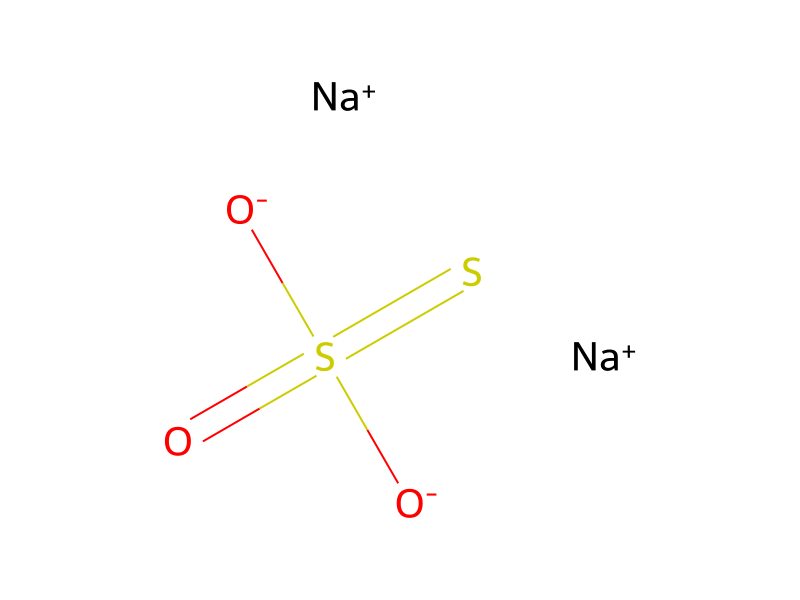
[OH-:1].[Li+].[OH2:3].[OH-:4].[Li+].OO.[Cl:8][C:9]([Cl:14])([Cl:13])[C:10](Cl)=[O:11].S([O-])([O-])(=O)=S.[Na+].[Na+]>O>[Cl:8][C:9]([Cl:14])([Cl:13])[C:10]([O:1][O:3][C:10](=[O:4])[C:9]([Cl:14])([Cl:13])[Cl:8])=[O:11]Participants






Procedure
Lithium Hydroxide as Base. A beaker was loaded with 1.25 g of lithium hydroxide monohydrate (30 mmoles), 28 ml of water, 90 ml of Freon® 113, 3.07 ml of 30% aqueous hydrogen peroxide, and finally 1.9 ml of trichloroacetyl chloride (17 mmoles) with ice bath cooling. An ultrasonic horn connected to a 40 Khz, 150 watt Dukane power source was immediately started up at 75% maximum power and lowered into the reaction mixture. After 15 seconds, the ultrasonic horn was turned off and the reaction mixture poured into a prechilled 250 ml Erlenmeyer flask sitting on dry ice. The reaction mixture was first allowed to freeze solid and then warmed with swirling. As soon as the Freon® 113 phase had thawed entirely to 88 ml of fluid, a 5.0 ml sample was drawn and found to take 6.2 ml of 0.1N sodium thiosulfate in iodometric titration (yield 64% based on starting trichloroacetyl chloride).
Workup
- temperaturecooling
- additionthe reaction mixture poured into a prechilled 250 ml Erlenmeyer flask
- temperaturewarmed
Sources & evidence
- ORD record
- ord-fd4ee116584c4e34aafff3900352f90c
- Source dataset
- uspto-grants-1998_11
- Patent number
- US05831131
Reaction notes
Loading…