Diisopropylamine → HCID 15086681, compound
Reaction equation

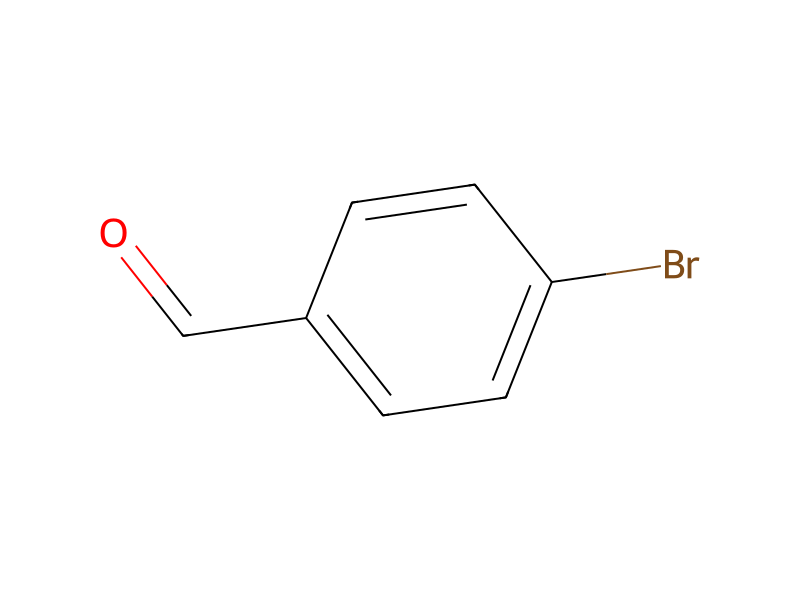
C(NC(C)C)(C)C.C([Li])CCC.[CH3:13][C:14]1([CH3:21])[C:18](=[O:19])[CH:17]=[C:16]([CH3:20])[O:15]1.[Br:22][C:23]1[CH:30]=[CH:29][C:26]([CH:27]=O)=[CH:25][CH:24]=1.FC(F)(F)C(OC(=O)C(F)(F)F)=O>O1CCCC1.CCCCCC.ClCCl.C(N(CC)CC)C.CN(C)P(N(C)C)(N(C)C)=O>[CH3:13][C:14]1([CH3:21])[C:18](=[O:19])[CH:17]=[C:16](/[CH:20]=[CH:27]/[C:26]2[CH:29]=[CH:30][C:23]([Br:22])=[CH:24][CH:25]=2)[O:15]1Participants
Reactant 5




Product 1

Reagents, catalysts & solvents 5





Procedure
To a solution of dry diisopropylamine (3.3 mL, 24 mM) in dry tetrahydrofuran (25 mL) at -78° C., was added dropwise a 2.3N solution of n-butyllithium in hexane (10.4 mL, 24 mM). After the reaction solution was stirred for 15 minutes, a solution of 2,2,5-trimethyl-3(2H)-furanone (2.0 g, 16 mM) in tetrahydrofuran (10 mL) was added dropwise. Hexamethylphosphoramide (4.4 mL, 24 mM) was then added dropwise for 30 minutes. Finally, p-bromobenzaldehyde (3.6 g, 19.2 mM) in tetrahydrofuran (10 mL) was added in one portion. The reaction solution was stirred 10 minutes when trifluoroacetic anhydride (5.6 mL, 40 mM) was added in one portion. Again, the reaction solution was stirred for 15 minutes when triethylamine (5.9 mL, 47.6 mM) was added and was allowed to room temperature. The reaction mixture was then partitioned between saturated aqueous sodium chloride (50 mL) and diethyl ether (50 mL). The layers were separated. The organic layers were then washed with saturated aqueous sodium chloride (2×25 mL), dried over MgSO4, filtered and concentrated under reduced pressure to give dark liquid. After the crude product was dissolved in dichloromethane (100 mL), trifluoroacetic anhydride (5.6 mL, 40 mM) was added. After thirty minutes, triethylamine (2.75 mL, 20 mM) was added. The resulting mixture was stirred for one hour, washed with 1N aqueous hydrochloric acid, dried over magnesium sulfate, filtered and concentrated under reduced pressure to afford an amber oil. The crude oil was purified by chromatography (silica gel, petroleum ether-ethyl acetate) to give yellow-brown crystals (1.8 g, 39%). Recrystallization from hexane gave an analytically pure product, m.p. 109°-110° C.
Workup
- additionwas added in one portion
- additionwas added
- customwas allowed to room temperature
- customThe reaction mixture was then partitioned between saturated aqueous sodium chloride (50 mL) and diethyl ether (50 mL)
- customThe layers were separated
- washThe organic layers were then washed with saturated aqueous sodium chloride (2×25 mL)
- dry with materialdried over MgSO4
- filtrationfiltered
- concentrationconcentrated under reduced pressure
- customto give dark liquid
- waitAfter thirty minutes
- stirringThe resulting mixture was stirred for one hour
- washwashed with 1N aqueous hydrochloric acid
- dry with materialdried over magnesium sulfate
- filtrationfiltered
- concentrationconcentrated under reduced pressure
- customto afford an amber oil
- customThe crude oil was purified by chromatography (silica gel, petroleum ether-ethyl acetate)
Sources & evidence
- ORD record
- ord-3c00087b8d41412badc8f60f92376a26
- Source dataset
- uspto-grants-1991_03
- Patent number
- US05001126
Reaction notes
Loading…