Hydrochloric Acid → 1-Methyl-6-oxo-1,6-dihydropyridine-3-boronic Acid
Reaction equation

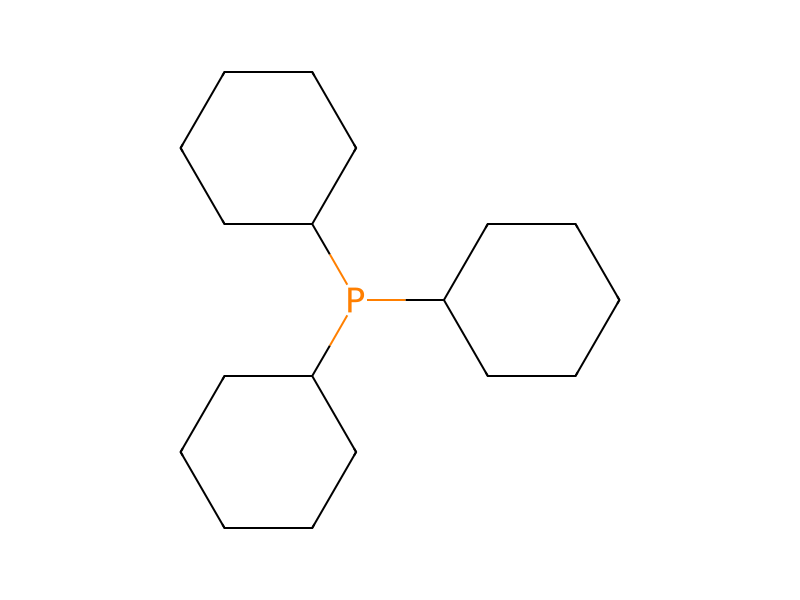
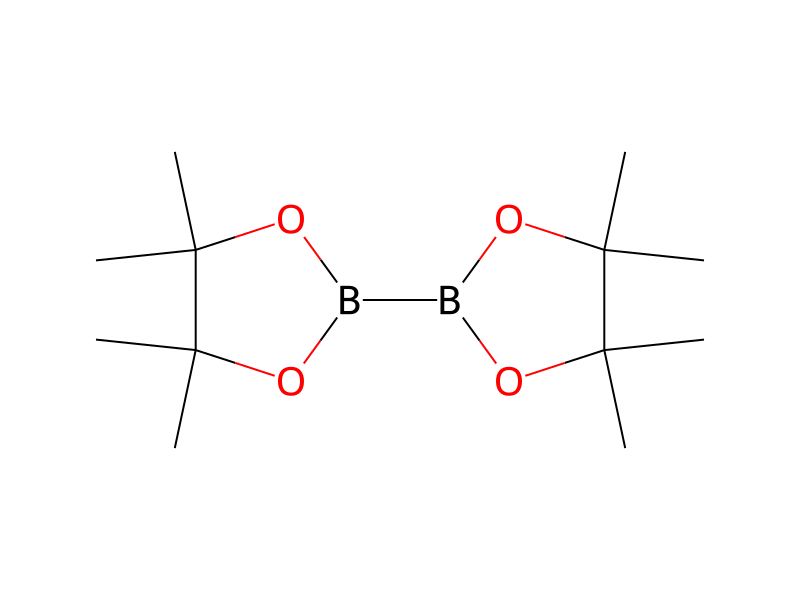
Br[C:2]1[CH:3]=[CH:4][C:5](=[O:9])[N:6]([CH3:8])[CH:7]=1.C1(P(C2CCCCC2)C2CCCCC2)CCCCC1.CC1(C)C(C)(C)[O:33][B:32](B2OC(C)(C)C(C)(C)O2)[O:31]1.C([O-])(=O)C.[K+].Cl>C1C=CC(/C=C/C(/C=C/C2C=CC=CC=2)=O)=CC=1.C1C=CC(/C=C/C(/C=C/C2C=CC=CC=2)=O)=CC=1.C1C=CC(/C=C/C(/C=C/C2C=CC=CC=2)=O)=CC=1.[Pd].[Pd]>[CH3:8][N:6]1[C:5](=[O:9])[CH:4]=[CH:3][C:2]([B:32]([OH:33])[OH:31])=[CH:7]1Participants
Reactant 5



Product 1

Reagents, catalysts & solvents 1

Conditions
- Temperature
- 90 °C
Procedure
5-Bromo-1-methylpyridin-2(1H)-one (400 mg, 2.17 mmol), tricyclohexylphosphine (72 mg, 0.26 mmol), 4,4,4′,4′,5,5,5′,5′-octamethyl-2,2′-bi-1,3,2-dioxaborolane (540 mg, 2.17 mmol), potassium acetate (522 mg, 5.32 mmol) and Pd2(dba)3 (97 mg, 0.11 mmol) were added to a flask. The flask was evacuated and purged with argon three times. Fully degassed dioxane (9.5 mL) was added and the reaction was sealed and heated at 90° C. overnight. The mixture was then cooled to room temperature, filtered over a thin layer of celite, eluting with dichloromethane. The majority of the dichloromethane was evaporated under reduced pressure and hexane was added until a precipitate formed. The slurry was filtered and the filtrate was concentrated. The resulting residue was dissolved in dioxane, 10 equivalents of 1 N hydrochloric acid were added, and the mixture was stirred overnight. Removal of the solvent under reduced pressure and purification of the resulting residue via reverse phase HPLC (10-100% acetonitrile/water+0.05% TFA modifier) afforded the title compound.
Workup
- customThe flask was evacuated
- custompurged with argon three times
- additionFully degassed dioxane (9.5 mL) was added
- customthe reaction was sealed
- temperatureThe mixture was then cooled to room temperature
- filtrationfiltered over a thin layer of celite,
- washeluting with dichloromethane
- customThe majority of the dichloromethane was evaporated under reduced pressure and hexane
- additionwas added until a precipitate
- customformed
- filtrationThe slurry was filtered
- concentrationthe filtrate was concentrated
- dissolutionThe resulting residue was dissolved in dioxane
- customRemoval of the solvent
- customunder reduced pressure and purification of the resulting residue via reverse phase HPLC (10-100% acetonitrile/water+0.05% TFA modifier)
Sources & evidence
- ORD record
- ord-2d6f90f1d77d484cbd87362308b2ec98
- Source dataset
- uspto-grants-2013_02
- Patent number
- US08367706B2
Reaction notes
Loading…