Hydrochloric Acid → 10-Aza-tricyclo[6.3.1.02,7]dodeca-2(7),3,5-triene tosylate
Reaction equation

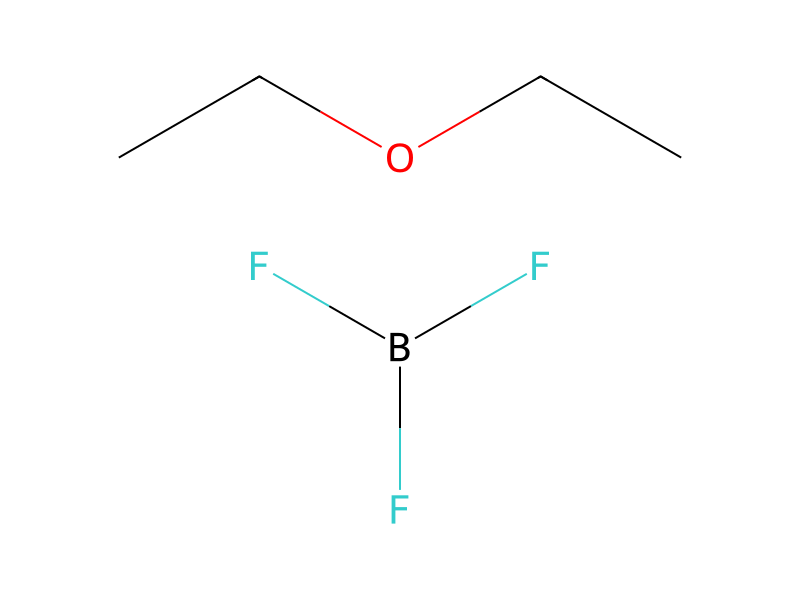
O=[C:2]1[NH:12][CH2:11][CH:10]2[CH2:13][CH:3]1[C:4]1[CH:5]=[CH:6][CH:7]=[CH:8][C:9]=12.[BH4-].[Na+].B(F)(F)F.CCOCC.Cl.O.[C:27]1([CH3:37])[CH:32]=[CH:31][C:30]([S:33]([OH:36])(=[O:35])=[O:34])=[CH:29][CH:28]=1>O1CCCC1.C(O)(C)C.CO>[S:33]([C:30]1[CH:31]=[CH:32][C:27]([CH3:37])=[CH:28][CH:29]=1)([OH:36])(=[O:35])=[O:34].[CH:3]12[CH2:13][CH:10]([CH2:11][NH:12][CH2:2]1)[C:9]1[CH:8]=[CH:7][CH:6]=[CH:5][C:4]2=1Participants
Reactant 5




Product 1

Reagents, catalysts & solvents 3



Conditions
- Temperature
- 50 °C
Procedure
To a solution of 1.38 g of 9-oxo-10-aza-tricyclo[6.3.1.02,7]dodeca-2(7),3,5-triene (8.00 mmol, 1 equivalent) in 8 mL of tetrahydrofuran was added 603 mg of sodium borohydride (16.0 mmol, 2.0 equivalent) followed by slow addition of 2.77 mL of boron trifluoride diethyl etherate (21.6 mmol, 2.7 equivalent). Once the effervescence subsided, the reaction mixture was heated to 50° C. for 5 hours. The reaction was then cooled to room temperature for addition of 10 mL of methanol (added dropwise at first) and 0.125 mL of concentrated hydrochloric acid. Heating was resumed at a reflux for 12 hours. The reaction mixture was then cooled to room temperature and concentrated in vacuo. The residue was diluted with 20 mL of 20% aqueous sodium hydroxide followed by 30 mL of methyl-tert-butyl ether. The mixture was stirred for 30 minutes and then the aqueous layer was extracted with another 30 mL of methyl-tert-butyl ether. The combined organic layers were washed with 40 mL of a saturated aqueous sodium chloride solution and dried over anhydrous sodium sulfate. After concentrating in vacuo, 1.67 g of p-toluenesulfonic acid monohydrate (8.80 mmol, 1.1 equivalent) was added with 20 mL of isopropanol. The solution was heated until homogeneous and then allowed to gradually cool to room temperature with stirring. White crystals of the title compound formed and were collected by filtration (2.17 g, 81%). mp: 207-208° C.; 1H NMR (400 MHz, CD3OD): δ 7.69 (d, J=7.9 Hz, 2H), 7.43-7.32 (m, 4H), 7.23 (d, J=7.9 Hz, 2H), 3.37 (d, J=11.2 Hz, 4H), 3.30 (bs, 2H), 3.15 (d, J=12.4 Hz, 2H), 2.36 (s, 3H), 2.40-2.35 (m, 1H), 2.08 (d, J=11.2 Hz, 1H); 13C NMR (100 MHz, CD3OD): δ 140.8, 140.5, 139.1, 127.2, 127.2, 124.3, 122.3, 45.1, 39.7, 37.3, 18.7; IR (KBr, cm−1): 3438, 3021, 2958, 2822, 2758, 2719, 2683, 2611, 2424, 1925, 1606, 1497, 1473, 1428, 1339, 1302, 1259, 1228, 1219, 1176, 1160, 1137, 1122, 1087, 1078, 945, 914, 876, 847, 829, 818, 801, 710, 492; Anal. Calcd for C18H21NO3S: C, 65.23; H, 6.39; N, 4.23; Found: C, 65.05; H, 6.48; N, 4.26.
Workup
- temperatureHeating
- temperaturea reflux for 12 hours
- temperatureThe reaction mixture was then cooled to room temperature
- concentrationconcentrated in vacuo
- additionThe residue was diluted with 20 mL of 20% aqueous sodium hydroxide
- extractionthe aqueous layer was extracted with another 30 mL of methyl-tert-butyl ether
- washThe combined organic layers were washed with 40 mL of a saturated aqueous sodium chloride solution
- dry with materialdried over anhydrous sodium sulfate
- temperatureThe solution was heated until homogeneous and
- temperatureto gradually cool to room temperature
- stirringwith stirring
Sources & evidence
- ORD record
- ord-c8dd0096806b4ef8bedfda36c221b370
- Source dataset
- uspto-grants-2003_08
- Patent number
- US06605610B1
Reaction notes
Loading…