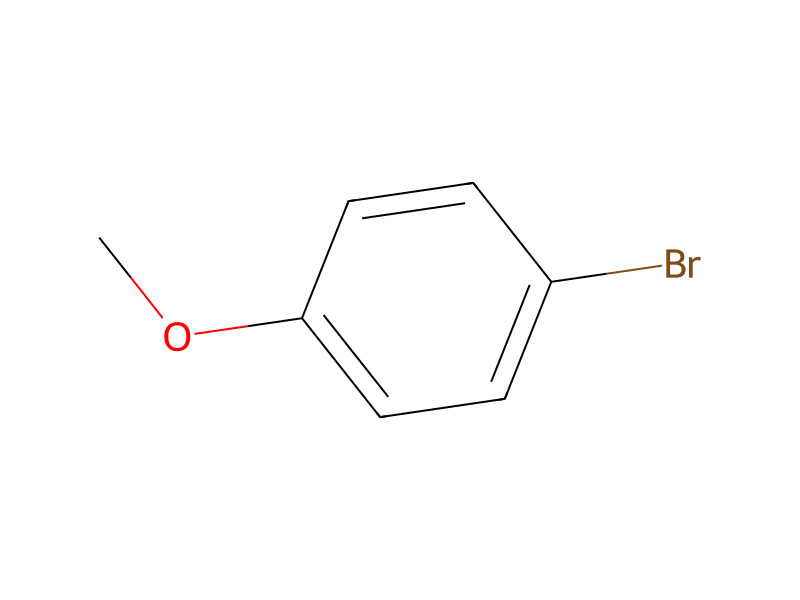
4-Bromoanisole → 1-Ethynyl-4-methoxybenzene
Reaction equation

Br[C:2]1[CH:7]=[CH:6][C:5]([O:8][CH3:9])=[CH:4][CH:3]=1.C[Si]([C:14]#[CH:15])(C)C.[OH-].[K+]>Cl[Pd](Cl)([P](C1C=CC=CC=1)(C1C=CC=CC=1)C1C=CC=CC=1)[P](C1C=CC=CC=1)(C1C=CC=CC=1)C1C=CC=CC=1.[Cu]I.CN(C=O)C.CCN(CC)CC>[CH3:9][O:8][C:5]1[CH:6]=[CH:7][C:2]([C:14]#[CH:15])=[CH:3][CH:4]=1Participants
8
Reactant 3


Product 1

Reagents, catalysts & solvents 4




Procedure
Using Method D above, 4-bromoanisole (Aldrich) was coupled with trimethylsilylacetylene (Aldrich) using (Ph3P)2PdCl2 and CuI as catalyst in DMF and Et3N as solvent and was heated at reflux for 1 day. The resulting trimethylsilyl derivative was hydrolized with aqueous potassium hydroxide to give 4-methoxyphenyl acetylene.
Workup
- temperatureat reflux for 1 day
Sources & evidence
- ORD record
- ord-a517a2329fe34fdead8c15b65bc6b3c3
- Source dataset
- uspto-grants-2001_11
- Patent number
- US06313310B1
Reaction notes
Loading…