Bromide ion → E-7-Phenylhept-4-enoic acid
Reaction equation

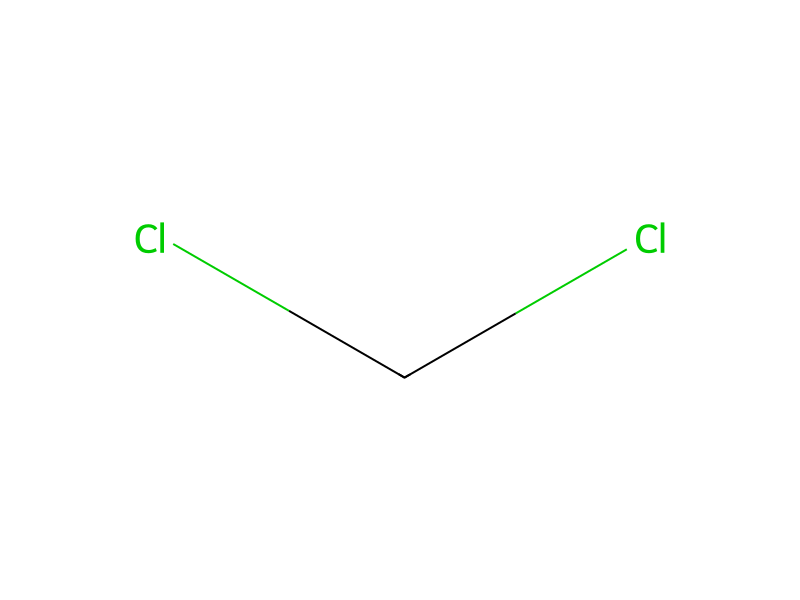
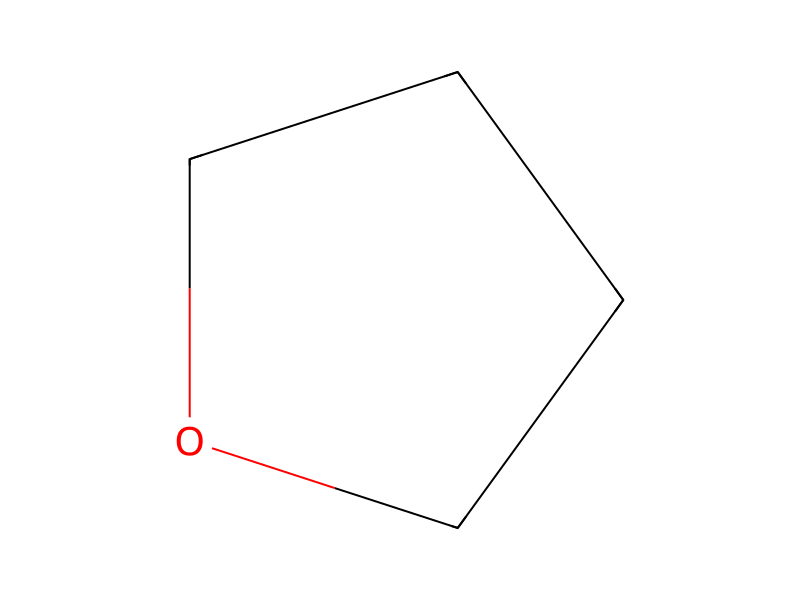
C(=O)CCC1C=CC=CC=1.[Li].C(O[PH+]([CH2:19][C:20]([O:22]CC)=[O:21])OCC)C.[Br-].Br[CH2:27]/[CH:28]=[CH:29]/[CH2:30][CH2:31][C:32]1[CH:37]=[CH:36][CH:35]=[CH:34][CH:33]=1.C1(P(C2C=CC=CC=2)C2C=CC=CC=2)C=CC=CC=1.C(Br)(Br)(Br)Br.[Na].C(OCC)(=O)CC(OCC)=O>O1CCCC1.C(Cl)Cl>[C:32]1([CH2:31][CH2:30]/[CH:29]=[CH:28]/[CH2:27][CH2:19][C:20]([OH:22])=[O:21])[CH:37]=[CH:36][CH:35]=[CH:34][CH:33]=1Participants
Reactant 9





Product 1

Reagents, catalysts & solvents 2
Procedure
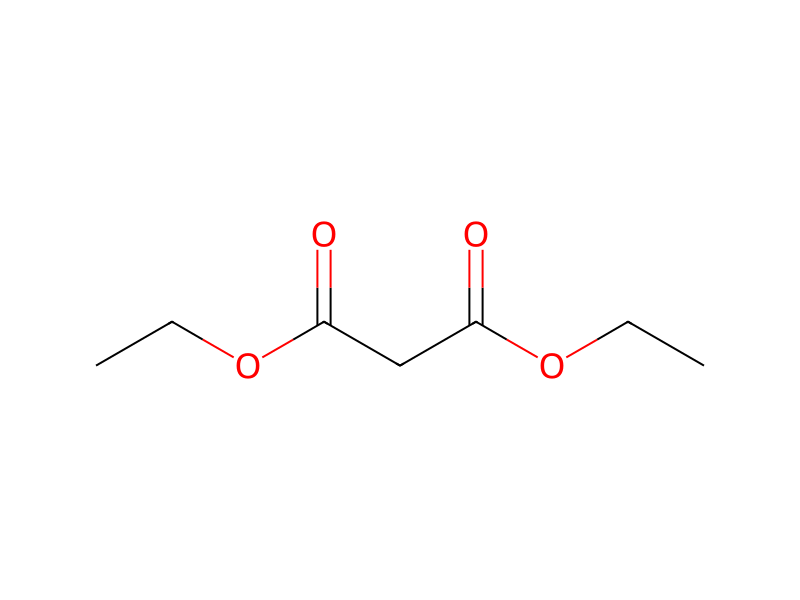
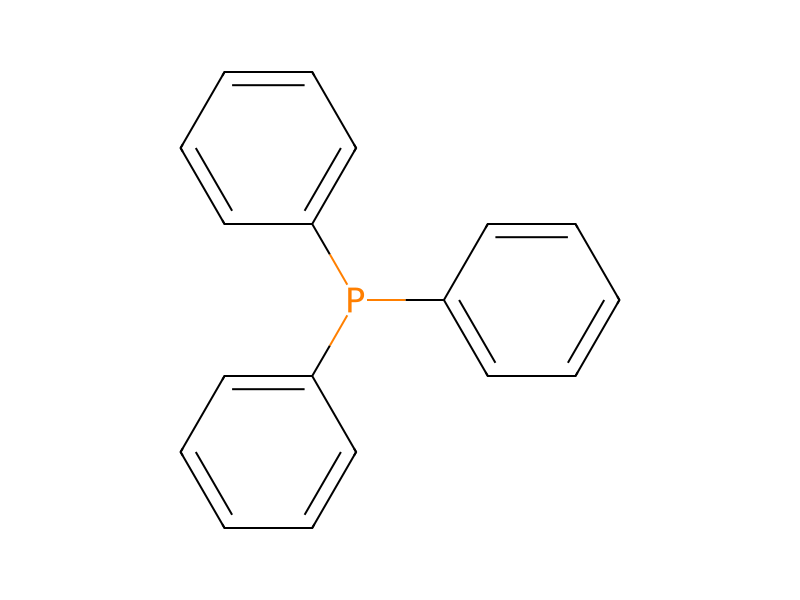
E-7-Phenylhept-4-enoic acid was prepared from commercially available dihydrocinnamaldehyde in five steps. Dihydrocinnamaldehyde was combined with the lithium salt of ethyl diethoxyphosphonioacetate in tetrahydrofuran at room temperature. The resulting unsaturated ester, ethyl 5-phenylpent-2-enoate, was purified by chromatography. The unsaturated ester was then reduced to the allylic alcohol, E-5-phenylpent-2-en-1-ol, by reaction with excess diisobutylaluminum hydride in tetrahydrofuran at −78° C. The purified alcohol was then converted to the bromide, E-1-bromo-5-phenylpent-2-ene, by reaction with triphenylphosphine and carbon tetrabromide in methylene chloride at 0° C. The purified bromide was then used to alkylate the sodium salt of diethyl malonate to provide the diester, methyl E-1-carbomethoxy-5-phenylhept-4-enoate. The diester was purified by chromatography and then subjected to saponification using methanolic sodium hydroxide. The diacid was purified by acid/base extraction and then used directly in the next step of the reaction sequence. Decarboxylation was effected by heating the neat diacid at 170° C. (under Ar) for 30 minutes. The product, E-7-phenylhept-4-enoic acid, was obtained in greater than 95% purity. Any residual diacid was removed by dissolving the acid in hexane and filtering. All compounds in the reaction sequence were fully characterized by spectral analysis (infrared and nuclear magnetic spectroscopy) and new compounds were analyzed by combustion analysis.
Workup
- customThe resulting unsaturated ester, ethyl 5-phenylpent-2-enoate, was purified by chromatography
- customThe unsaturated ester was then reduced to the allylic alcohol, E-5-phenylpent-2-en-1-ol, by reaction with excess diisobutylaluminum hydride in tetrahydrofuran at −78° C
Sources & evidence
- ORD record
- ord-7aec068fbbec475ba20162ba56ea5760
- Source dataset
- uspto-grants-2003_12
- Patent number
- US06660770B2
Reaction notes
Loading…