Hydrochloric Acid → Ascorbic acid 2-phosphate magnesium salt
Reaction equation

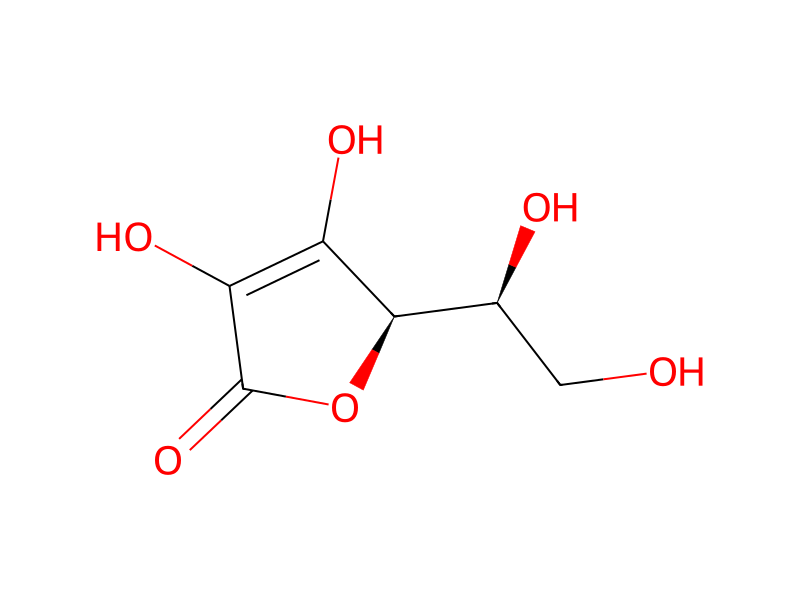
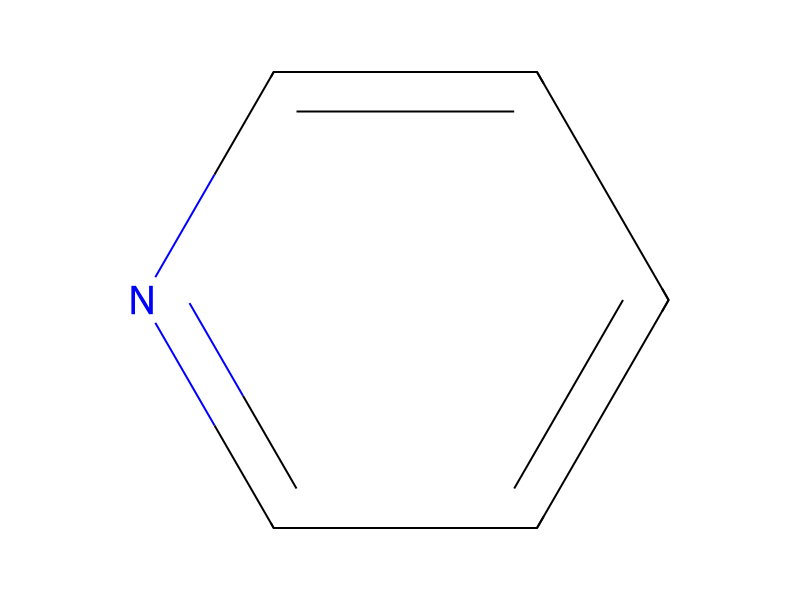
[O:1]=[C:2]1[O:8][C@H:7]([C@H:9]([CH2:11][OH:12])[OH:10])[C:5]([OH:6])=[C:3]1[OH:4].[P:13](Cl)(Cl)(Cl)=[O:14].[OH-:18].[K+].Cl.C([O-])(=[O:23])C.[Mg+2:25].C([O-])(=O)C>N1C=CC=CC=1.O>[P:13]([O:4][C:3]1[C:2]([O:8][C@H:7]([C@H:9]([CH2:11][OH:12])[OH:10])[C:5]=1[OH:6])=[O:1])([O-:14])([O-:23])=[O:18].[Mg+2:25]Participants

Procedure
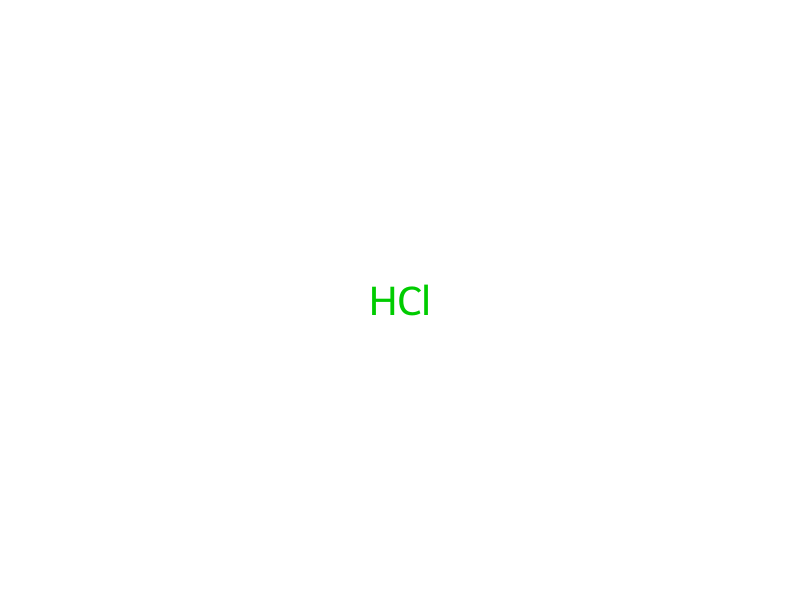
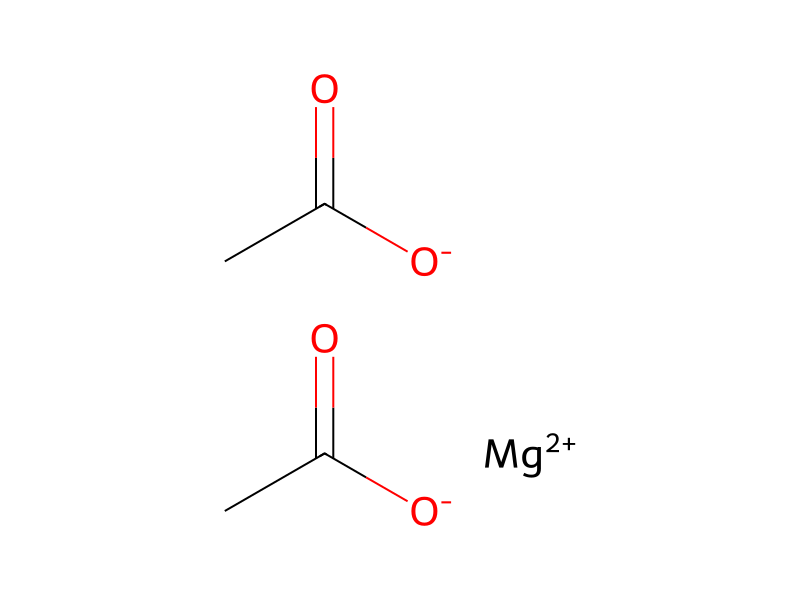
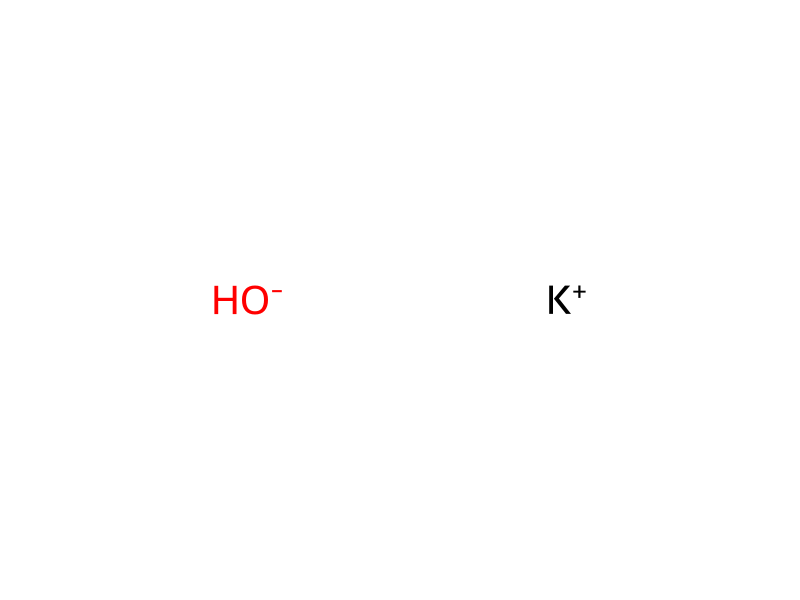
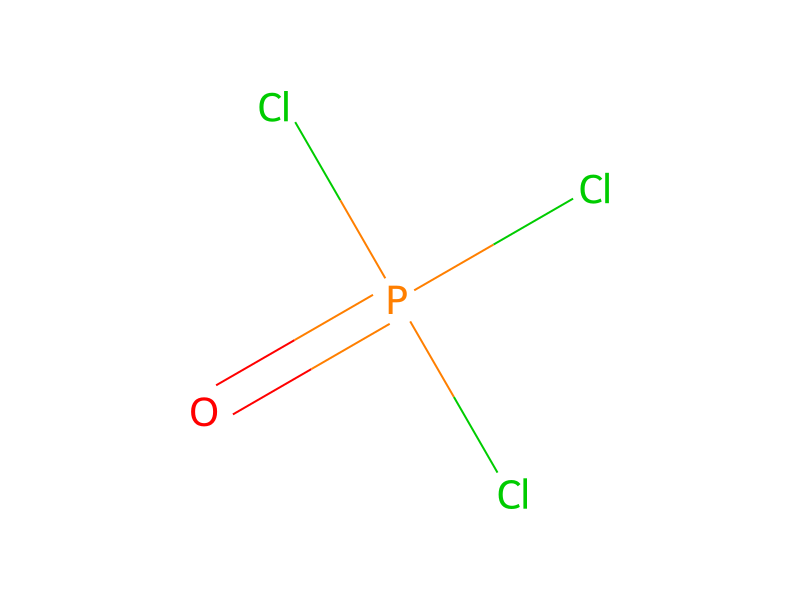
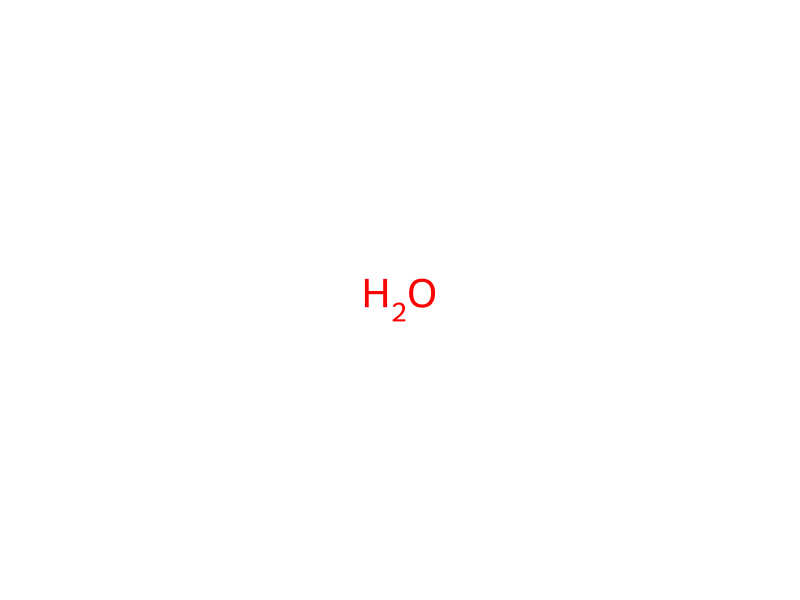
A solution consisting of 52.8 g of L-ascorbic acid, 965 ml of water and 37 ml of pyridine was cooled to 0°-5° C., and 71 g of phosphoryl chloride was added dropwise with stirring over a period of about 2 hours while maintaining the pH at 12.7±0.2 with a 50% aqueous potassium hydroxide solution. After completion of the dropwise addition, the resulting mixture was stirred at the same temperature for about 30 minutes. After completion of the reaction, the pyridine was distilled off under reduced pressure at about 40° C., and the residue was adjusted to a pH of about 1 with concentrated hydrochloric acid and then diluted with water to adjust the L-ascorbic acid-2-phosphate concentration to about 2%, whereby a starting solution for adsorption was prepared. The starting solution for adsorption was cooled to 0°-5° C. and passed through a column of activated carbon cooled to 0°-5° C. [a column with a diameter of 10 cm and a length of 30 cm which had been packed with activated carbon (Ryujo Shirasagi, mfd. by Takeda Chemical Industries, Ltd.) by a wet process so that the length of packed portion of the column might be 20 cm] at a flow rate SV=1 to be subjected to adsorption. Then, a 0.5% aqueous hydrochloric acid solution was passed through the column under the same conditions as above until the electric conductivity of the solution became 20 ms or less. Subsequently, a 2% aqueous magnesium acetate solution was passed through the column at a flow rate SV=1 at room temperature to elute a desired component (magnesium L-ascorbic acid-2-phosphate). The eluate thus obtained was monitored by means of absorbance and a fraction containing 0.1% or more of the desired component was separated therefrom as an available fraction. The available fraction was concentrated to adjust the concentration of the desired component to about 10%, after which acetone was added in a volume of twice that of the residue with stirring to precipitate magnesium L-ascorbic acid-2-phosphate. The crystals precipitated were collected by filtration and then dried by air blowing at room temperature to obtain 65 g of magnesium L-ascorbic acid-2-phosphate. The magnesium L-ascorbic acid-2-phosphate obtained had a purity of as good as 98% (in terms of dehydrate) and an absorbance of as good as 0.01 or less (360 nm, C=1%).
Workup
- temperaturewas cooled to 0°-5° C.
- additionAfter completion of the dropwise addition
- stirringthe resulting mixture was stirred at the same temperature for about 30 minutes
- customAfter completion of the reaction
- distillationthe pyridine was distilled off under reduced pressure at about 40° C.
- additiondiluted with water
- concentrationthe L-ascorbic acid-2-phosphate concentration to about 2%, whereby a starting solution for adsorption
- customwas prepared
- temperatureThe starting solution for adsorption was cooled to 0°-5° C.
- temperaturecooled to 0°-5° C. [a column with a diameter of 10 cm
- waitbecame 20 ms or less
- customwas passed through the column at a flow rate SV=1 at room temperature
- washto elute a desired component (magnesium L-ascorbic acid-2-phosphate)
- customThe eluate thus obtained
- additiona fraction containing 0.1% or more of the desired component
- customwas separated
- concentrationThe available fraction was concentrated
- additionafter which acetone was added in a volume of twice that of the residue
- stirringwith stirring
- customto precipitate magnesium L-ascorbic acid-2-phosphate
- customThe crystals precipitated
- filtrationwere collected by filtration
- customdried by air
- customblowing at room temperature
Sources & evidence
- ORD record
- ord-2bf19981aae84811bdee451dddd16591
- Source dataset
- uspto-grants-1996_05
- Patent number
- US05516919
Reaction notes
Loading…