4-Methylmorpholine → HCID 18439443, compound
Reaction equation

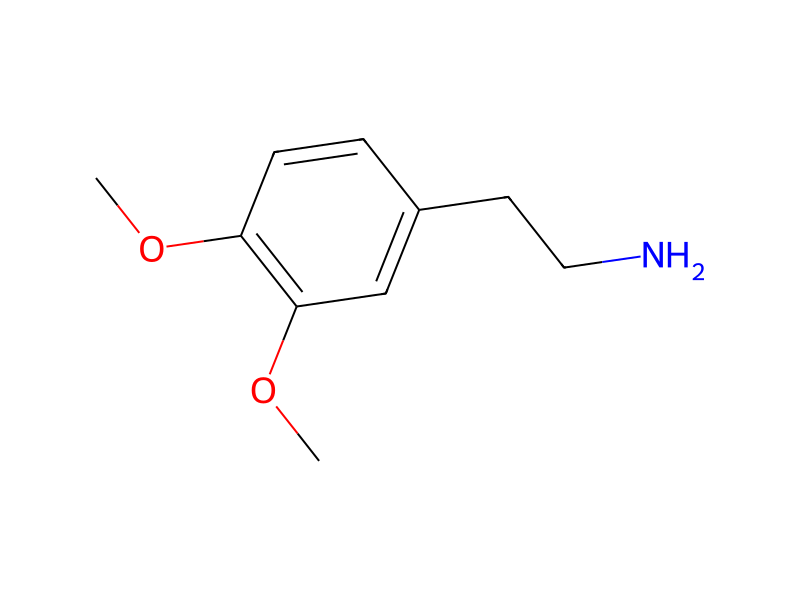
ClC(OCC(C)C)=O.CN1CCOCC1.[CH3:16][CH:17]([CH3:23])[C:18]#[C:19][C:20](O)=[O:21].[CH2:24]([NH2:36])[CH2:25][C:26]1[CH:35]=[CH:34][C:31]([O:32][CH3:33])=[C:28]([O:29][CH3:30])[CH:27]=1>O1CCCC1>[CH3:30][O:29][C:28]1[CH:27]=[C:26]([CH2:25][CH2:24][NH:36][C:20](=[O:21])[C:19]#[C:18][CH:17]([CH3:23])[CH3:16])[CH:35]=[CH:34][C:31]=1[O:32][CH3:33]Participants
6
Reactant 4



Product 1

Reagents, catalysts & solvents 1

Conditions
- Temperature
- 22.5 °C
Procedure
38.2 g (280 mmol) of isobutyl chloroformate were added dropwise at 0 to 5° C., as well as 28.3 g (280 mmol) of N-methylmorpholine at 5 to 15° C., to a solution of 28.4 g (254 mmol) of 4-methyl-2-pentynoic acid (ex. 3) in 100 ml of tetrahydrofuran (THF). 46 g (254 mmol) of homoveratrylamine were subsequently added dropwise while cooling with ice and the mixture was allowed to stir at 20 to 25° C. for 48 hours. The reaction solution was then concentrated and the residue was poured into water/10% hydrochloric acid solution and extracted with MTBE. After drying, distilling off the volatile components and chromatographing on silica gel (cyclohexane:MTBE [3:1]), 44 g of the title compound were obtained.
Workup
- customat 5 to 15° C.
- temperaturewhile cooling with ice
- concentrationThe reaction solution was then concentrated
- additionthe residue was poured into water/10% hydrochloric acid solution
- extractionextracted with MTBE
- customAfter drying
- distillationdistilling off the volatile components and chromatographing on silica gel (cyclohexane:MTBE [3:1])
Sources & evidence
- ORD record
- ord-1c4534313b20401e9918882457af6639
- Source dataset
- uspto-grants-2007_03
- Patent number
- US07186861B2
Reaction notes
Loading…