Hydrochloric Acid → HCID 68911489, compound
Reaction equation

[ClH:1].[CH3:2][N:3]1[CH2:8][CH2:7][C:6]2[N:9]=[C:10]([C:12]([NH:14][C@@H:15]3[CH2:20][CH2:19][CH2:18][CH2:17][C@@H]3N)=[O:13])[S:11][C:5]=2[CH2:4]1.O.O[N:24]1[C:28]2[CH:29]=[CH:30][CH:31]=[CH:32]C=2N=N1.Cl.C[N:35](C)[CH2:36][CH2:37]CN=C=NCC.Cl.C[N:47]([CH3:50])[CH:48]=[O:49]>CO.ClCCl.C(N(CC)CC)C>[ClH:1].[Cl:1][C:31]1[CH:30]=[CH:29][C:28]2[N:24]([CH:37]=[C:36]([C:48]([NH:47][C@@H:50]3[CH2:17][CH2:18][CH2:19][CH2:20][C@@H:15]3[NH:14][C:12]([C:10]3[S:11][C:5]4[CH2:4][N:3]([CH3:2])[CH2:8][CH2:7][C:6]=4[N:9]=3)=[O:13])=[O:49])[N:35]=2)[CH:32]=1Participants
Reactant 5




Product 1

Reagents, catalysts & solvents 3



Procedure
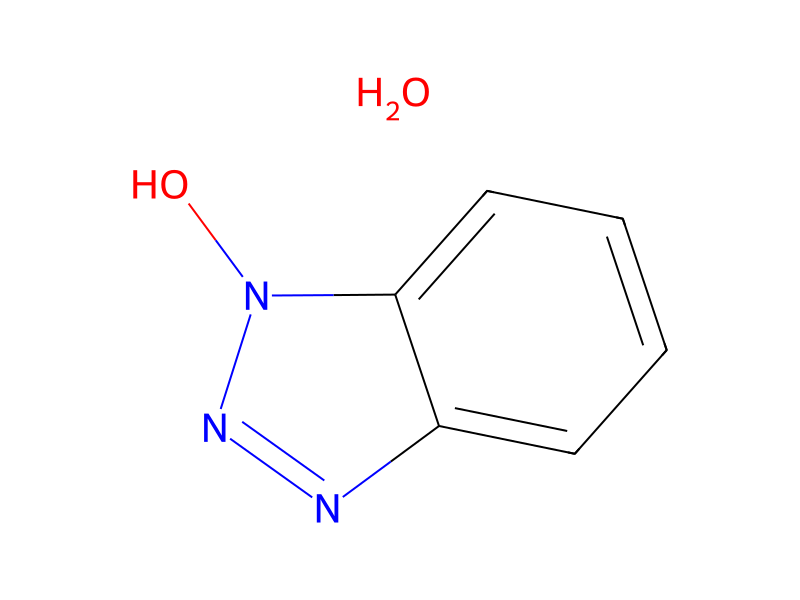
Ethyl 6-chloroimidazo[1,2-a]pyridine-2-carboxylate (Japanese Patent Application Laid-Open No. 11-500123 through PCT route) (150 mg) was dissolved in tetrahydrofuran (4 ml), and water (1 ml) and lithium hydroxide (18 mg) were added at room temperature to stir the mixture for 1 hour. The reaction mixture was concentrated under reduced pressure to obtain crude lithium 6-chloroimidazo[1,2-a]pyridine-2-carboxylate. This product was dissolved in N,N-dimethylformamide (4.0 ml), and (±)-cis-N-[(5-methyl-4,5,6,7-tetrahydrothiazolo[5,4-c]pyridin-2-yl)carbonyl]-1,2-cyclohexane-diamine hydrochloride (232 mg), 1-hydroxybenzotriazole monohydrate (180 mg), 1-(3-dimethylaminopropyl)-3-ethylcarbodiimide hydrochloride (256 mg) and triethylamine (371 μl) were added to this solution to stir the mixture at room temperature for 3 days. The reaction mixture was concentrated under reduced pressure, and water and a saturated aqueous solution of sodium hydrogencarbonate were added to the residue to conduct extraction with dichloromethane. The resultant organic layer was then dried over anhydrous sodium sulfate, and the solvent was distilled off under reduced pressure. The resultant residue was purified by column chromatography on silica gel (dichloromethane:acetone=1:1→dichloromethane:acetone:methanol=5:5:1) to obtain a white solid. To this solid, were added dichloromethane, methanol and 1N hydrochloric acid, and the resultant mixture was concentrated to obtain the title compound (224 mg) as a pale brown solid.
Workup
- concentrationThe reaction mixture was concentrated under reduced pressure, and water
- additiona saturated aqueous solution of sodium hydrogencarbonate were added to the residue
- extractionextraction with dichloromethane
- dry with materialThe resultant organic layer was then dried over anhydrous sodium sulfate
- distillationthe solvent was distilled off under reduced pressure
- customThe resultant residue was purified by column chromatography on silica gel (dichloromethane:acetone=1:1→dichloromethane:acetone:methanol=5:5:1)
- customto obtain a white solid
- concentrationthe resultant mixture was concentrated
Sources & evidence
- ORD record
- ord-cb6161c5ed5a4ad494fc0d469c384e44
- Source dataset
- uspto-grants-2007_03
- Patent number
- US07192968B2
Reaction notes
Loading…