Hydrochloric Acid → 6-Isobutyl-benzo[1,3]dioxole-4-boronic acid
Reaction equation

Br[C:2]1[C:10]2[O:9][CH2:8][O:7][C:6]=2[CH:5]=[C:4]([CH2:11][CH:12]([CH3:14])[CH3:13])[CH:3]=1.[Li]CCCC.C([O:23][B:24](OC(C)C)[O:25]C(C)C)(C)C.Cl>C1COCC1.C(OCC)(=O)C>[CH2:11]([C:4]1[CH:3]=[C:2]([B:24]([OH:25])[OH:23])[C:10]2[O:9][CH2:8][O:7][C:6]=2[CH:5]=1)[CH:12]([CH3:14])[CH3:13]Participants
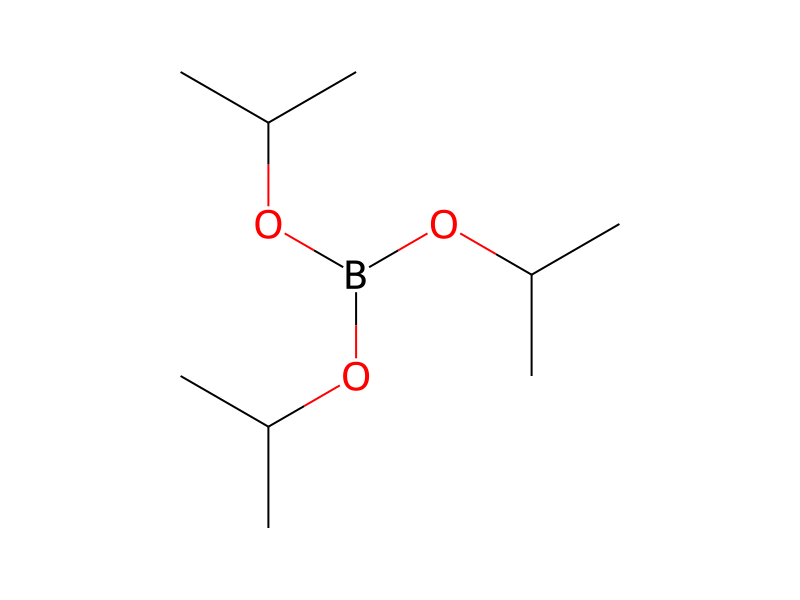
Reactant 4



Product 1

Reagents, catalysts & solvents 2


Conditions
- Temperature
- -78 °C
Procedure
To a mixture of 4-bromo-6-isobutyl-benzo[1,3]dioxole (232 mg, 0.90 mmol) in THF (3 mL) cooled to −78° C. under an atmosphere of argon was added n-BuLi (0.72 mL, 2.5 M, 1.80 mmol) dropwise. The reaction mixture was stirred for 5 minutes and triisopropylborate (0.62 mL, 2.71 mmol) was added dropwise. The mixture was stirred at −50° C. for 2 hours then warmed up to room temperature and stirred overnight at room temperature. 2.0 N HCl was slowly added to the reaction mixture. After 30 minutes the mixture was diluted with ethyl acetate and the layers separated. The organic layer was further washed with water, brine, dried (MgSO4), filtered and evaporated. The residue was chromatographed on silica gel (30% ethyl acetate in hexane) to give 110 mg of 6-isobutyl-benzo[1,3]dioxole-4-boronic acid (55%).
Workup
- stirringThe mixture was stirred at −50° C. for 2 hours
- temperaturethen warmed up to room temperature
- stirringstirred overnight at room temperature
- customthe layers separated
- washThe organic layer was further washed with water, brine
- dry with materialdried (MgSO4)
- filtrationfiltered
- customevaporated
- customThe residue was chromatographed on silica gel (30% ethyl acetate in hexane)
Sources & evidence
- ORD record
- ord-6a27939b9ebc432fb5ea79fb295c87df
- Source dataset
- uspto-grants-2007_03
- Patent number
- US07196108B2
Reaction notes
Loading…