Benzene → Benzamide
Reaction equation

[NH2:1][C:2](N)=[O:3].O1C=CN=C1.Cl.[OH-].[Na+].C(=O)(O)[O-].[Na+].[CH:18]1[CH:23]=[CH:22][CH:21]=[CH:20][CH:19]=1>C(OCC)(=O)C>[C:2]([NH2:1])(=[O:3])[C:18]1[CH:23]=[CH:22][CH:21]=[CH:20][CH:19]=1Participants
Reactant 6






Product 1
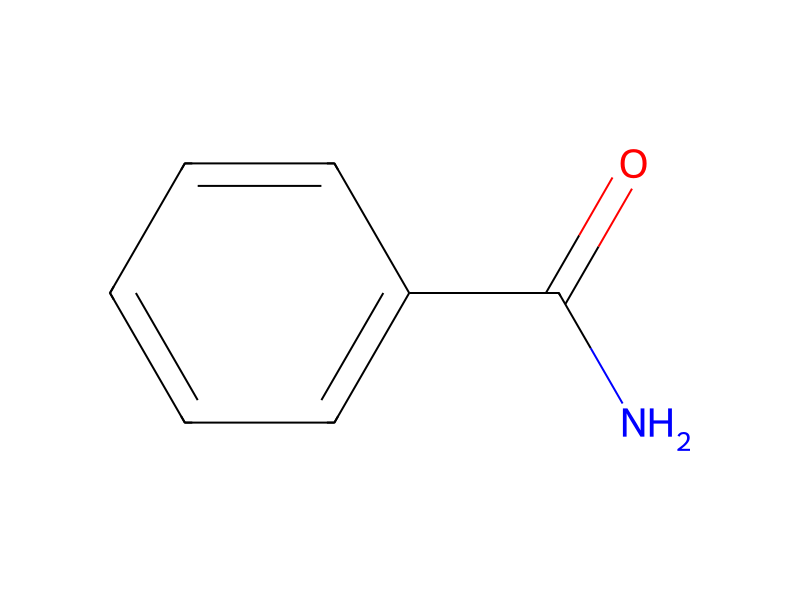
Reagents, catalysts & solvents 1

Procedure
The reaction of the aliphatic carboxylic acid derivative (III) with the isocyanoacetate compound (IV) is carried out in a solvent (e.g., tetrahydrofuran, dioxane, dimethylformamide) in the presence of a base such as sodium methoxide, potasium t-butoxide or 1,8-diazabicyclo(5.4.0)undecene-7 at -50° to 50° C. The oxazole derivative (V) thus obtained is saponified with an alkali metal hydroxide (e.g., sodium hydroxide, potassium hydroxide) at 20° to 50° C., and the reaction mixture is acidified to give the oxazolecarboxylic acid derivative (VI) which is then treated with a mineral acid (e.g., 2N hydrochloric acid-methanol) at 40° to 80° C. to give the aminoketone compound (VII). Alternatively, the aminoketone compound (VII) may be prepared by hydrolyzing the compound (V) with a mineral acid, for example, by treating the compound (V) with 4N hydrochloric acid at 50° to 80° C. The subsequent reaction of the aminoketone compound (VII) with the benzoyl halide (VIII) is carried out in a solvent (e.g., ethyl acetate, benzene) in the presence of an acid acceptor (e.g., sodium hydroxide, sodium bicarbonate) at -20° to 20° C. The N-benzoylamine derivative (IX) thus obtained is then reacted with the halogenoacetate compound (X) in a solvent (e.g., tetrahydrofuran, dioxane, dimethylformamide, dimethylsulfoxide, acetonitrile) in the presence of an acid acceptor (e.g., potassium hydroxide, sodium ethoxide, potassium t-butoxide, sodium hydride) at -50° to 30° C. to give the 3-benzoylaminopropionate derivative (II).
Workup
- customat 50° to 80° C
Sources & evidence
- ORD record
- ord-9dbac3b20a2443bebc8ade453f68191b
- Source dataset
- uspto-grants-1985_08
- Patent number
- US04535089
Reaction notes
Loading…