1,3-Dibromopropane → 2-(3-Bromopropoxy)-1H-isoindole-1,3(2H)-dione
Reaction equation

[OH:1][N:2]1[C:6](=[O:7])[C:5]2=[CH:8][CH:9]=[CH:10][CH:11]=[C:4]2[C:3]1=[O:12].[Br:13][CH2:14][CH2:15][CH2:16]Br.C(N(CC)CC)C>CN(C=O)C>[C:3]1(=[O:12])[N:2]([O:1][CH2:16][CH2:15][CH2:14][Br:13])[C:6](=[O:7])[C:5]2=[CH:8][CH:9]=[CH:10][CH:11]=[C:4]12Participants
5
Reactant 3


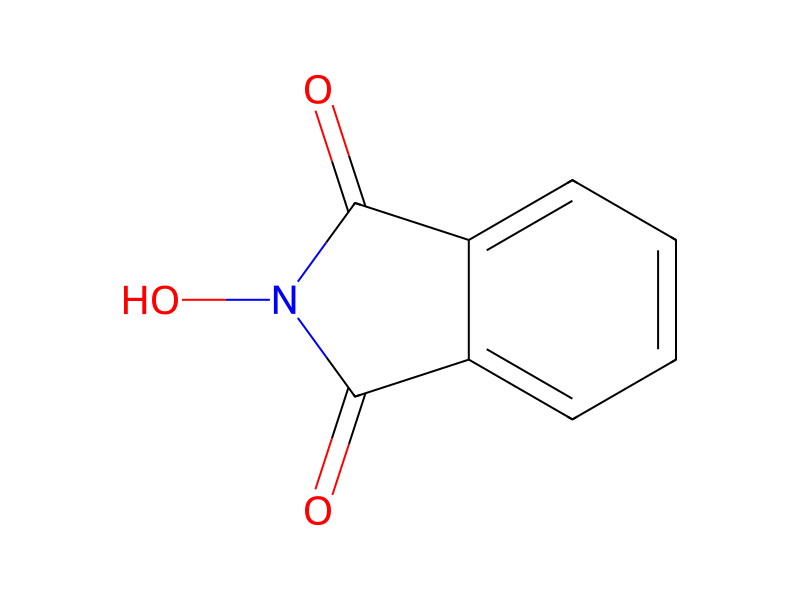
Product 1

Reagents, catalysts & solvents 1

Conditions
- Temperature
- 47.5 °C
Procedure
A mixture of N-hydroxyphthalimide (16.3 g, 100 mmol) and 1,3-dibromopropane (20.19 g, 100 mmol) in dry DMF (150 mL) and triethyl amine (15.33 mL, 110 mmol) is stirred at 20 to 75° C. for 1 to 10 hours. After filtration, the mixture is evaporated to dryness in vacuo. The residue is purified by silica gel flash column chromatography to give the title compound.
Workup
- filtrationAfter filtration
- customthe mixture is evaporated to dryness in vacuo
- customThe residue is purified by silica gel flash column chromatography
Sources & evidence
- ORD record
- ord-122357df30bc46709670550b386ea652
- Source dataset
- uspto-grants-2005_09
- Patent number
- US06942966B1
Reaction notes
Loading…