Benzaldehyde → alpha-(Nitromethyl)benzenemethanol
Reaction equation

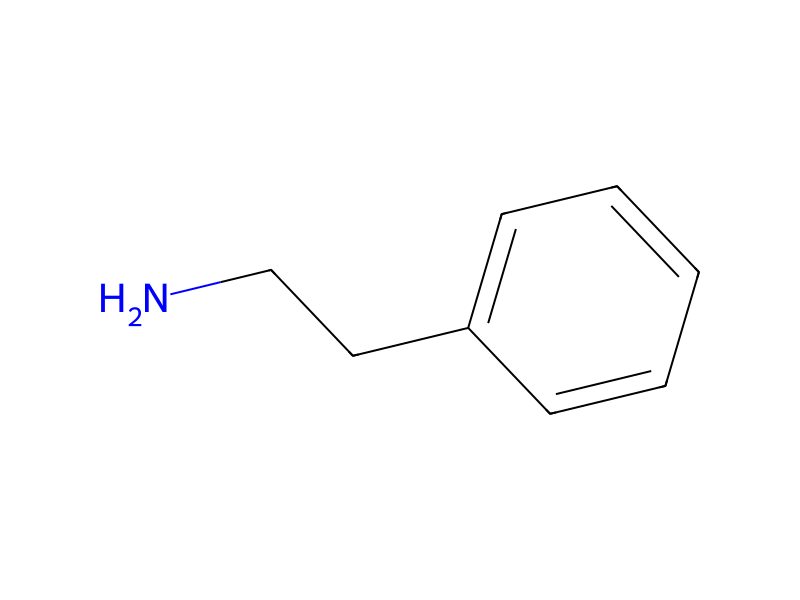
NC(N)=N.[CH:5](=[O:12])[C:6]1[CH:11]=[CH:10][CH:9]=[CH:8][CH:7]=1.C(N)CC1C=CC=CC=1.[N+:22]([CH3:25])([O-:24])=[O:23]>>[N+:22]([CH2:25][CH:5]([C:6]1[CH:11]=[CH:10][CH:9]=[CH:8][CH:7]=1)[OH:12])([O-:24])=[O:23]Participants



Procedure
In recent years, attention has been paid to optically active guanidine compounds as base catalysts for asymmetric nucleophilic-type reactions, a representative of which is an asymmetric aldol-type reaction. However, all of the previously known optically active guanidine compounds have central chirality as a chiral element, and it cannot be said that molecular design based on only such the central chirality is sufficient to draw the potential usefulness of such optically active guanidine compounds. As one of the reactions using an optically active guanidine compound which is constructed based on central chirality as an asymmetric base catalyst, a nitroaldol reaction is reported (Non-Patent Literature 1: Tetrahedron: Asymmetry, 1994, 5, 1393; Non-Patent Literature 2: Tetrahedron Lett., 2003, 44, 8677). The Non-Patent Literature 1 disclosed that in the aldol condensation between benzaldehyde and nitromethane, optically active guanidines having a phenethylamine skeleton as an optically active site are used as an asymmetric catalyst, and 2-nitro-1-phenylethanol is obtained in a yield of 31% and an asymmetric yield of 33% ee.
Workup
- customan asymmetric aldol-type reaction
- customa nitroaldol reaction
Sources & evidence
- ORD record
- ord-e2ca5936b391455cb1b94310decd6b0a
- Source dataset
- uspto-grants-2010_08
- Patent number
- US07781425B2
Reaction notes
Loading…