Picolinic acid → HCID 70974722, compound
Reaction equation

Cl.[Br:2][C:3]1[CH:12]=[C:11]2[C:6]([CH2:7][CH2:8][NH:9][CH2:10]2)=[CH:5][CH:4]=1.[N:13]1[CH:18]=[CH:17][CH:16]=[CH:15][C:14]=1[C:19](O)=[O:20].CN(C(ON1N=NC2C=CC=NC1=2)=[N+](C)C)C.F[P-](F)(F)(F)(F)F.CN1CCOCC1>CN(C=O)C.O.C(#N)C.CCOC(C)=O>[Br:2][C:3]1[CH:12]=[C:11]2[C:6]([CH2:7][CH2:8][N:9]([C:19]([C:14]3[CH:15]=[CH:16][CH:17]=[CH:18][N:13]=3)=[O:20])[CH2:10]2)=[CH:5][CH:4]=1Participants
8
Reactant 4




Product 1

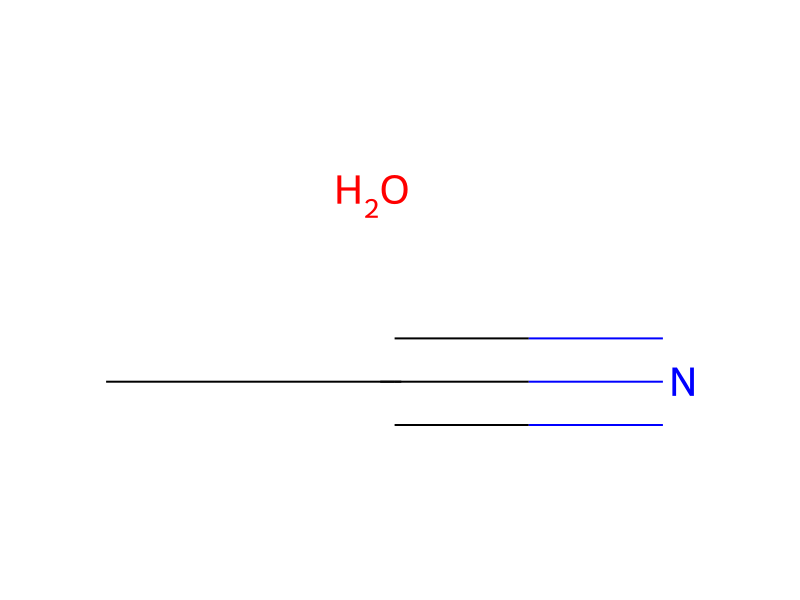
Reagents, catalysts & solvents 3


Conditions
- Temperature
- 23 °C
Procedure
To a suspension of 7-bromo-1,2,3,4-tetrahydro-isoquinoline hydrochloride (500 mgs, 2.0 mmol), pyridine-2-carboxylic acid (322 mgs, 2.61 mmol), HATU (992 mgs, 2.61 mmol), in DMF (2.5 mL) was added NMM (0.7 mL, 6.0 mmol) and the resulting solution was stirred at 23° C. for 3 h. The reaction mixture was then diluted with water/acetonitrile (15:1) and the resulting oil was then taken into EtOAc and washed with 1N HCl, NaHCO3, brine and dried (MgSO4). The mixture was the filtered and concentrated) to provide (7-bromo-3,4-dihydroisoquinolin-2(1H)-yl)(pyridin-2-yl)methanone.
Workup
- washwashed with 1N HCl, NaHCO3, brine
- dry with materialdried (MgSO4)
- filtrationfiltered
- concentrationconcentrated)
Sources & evidence
- ORD record
- ord-3ea604f3237f44a58e7d8d875b67f2a7
- Source dataset
- uspto-grants-2015_08
- Patent number
- US09115096B2
Reaction notes
Loading…