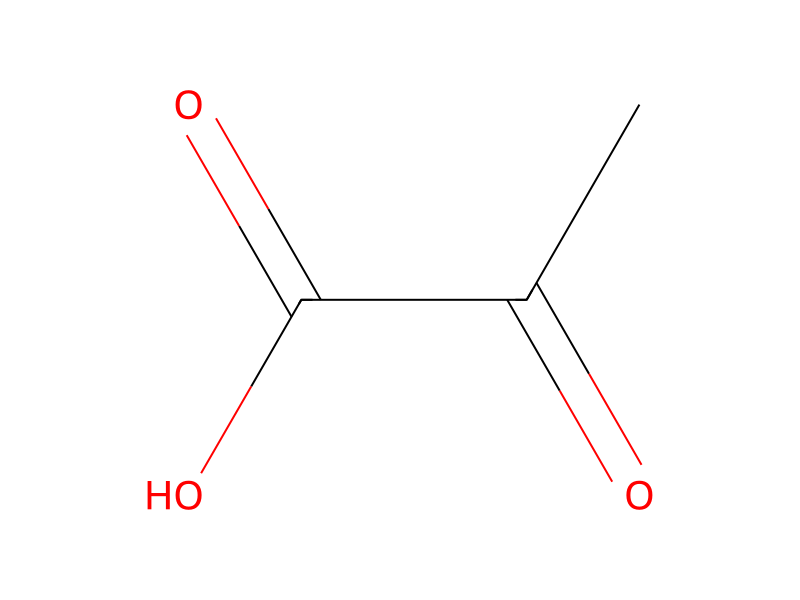
Pyruvic Acid → HCID 118275230, compound
Reaction equation

[C:1]([OH:6])(=[O:5])[C:2]([CH3:4])=O.N12CCN(CC1)CC2.[NH2:15][C:16]1[N:21]=[C:20]([CH3:22])[C:19]([CH2:23][NH:24][C:25](=[O:31])[O:26][C:27]([CH3:30])([CH3:29])[CH3:28])=[CH:18][C:17]=1I>CN(C)C=O.C([O-])(=O)C.[Pd+2].C([O-])(=O)C>[C:27]([O:26][C:25]([NH:24][CH2:23][C:19]1[CH:18]=[C:17]2[CH:4]=[C:2]([C:1]([OH:6])=[O:5])[NH:15][C:16]2=[N:21][C:20]=1[CH3:22])=[O:31])([CH3:30])([CH3:29])[CH3:28]Participants
Reactant 3


Product 1

Reagents, catalysts & solvents 2


Conditions
- Temperature
- 100 °C
Procedure
Under argon, pyruvic acid (6.90 ml, 100.1 mmol) and 1,4-diazabicyclo[2.2.2]octane (843 g, 7.51 mmol) were added to a solution of tert-butyl [(6-amino-5-iodo-2-methylpyridin-3-yl)methyl]carbamate (840 mg, 2.31 mmol) in N,N-dimethylformamide (0.5 ml), and the flask was evacuated and flushed with argon. Then argon was passed through the solution for 5 min and then palladium(II) acetate (25.9 mg, 0.11 mmol) was added and the mixture was heated to 100° C. for 2 h. The cooled solution was filtered through Celite and the dimethylformamide was distilled off. The residue was then taken up in water and acidified with hydrochloric acid, giving a 5-{[(tert-butoxycarbonyl)amino]methyl}-6-methyl-1H-pyrrolo[2,3-b]pyridine-2-carboxylic acid (650 g, 88% of theory). HPLC-MS: log P=0.58; mass (m/z): 306.1 (M+H)+; 1H-NMR (DMSO) 1.37 (s, 9H), 2.33 (s, 3H), 4.17 (d, 2H), 6.57 (s, 1H), 7.68 (s, 1H).
Workup
- customthe flask was evacuated
- customflushed with argon
- filtrationThe cooled solution was filtered through Celite
- distillationthe dimethylformamide was distilled off
Sources & evidence
- ORD record
- ord-c4f29563ee354cd49113700042663cd5
- Source dataset
- uspto-grants-2016_05
- Patent number
- US09345247B2
Reaction notes
Loading…