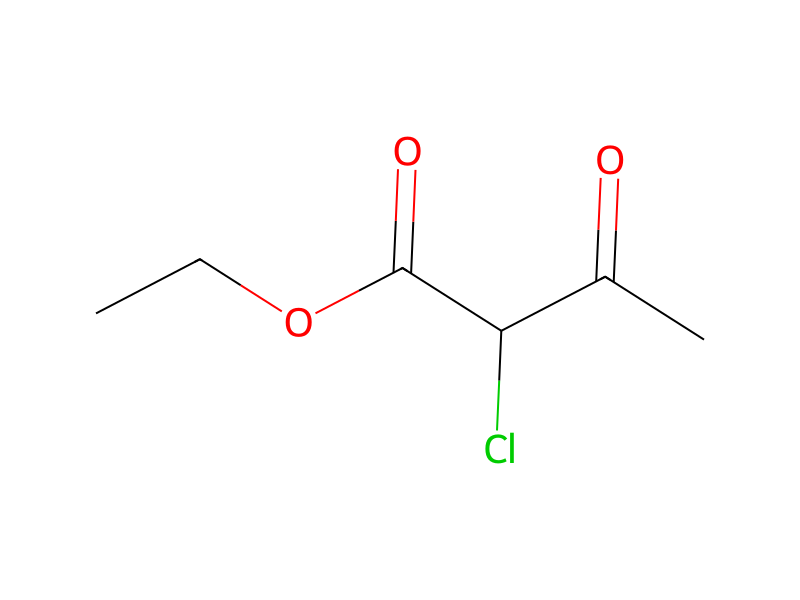
Ethyl 2-chloroacetoacetate → HCID 86693528, compound
Reaction equation

[C:1]([C:3]1([CH2:6][O:7][C:8]2[CH:13]=[CH:12][C:11]([I:14])=[CH:10][C:9]=2[N+:15]([O-])=O)[CH2:5][CH2:4]1)#[CH:2].[N:18]([O-])=O.[Na+].[CH2:22]([O:24][C:25](=[O:31])[CH:26](Cl)C(C)=O)[CH3:23].C([O-])(=O)C.[Na+]>CCO.C(OC(=O)C)C.C(N(CC)CC)C.C1(C)C=CC=CC=1.[Fe].O.C(O)(=O)C>[I:14][C:11]1[CH:12]=[CH:13][C:8]2[O:7][CH2:6][C:3]3([C:1]4[N:15]([N:18]=[C:26]([C:25]([O:24][CH2:22][CH3:23])=[O:31])[CH:2]=4)[C:9]=2[CH:10]=1)[CH2:5][CH2:4]3Participants
Reactant 4



Product 1

Reagents, catalysts & solvents 7







Conditions
- Temperature
- 70 °C
Procedure
A suspension of 1((1-ethynylcyclopropyl)methoxy)-4-iodo-2-nitrobenzene (500 mg, 1.47 mmol) in EtOH was treated with acetic acid then iron powder. FeCl3-6H2O was added and the mixture sealed and heated at 70° C. (periodic sonication). After 2 hours, TLC and LCMS indicated complete conversion. The mixture was diluted with ˜100 mL of ethylacetate and filtered through a plug of celite and silica. The resulting aniline was used in the next steps without further purification. The crude aniline was suspended in 2 mL THF and treated with 2 mL of a 1:1 mix of concentrated HCl:water at 0° C. After 2 min, a solution of NaNO2 (111 mg, 1.62 mmol) in 0.5 mL, water was added and the mixture rapidly stirred (periodic sonication). In a second flask, ethyl-2-chloroacetoacetate (266 mg, 1.62 mmol) and sodium acetate (195 mg, 2.35 mmol) were stirred in 7 mL of ethanol at room temperature. After 30 min, the solution of the diazocompound was decanted over (water rinsing) at 0° C. The mixture was stirred at 0° C. for 30 min, then room temperature for 30 min (complete conversion to the chlorohydrazone by LCMS, very non-polar). The mixture was diluted with water and extracted with ethyl acetate. The combined organics were washed with brine, dried over sodium sulfate and concentrated by rotoevaporation to give a light yellow solid which was used in the next step without purification. The crude chlorohydrazone (547 mg, 1.23 mmol) was dissolved in triethylamine 1.3 mL) and toluene (11.5 mL) in a mw vial and heated at 125° C. (sand bath temp) overnight. LCMS indicated good, clean conversion to the titled compound. The mixture was diluted with water and extracted with ethyl acetate. The combined organics were washed with brine, dried over sodium sulfate and concentrated by rotoevaporation. Purification by FCC (5-50% EtOAc in heptanes) gave 313 mg of a sticky red/orange oil (62% yield). 1H NMR (400 MHz, DMSO) δ 8.22 (d, J=2.1 Hz, 1H), 7.67 (dd, J=8.4, 2.2 Hz, 1H), 7.03 (d, J=8.5 Hz, 1H), 6.72 (s, 1H), 4.32 (q, J=7.1 Hz, 2H), 4.25 (s, 2H), 1.31 (t, J=7.0 Hz, 3H), 1.09-0.94 (m, 4H).
Workup
- customthe mixture sealed
- custom(periodic sonication)
- filtrationfiltered through a plug of celite and silica
- customThe resulting aniline was used in the next steps without further purification
- additiontreated with 2 mL of a 1:1
- additionmix of concentrated HCl
- customat 0° C
- waitAfter 2 min
- custom(periodic sonication)
- waitAfter 30 min
- customthe solution of the diazocompound was decanted over (water rinsing) at 0° C
- stirringThe mixture was stirred at 0° C. for 30 min
- waitroom temperature for 30 min (complete conversion to the chlorohydrazone by LCMS
- additionThe mixture was diluted with water
- extractionextracted with ethyl acetate
- washThe combined organics were washed with brine
- dry with materialdried over sodium sulfate
- concentrationconcentrated by rotoevaporation
- customto give a light yellow solid which
- customwas used in the next step without purification
- temperatureheated at 125° C. (sand bath temp) overnight
Sources & evidence
- ORD record
- ord-b276cb1735744052816b942715d12234
- Source dataset
- uspto-grants-2015_05
- Patent number
- US09034866B2
Reaction notes
Loading…