Piperazine → HCID 131734484, compound
Reaction equation

[NH:1]1[CH2:6][CH2:5][NH:4][CH2:3][CH2:2]1.CS(O)(=O)=O.[CH:12]([Si:15]([CH:20]([CH3:22])[CH3:21])([CH:17]([CH3:19])[CH3:18])Cl)([CH3:14])[CH3:13].[OH-].[Na+]>C1(C)C(C)=CC=CC=1>[CH:12]([Si:15]([CH:20]([CH3:22])[CH3:21])([CH:17]([CH3:19])[CH3:18])[N:1]1[CH2:6][CH2:5][NH:4][CH2:3][CH2:2]1)([CH3:14])[CH3:13]Participants
6
Reactant 4

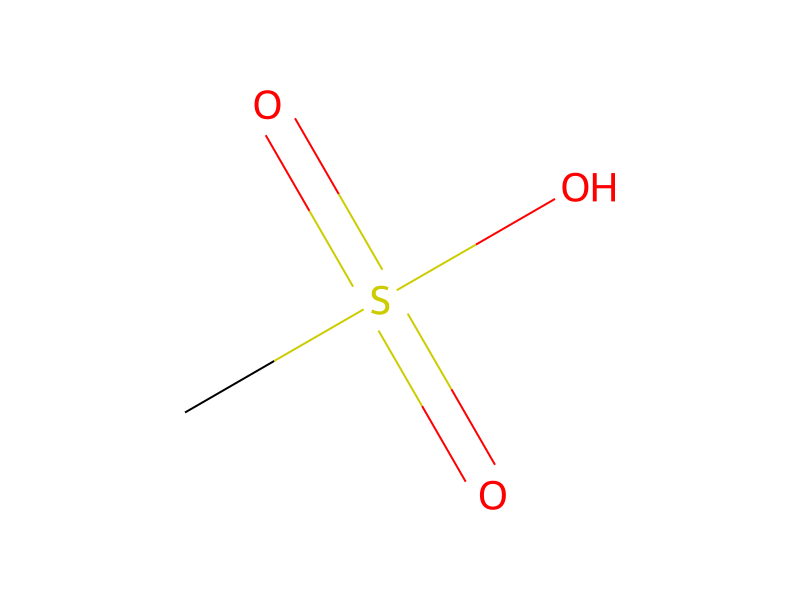


Product 1

Reagents, catalysts & solvents 1

Conditions
- Temperature
- 130 °C
Procedure
A flask equipped with a stirrer, reflux condenser, dropping funnel and thermometer was charged with 189.4 g (2.2 mol) of piperazine, 200 ml of xylene, and 1.0 g (0.01 mol) of methanesulfonic acid and heated at 130° C. Once the internal temperature became steady, 192.8 g (1.0 mol) of triisopropylchlorosilane was added dropwise over 2 hours. Stirring was continued for 10 hours at the temperature. The reaction solution was cooled to room temperature, to which 500 g of a 10 wt % sodium hydroxide aqueous solution was added. The organic layer was separated. On distillation, 132.6 g of a fraction having a boiling point of 109-111° C./0.4 kPa was collected, which was 1-triisopropylsilylpiperazine.
Workup
- customA flask equipped with a stirrer
- temperaturereflux condenser
- additionwas added
- customThe organic layer was separated
- distillationOn distillation, 132.6 g of a fraction
- customwas collected
Sources & evidence
- ORD record
- ord-68d58d72e3924fb5bfe816ca2db0a603
- Source dataset
- uspto-grants-2016_01
- Patent number
- US09233988B2
Reaction notes
Loading…