Anthrone → Ethanol, 2-(9-anthracenyloxy)-
Reaction equation

[CH:1]1[C:14]2[C:13](=[O:15])[C:12]3[C:7](=[CH:8][CH:9]=[CH:10][CH:11]=3)[CH2:6][C:5]=2[CH:4]=[CH:3][CH:2]=1.C(=O)([O-])[O-].[K+].[K+].Br[CH2:23][CH2:24][OH:25]>CN(C=O)C>[CH:11]1[C:12]2[C:7](=[CH:6][C:5]3[C:14]([C:13]=2[O:15][CH2:23][CH2:24][OH:25])=[CH:1][CH:2]=[CH:3][CH:4]=3)[CH:8]=[CH:9][CH:10]=1Participants
5
Reactant 3
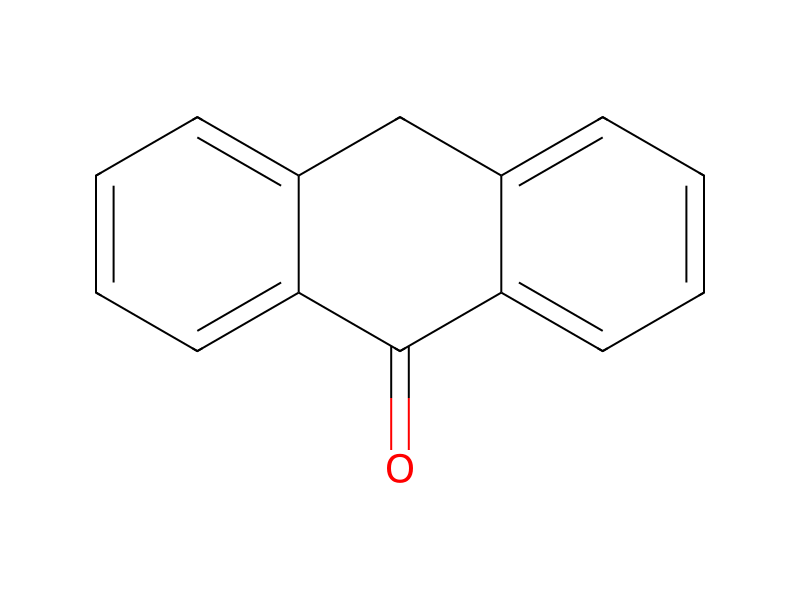


Product 1

Reagents, catalysts & solvents 1

Procedure
To a solution of anthrone (5.0 g, 25.7 mmole) in 34 mL anhydrous DMF under an inert atmosphere was added potassium carbonate (7.47 g, 54.1 mmole). To the resulting reaction mixture was added 2-bromoethanol (2.0 mL, 28.3 mmole). The resulting reaction mixture was stirred for 1 hr at room temperature, then 3 hrs at 80° C. The reaction was then cooled to room temperature and quenched with saturated NaHCO3. Ethyl acetate was added and the organic layer was collected and dried over magnesium sulfate. The solvent was concentrated under reduced pressure and the residue was purified via flash chromatography.
Workup
- customTo the resulting reaction mixture
- customThe resulting reaction mixture
- custom3 hrs
- customat 80° C
- temperatureThe reaction was then cooled to room temperature
- customquenched with saturated NaHCO3
- additionEthyl acetate was added
- customthe organic layer was collected
- dry with materialdried over magnesium sulfate
- concentrationThe solvent was concentrated under reduced pressure
- customthe residue was purified via flash chromatography
Sources & evidence
- ORD record
- ord-5d7b9a263d86414abb91f2db5d548325
- Source dataset
- uspto-grants-2016_01
- Patent number
- US09234153B2
Reaction notes
Loading…