Picolinic acid → Diethyl 2-(6-chloro-5-methylpyridin-3-yl)malonate
Reaction equation

Br[C:2]1[CH:3]=[C:4]([CH3:9])[C:5]([Cl:8])=[N:6][CH:7]=1.C([O-])([O-])=O.[Cs+].[Cs+].N1C=CC=CC=1C(O)=O.[C:25]([O:33][CH2:34][CH3:35])(=[O:32])[CH2:26][C:27]([O:29][CH2:30][CH3:31])=[O:28]>[Cu]I>[Cl:8][C:5]1[N:6]=[CH:7][C:2]([CH:26]([C:27]([O:29][CH2:30][CH3:31])=[O:28])[C:25]([O:33][CH2:34][CH3:35])=[O:32])=[CH:3][C:4]=1[CH3:9]Participants
Reactant 4

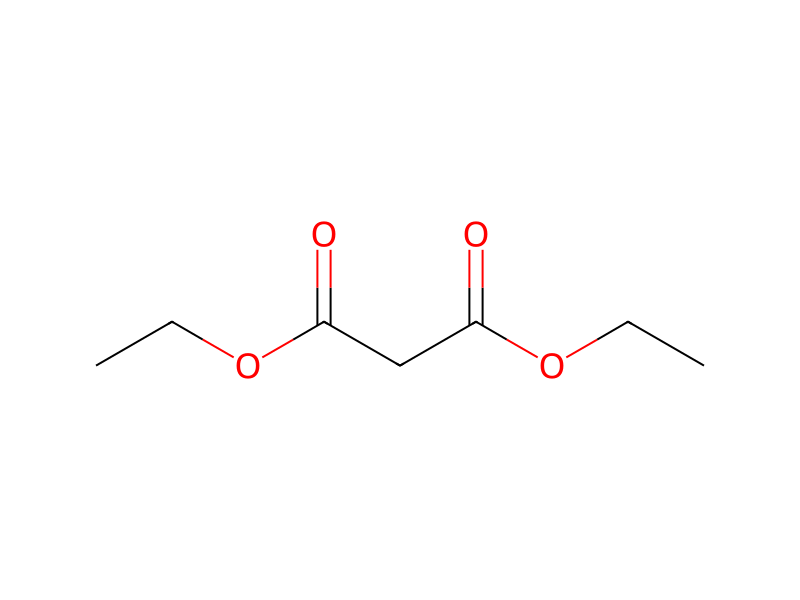


Product 1

Reagents, catalysts & solvents 1

Conditions
- Temperature
- 96 °C
Procedure
To a flask were added 5-bromo-2-chloro-3-methylpyridine 156-1 (4.13 g, 20 mmol), CuI (380 mg, 2.00 mmol), Cs2CO3 (18 g, 60 mmol), 2-picolinic acid (480 mg, 4.00 mmol). The flask was evacuated and backfilled with argon 3 times. Anhydrous dioxane (40 mL) was added to the flask, followed by diethyl malonate 156-2 (6 mL, 40 mmol). The mixture was stirred at 96° C. for 36 hours under argon. After cooled to room temperature, the mixture was partitioned between ethyl acetate and water. The organic portion was dried over Na2SO4, filtered and concentrated by rotary evaporation. The crude product was purified by flash chromatography, eluted with 20% ethyl acetate in hexanes to give diethyl 2-(6-chloro-5-methylpyridin-3-yl)malonate 156-3 as colorless oil. MS m/z 286.1 (M+1).
Workup
- customThe flask was evacuated
- additionAnhydrous dioxane (40 mL) was added to the flask
- temperatureAfter cooled to room temperature
- customthe mixture was partitioned between ethyl acetate and water
- dry with materialThe organic portion was dried over Na2SO4
- filtrationfiltered
- concentrationconcentrated by rotary evaporation
- customThe crude product was purified by flash chromatography
- washeluted with 20% ethyl acetate in hexanes
Sources & evidence
- ORD record
- ord-c47f6c9e180b40ec8c2947ef21cfdd91
- Source dataset
- uspto-grants-2016_01
- Patent number
- US09238646B2
Reaction notes
Loading…